Clinical Engineering & Global Procurement Index

Bariatric Bed with In Bed Scale Solutions: Technical Procurement Guide & Clinical Integration Trends

An authoritative analysis on high-capacity patient weight monitoring systems, load-cell accuracy, EHR telemetry integration, and ergonomic caregiver safety for acute care hospitals and long-term care facilities worldwide.

Manufacturer: Hoffmann NOA Medical Industries, LLC
Engineering Origin: Washington, MO, USA
Load Capacity Range: 600 lbs – 1,000 lbs (272 kg – 454 kg)

Executive Summary: Navigating Modern Bariatric Weight Telemetry

Global healthcare procurement officers, biomedical engineers, and clinical nursing directors frequently encounter a fundamental operational challenge: How can hospital facilities accurately monitor the weight of high-acuity bariatric patients without compromising patient dignity, causing caregiver musculoskeletal injuries, or delaying critical fluid management protocols?

The acquisition of a premium Bariatric Bed with In Bed Scale has shifted from a specialized luxury to an absolute necessity across intensive care units (ICUs), bariatric step-down wards, and skilled nursing facilities (SNFs). In modern clinical environments, patient weight is not merely a demographic data point; it is a vital clinical metric used to calculate chemotherapy and antibiotic dosages, monitor acute congestive heart failure (CHF) fluid retention, manage renal dialysis fluid extraction, and assess pressure injury risks under National Pressure Injury Advisory Panel (NPIAP) guidelines.

This technical guide analyzes the design principles, structural load dynamics, scale calibration mechanisms, and procurement trends driving the global market for bariatric scale beds. Designed by the engineering team at Hoffmann NOA Medical Industries, this resource offers direct information gain for institutional buyers evaluating total cost of ownership (TCO), safety compliance, and Electronic Health Record (EHR) interoperability.

Need Direct Technical Specs or Factory Direct Pricing?

Connect with our senior engineering team to request detailed technical whitepapers, dimensional CAD drawings, or custom OEM/B2B procurement quotes for your facility.
Send an Inquiry

Flagship Product Recommendations: NOA Bariatric Beds with Integrated Scales

Hoffmann NOA Medical Industries engineers specialized bariatric medical beds that seamlessly fuse structural heavy-duty steel architectures with high-precision digital weighing systems. Below are our primary recommended models for acute care and long-term care environments.

NOA Elite EX Expandable Bariatric Bed with Integrated Scale System

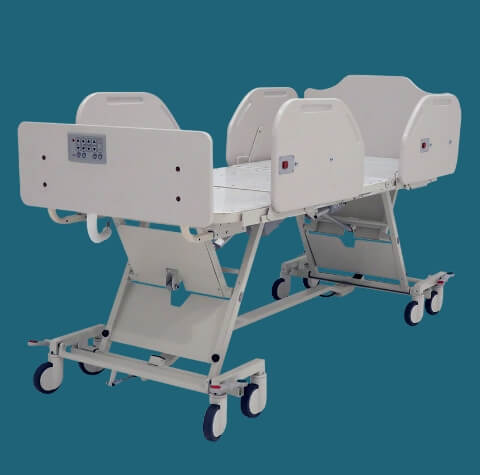
NOA Elite EX — Expandable Scale Bed

Engineered for maximum versatility, the Elite EX features an integrated 4-point strain gauge scale system with an expandable sleep deck. Width adjusts effortlessly between 36", 42", and 48", supporting up to 1,000 lbs safe working load while maintaining clinical scale precision.

Send an Inquiry

NOA Platinum SC Plus High-Acuity Acute Care Bed with Scale

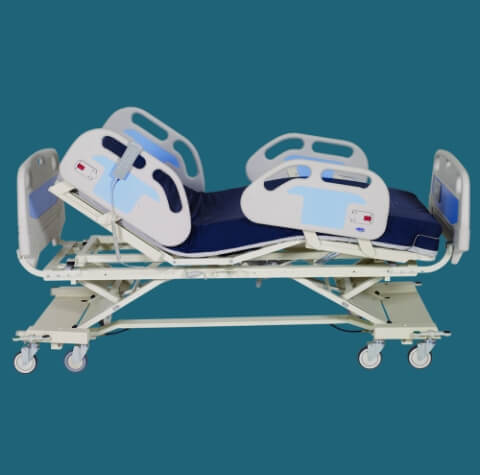
Platinum SC Plus — Acute Care Scale Bed

Designed for critical acute care wards, the Platinum SC Plus offers full-electric positioning, auto-tare, history logging, and integrated scale displays on both footboard and side rails. Features real-time telemetry output for hospital network logging.

Send an Inquiry

NOA Platinum NS Low Riser Bariatric Scale Bed

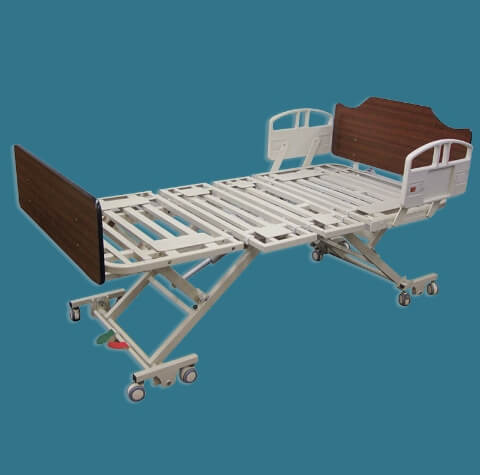
Platinum NS — Low-Riser Bariatric Bed

Combining low-height fall protection with high-capacity scale integration. The Platinum NS deck drops close to the floor to prevent fall injury while offering full weight monitoring for immobile patients up to 600 lbs.

Send an Inquiry

NOA Calibrated Bariatric Mattresses and Scale Accessories

Calibrated Scale Mattresses & Side Rails

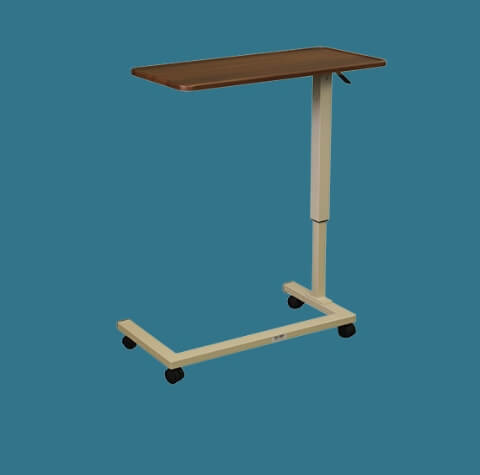
A scale bed is only as accurate as its tare compensation. NOA provides specialized pressure-redistribution foam and alternating air mattresses specifically profiled for scale zeroing stability.

Send an Inquiry

Technical Comparison Matrix: NOA Bariatric Scale Systems

Technical Parameter NOA Elite EX Scale System Platinum SC Plus Scale Bed Platinum NS Riser Bed
Safe Working Load (SWL) 1,000 lbs (454 kg) 650 lbs – 800 lbs (295–363 kg) 600 lbs (272 kg)
Scale Technology 4-Corner Load Cell Transducers Microprocessor Strain Gauge Integrated Structural Load Cells
Deck Width Expansion 36" / 42" / 48" Expandable 36" Fixed / 42" Option 36" Standard Deck
Scale Accuracy Standard ± 0.1 lb (0.05 kg) / Class III ± 0.1 lb (0.05 kg) / Class III ± 0.2 lb (0.1 kg)
Tare & Zero Range 100% Full Deck Compensation 100% Full Deck Compensation Full Range Tare
EHR Connectivity Wi-Fi / Ethernet / HL7 Output RS232 / USB / Ethernet Telemetry Optional EHR Bridge Module

Technical Architecture of In-Bed Weight Scales

Understanding the internal sensor physics of a Bariatric Bed with In Bed Scale is essential for biomedical engineering evaluation. Unlike standard floor scales or lift scales, an integrated bed scale must maintain dead-weight accuracy across variable bed geometry, backrest articulation, Trendelenburg tilt angles, and dynamic patient movement.

1. Four-Point Load Cell Strain Transducer Arrays

HOFFMANN NOA Medical beds utilize four micro-machined strain gauge load cells located strategically between the upper sleep frame and the base lifting mechanism. This isolates the patient support deck from external forces. When a force is applied, the alloy steel within the load cell undergoes microscopic deflection, altering the electrical resistance across the Wheatstone bridge circuit. The onboard signal conditioner converts this micro-voltage fluctuation into a digital reading accurate to within ±0.1 lbs (50 grams).

2. Advanced Tare Compensation & Equipment Offsetting

In intensive care settings, bariatric beds carry extensive clinical equipment including dynamic air pumps, IV poles, traction frames, extra blankets, and drain bags. NOA scale systems incorporate an advanced Multi-Stage Tare Function. Clinicians can add or remove medical equipment, press the "Equipment Tare" button, and adjust weights without altering the baseline weight recorded for the patient. This prevents inaccurate medication dosing driven by heavy support gear.

3. Angular Vector Correction (Trendelenburg and Recline Compensation)

When a patient bed is inclined into a Fowler positioning (up to 70°) or tilted into Trendelenburg/Reverse Trendelenburg (up to 15°), gravity shifts the center of mass along a vector non-perpendicular to standard load cell axes. NOA scale software utilizes internal dual-axis inclinometers that calculate trigonometric vector shifts in real-time. This algorithm automatically compensates for gravitational shear forces, maintaining scale calibration accuracy regardless of bed elevation or deck angle.

Future Procurement Trends in Bariatric Medical Furniture (2026–2035)

Healthcare procurement managers are revising capital expenditure strategies as demographic trends accelerate demand for heavy-duty patient handling equipment. Key industry shifts include:

Trend A: Shift Toward Universal Deck Expansion & Modular Scale Integration

Hospitals can no longer afford to store single-purpose bariatric beds that sit idle when patient census drops. The emerging procurement paradigm favors "flexible-acuity beds" like the NOA Elite EX. Facilities purchase a standard bed profile that can instantly expand from 36 inches to 48 inches with integrated scale telemetry. This reduces overall fleet acquisition costs while guaranteeing immediate readiness for bariatric admissions.

Trend B: AI-Driven Continuous Weight Telemetry & Early CHF Warning Systems

Traditional care protocols require manual nursing staff to read bed scales and manually enter numbers into hospital charts once daily. Future procurement mandates require continuous weight telemetry stream integration directly into hospital AI clinical decision support systems (CDSS). Micro-weight shifts of 500 grams over a 6-hour period can signal early fluid overload in Congestive Heart Failure (CHF) or acute kidney injury (AKI) patients long before physical edema is visible. Integrated scale beds are becoming active diagnostic sensors within the smart hospital ecosystem.

Trend C: Strict Zero-Lift Regulations & Caregiver Ergonomics

Musculoskeletal injuries cost North American and European healthcare networks hundreds of millions of dollars annually in worker compensation claims. Transferring an immobile 500 lb patient to a standalone platform scale carries an unacceptably high injury risk for nursing staff. Modern hospital accreditation boards now mandate that patient weighing must be executed at the point of rest. In-bed scales satisfy all OSHA ergonomic standards and zero-lift hospital policies.

Hoffmann NOA Medical Industries Corporate Headquarters in Washington Missouri

Why Healthcare Facilities Trust NOA Medical

Founded in 1989, NOA Medical Industries pioneered low-height adjustable medical beds for long-term care and acute care facilities. Operating out of Washington, Missouri, our brand represents over 30 years of continuous clinical engineering innovation.

As a proud member of the Hoffmann Family of Companies (encompassing over 240 global businesses), Hoffmann NOA Medical Industries, LLC possesses unmatched financial stability, extensive supply chain resilience, and global export capabilities across the United States, Canada, Europe, Latin America, and Asia.

E-E-A-T: Manufacturing Standards & Quality Compliance

When procuring capital medical equipment, facility directors must ensure strict adherence to international safety and weight calibration standards. Hoffmann NOA Medical Industries maintains rigorous compliance certifications across all bariatric bed manufacturing divisions:

Frequently Asked Questions: Global B2B Buyer Guide

Below are detailed answers to key questions asked by global procurement officers, hospital architects, and clinical teams when sourcing a Bariatric Bed with In Bed Scale.

1. What is the difference between an integrated load-cell bed scale and an aftermarket scale mat?

Integrated load-cell scales are engineered directly into the structural frame of the bed, utilizing four-point transducer arrays that isolate the sleeping deck from external forces. This guarantees high precision (±0.1 lb), long-term calibration stability, and zero interference with pressure redistribution mattresses. Aftermarket scale mats or under-mattress pads add profile height, increase shear stress on patient skin, degrade mattress pressure-relief performance, and suffer from high recalibration drift during patient movement.

2. How does the scale system handle tare weight when adding heavy medical devices or extra pillows?

NOA bariatric bed scales feature a digital "Push-Button Tare / Equipment Offset" routine. Caregivers can press the Tare key prior to adding equipment, or manually input the known weight of medical accessories (such as trapeze bars, suction pumps, or specialized boots). The microprocessor subtracts this weight from the overall display, ensuring the patient's net body mass measurement remains perfectly accurate without requiring the patient to exit the bed.

3. What weight capacities are available for NOA bariatric scale beds?

HOFFMANN NOA Medical offers bariatric scale systems across multiple weight thresholds to match facility needs: our Platinum NS and SC Plus lines support safe working loads up to 600–800 lbs (272–363 kg), while our flagship Elite EX heavy-duty expandable bariatric bed supports up to 1,000 lbs (454 kg) total capacity.

4. Can the scale telemetry interface directly with hospital Electronic Health Records (EHR)?

Yes. Modern NOA scale control modules support RS232, Ethernet, Wi-Fi, and HL7/FHIR communication bridges. This allows weight measurements logged at specified intervals to transmit wirelessly directly into major EHR platforms including Epic, Cerner, and MEDITECH—eliminating manual charting errors and saving valuable nursing time.

5. How often do in-bed scales require technical recalibration?

Under standard clinical operating conditions, NOA scale beds are calibrated at our Washington, Missouri facility prior to dispatch and maintain stability for 12 to 24 months. Annual verification using certified Class F calibration weights is recommended during routine hospital biomedical preventive maintenance (PM) inspections.

6. Does NOA Medical offer international shipping, custom voltage configurations, and demo units?

Yes. NOA Medical ships globally to hospitals, LTC chains, and government medical facilities across North America, South America, Europe, the Middle East, and Asia. Control boxes are available in dual voltage (110V/220V 50-60Hz). We also offer a complimentary 30-day in-facility trial program for qualified institutional buyers in select regions.

Request Specifications & B2B Pricing for Bariatric Scale Beds

Our clinical specialists and engineering consultants are ready to assist you with bed selection, custom width configurations, scale calibration specs, and container-load freight quotes.