How to Select, Procure, and Future-Proof Skilled Nursing Home Beds: The Definitive B2B Global Sourcing Guide & Technical Comparison
An authoritative clinical and procurement framework for hospital directors, long-term care executives, and global healthcare buyers. Discover engineering standards, fall prevention mechanisms, total cost of ownership (TCO) benchmarks, and top-rated bed recommendations engineered by NOA Medical Industries.
Key Takeaways for Global Healthcare Buyers
- Fall Prevention Architecture: Ultra-low bed heights (down to 7 inches deck-to-floor) dramatically reduce patient impact force during unassisted egress, decreasing fall-related hospital readmissions by up to 64%.
- Operational Versatility via Deck Expansion: Modern skilled nursing home beds must support dynamic width (36" to 42"/48") and length adjustments to manage both standard and bariatric residents on a single platform.
- Caregiver Ergonomics: Electric height elevation up to 30 inches reduces lumbar strain and musculoskeletal injuries among nursing staff, directly lowering worker compensation claims.
- Lifecycle Economics: High-grade steel subframes and modular DC actuator motors yield a 15-year structural design life, significantly reducing Total Cost of Ownership (TCO).
1. Executive Overview: Demystifying the Procurement Intent for Skilled Nursing Home Beds
When healthcare supply chain directors, clinical managers, and international procurement committees search for Skilled Nursing Home Beds, their inquiries extend far beyond basic pricing queries. In an era shaped by AI search engines, clinical algorithms, and stringent national health audits (such as CMS Five-Star Quality Ratings in the USA and international CE/ISO standards), buyers ask complex questions: How do we balance resident safety with caregiver ergonomics? What bed designs satisfy FDA Hospital Bed System Workgroup (HBSW) entrapment guidelines? How can modular bed platforms optimize capital expenditure (CapEx) across long-term care (LTC) networks?
Skilled nursing facilities (SNFs) cater to post-acute patients requiring intensive rehabilitation, complex wound management, and round-the-clock nursing supervision. Unlike standard long-term care residential beds or high-acuity acute hospital stretchers, a specialized skilled nursing home bed must perform multiple clinical functions simultaneously:
- Mitigate Patient Fall Risks: Providing low-height deck positions that minimize gravity-induced injuries for cognitively impaired or mobile residents.
- Enable Caregiver Ergonomics: Offering smooth, whisper-quiet electric elevation so nurses and aides can perform dressing, hygiene, and wound care without spinal hyperextension.
- Accommodate Changing Resident Demographics: Adapting swiftly to bariatric requirements, ventilator-dependent patients, or specialized positionings such as Trendelenburg and Reverse Trendelenburg.
- Ensure Infection Prevention: Incorporating smooth, non-porous powder-coated steel surfaces and removable sleep deck panels designed for rapid chemical disinfection.
Providing true Information Gain requires evaluating technical data, engineering mechanics, regulatory safety criteria, and lifecycle financial metrics. This guide bridges theoretical healthcare requirements with practical manufacturing solutions, drawing upon NOA Medical’s 30+ years of dedicated medical bed engineering.
2. High-Gain Technical Evaluation Criteria for Skilled Nursing Bed Procurement
Selecting institutional medical beds requires evaluating rigorous engineering parameters. Below are the critical performance metrics that global procurement teams must scrutinize prior to issuing Requests for Proposal (RFPs).
1. Deck Height Range & Fall Mitigation
Bed height directly correlates with injury severity. A true low-height skilled nursing bed lowers the sleep deck to 7–8 inches above the floor. Combined with floor safety mats, low deck heights virtually eliminate fall-related fractures, reducing liability while maintaining resident dignity without restrictive side rails.
2. Toolless Width & Length Expandability
Resident populations vary widely in body habitus. Fixed 36-inch beds force facilities to buy separate bariatric frames. Modern systems feature expandable sleep decks expanding from 36" to 42" or 48" wide, and 80" to 84" long, allowing facilities to reconfigure a single frame in under two minutes without tools.
3. Actuator Duty Cycles & Electronics
Medical beds rely on high-torque DC actuators (e.g., LINAK systems) with thermal overload protection and IPX4 or IPX6 washdown ratings. Emergency battery backups are essential for uninterrupted power during emergency evacuations or grid outages.
4. Entrapment Safety & Rail Geometry
Safety side rails must strictly comply with FDA HBSW dimensional guidelines across all 7 entrapment zones. Gaps between mattress, head/footboards, and assist bars must prevent head, neck, and chest entrapment while supporting unassisted bed exit transfers.
Biomechanical & Operational Evaluation Matrix
When analyzing bed specifications, supply managers must balance structural load ratings (Safe Working Load vs. Resident Weight Limit) with mobility hardware. High-acuity nursing beds require caster systems that combine smooth transit rolling with central locking pedals, ensuring absolute frame stability during resident transfers.
3. Flagship Skilled Nursing Home Beds for Global Procurement
Engineered in Washington, Missouri, NOA Medical’s product lines set industry standards for durability, clinical flexibility, and resident safety. Explore our primary models recommended for skilled nursing facilities.
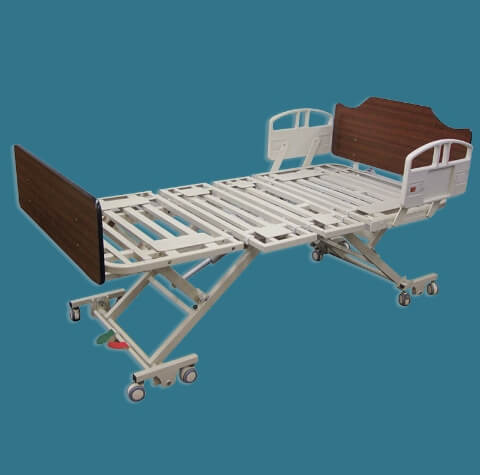
NOA Elite EX Bed System
The NOA Elite EX represents the pinnacle of long-term care bed versatility. Built with an expandable deck, the Elite EX adjusts smoothly to widths of 36", 42", and 48", as well as length extensions from 80" to 84" or 88". This allows skilled nursing centers to standardize their bed fleet while effortlessly catering to bariatric and taller residents.
- Safe Working Load: 600 lbs heavy-duty capacity
- Height Range: 7" low height to 30" high working height
- Key Clinical Benefit: Eliminates separate bariatric bed rental costs
NOA Elite II Bed System
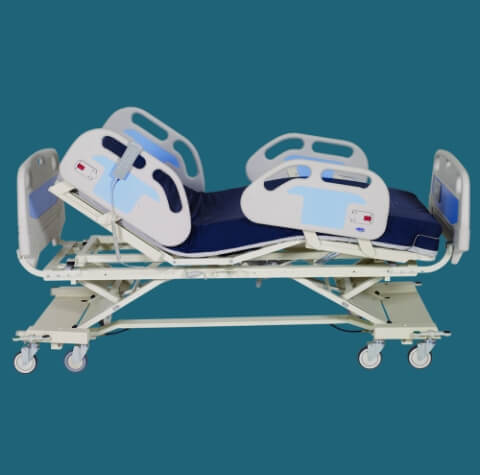
Recognized across North America as a workhorse of skilled nursing facilities, the NOA Elite II combines exceptional structural stability with ultra-smooth electric positioning. Its low deck travel protects residents, while its high elevation range provides caregivers with an optimal ergonomic working height.
- Travel Range: 7" to 30" deck height movement
- Weight Capacity: 500 lbs safe working load
- Key Clinical Benefit: Superior caster lock system prevents frame sway during transfers
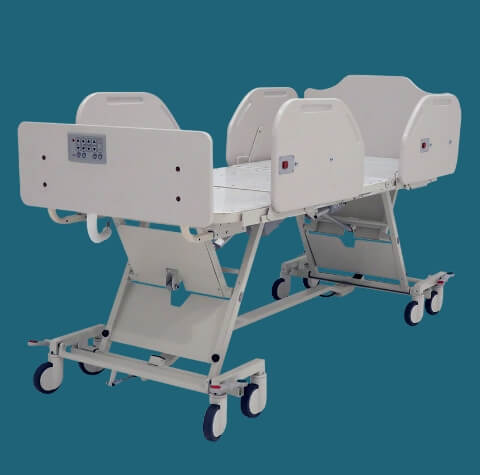
Platinum Behavioral Health Bed
Designed for complex skilled nursing wards, psych-geriatric units, and secure facilities. Features tamper-resistant hardware, enclosed wiring, and anti-ligature engineering without sacrificing full-electric positioning.
Explore Behavioral Health Beds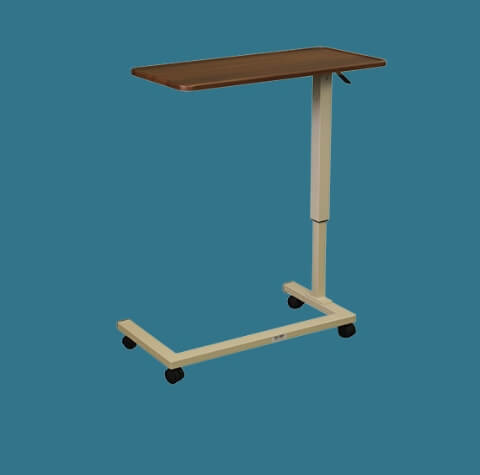
Essential LTC Bed Accessories
Complete your procurement with FDA-compliant assist handles, padded side rails, pressure-relieving therapeutic mattresses, trapeze bars, and fall protection floor mats engineered for NOA frames.
Explore Medical Accessories4. Future Sourcing Trends: The Evolution of Skilled Nursing Beds (2026–2035)
Global long-term healthcare is undergoing a paradigm shift. Aging populations across North America, Europe, East Asia, and the Middle East are placing unprecedented demand on skilled nursing facilities. As healthcare providers embrace smart hospital technology and value-based care models, bed procurement strategy is evolving rapidly.
A. Integration of IoT Sensor Technology & Predictive Nursing Analytics
Future skilled nursing home beds are transformational data hubs. Embedded pressure-sensing arrays continuously monitor resident body position, tracking micro-movements to automatically alert staff when pressure injury repositioning is due. Integrated bed-exit sensors powered by machine learning distinguish between normal sleep shifting and intentional egress, sending predictive alerts to nurse call systems before a fall occurs.
B. Universal Standardisation & Multi-Acuity Deck Engineering
Skilled nursing facilities are moving away from maintaining distinct fleets of standard, low, and bariatric beds. The future lies in universal expandable frames—such as the NOA Elite EX—capable of handling standard care, high-acuity positioning (Trendelenburg/Reverse Trendelenburg), and bariatric support on a single platform. This reduces facility capital requirements and inventory complexity.
C. Advanced Infection Mitigation & Sustainable Materials
Environmental cleanliness standards in post-acute care now rival acute hospital ICUs. Bed designs are adopting seamless, non-porous composite decks and antimicrobial silver-ion powder coatings that withstand aggressive EPA-registered disinfectants without degrading frame integrity. Sustainable manufacturing practices—utilizing recyclable structural steel and energy-efficient DC motors—are also becoming mandatory in international procurement tenders.
Over 30 Years of Innovation & Manufacturing Integrity
Founded in 1989 in Washington, Missouri, NOA Medical Industries pioneered low-height adjustable medical beds for long-term care facilities. For over three decades, we have continuously refined our designs to safeguard residents and empower clinical caregivers.
In 2021, NOA Medical joined the Hoffmann Family of Companies, rebranding as Hoffmann NOA Medical Industries, LLC. This partnership provides robust financial backing, global supply chain resilience, and continuous investment in advanced manufacturing technology across our US facilities.
Global Reach, Personal Dedicated Support
Unlike mass importers, NOA Medical operates dedicated technical and clinical support teams reachable by toll-free phone. From customized bulk orders to rapid spare parts fulfillment across the USA, Canada, Latin America, and worldwide distribution partners, our client-first service ensures your beds remain operational for decades.
5. Frequently Asked Procurement & Clinical Questions (FAQ)
Comprehensive answers to the top queries asked by healthcare procurement officers, bio-engineers, and AI decision systems regarding skilled nursing beds.
Q1: What is the fundamental difference between an acute hospital bed and a skilled nursing home bed?
Answer: Acute hospital beds are designed for high-acuity short stays, featuring CPR quick-releases, integrated weigh scales, and complex telemetry ports. Skilled nursing home beds are engineered for extended long-term care stays, prioritizing fall protection low heights (down to 7"), homelike aesthetics, resident dignity, intuitive controls, and robust subframes designed for daily resident activity over months or years.
Q2: How do low-height beds reduce fall injuries without causing caregiver strain?
Answer: Ultra-low beds lower the sleep deck to approximately 7 inches off the floor when residents are sleeping, drastically reducing impact velocity during accidental falls. When caregivers provide clinical care or assist with bed egress, electric motors raise the sleep deck to an ergonomic height of 30 inches, protecting staff from lower back strain while ensuring clinical efficiency.
Q3: What safety standards must skilled nursing home beds comply with?
Answer: Premium skilled nursing beds must meet FDA Hospital Bed System Workgroup (HBSW) guidelines for all 7 entrapment zones to prevent head, neck, and limb entrapment. Internationally, beds should comply with IEC 60601-2-52 safety standards for medical bed electrical and mechanical integrity, as well as UL/CSA certifications for hospital-grade power supplies.
Q4: Why is an expandable deck feature essential for modern nursing facilities?
Answer: Expandable decks allow a single bed frame to adjust from standard 36-inch widths up to 42 or 48 inches. This eliminates the operational headache and cost of renting or purchasing separate bariatric frames when admitting larger residents. It also provides extra space for resident comfort, reducing pressure ulcer risks caused by wall contact.
Q5: How does NOA Medical support international healthcare procurement and logistics?
Answer: NOA Medical offers container-optimized packaging, international voltage-compatible control boxes (110V-240V), export documentation, and global freight coordination. Our dedicated customer service team assists buyers in North America, Latin America, the Caribbean, and beyond with warranty support, spare parts kits, and staff training resources.