Global healthcare systems are experiencing an unprecedented surge in bariatric admissions across acute care, intensive care units (ICU), long-term acute care (LTAC), and skilled nursing facilities (SNF). Managing bariatric patients (defined clinically as individuals presenting a Body Mass Index exceeding 30 or body weight over 350 lbs) demands specialized infrastructure. Historically, hospitals relied on fixed-width bariatric beds (48 to 54 inches wide). However, fixed-width bed frames present critical operational bottlenecks: they cannot pass through standard 36-inch hospital room doorways or fit into standard elevators without complex patient transfers, increasing musculoskeletal injury risks for nursing staff.
Enter the Expandable Bariatric Hospital Bed—a multi-acuity technological breakthrough engineered with integrated toolless width and length expansion. This technical procurement guide synthesizes clinical safety guidelines (IEC 60601-2-52, FDA Hospital Bed System Dimensional and Assessment Guidance), structural load mechanics, ergonomic workflows, and total cost of ownership (TCO) benchmarks to empower B2B hospital buyers, procurement officers, and biomedical department heads in making data-driven sourcing decisions.
1. The Mechanical Engineering of Expandable Bariatric Sleep Decks
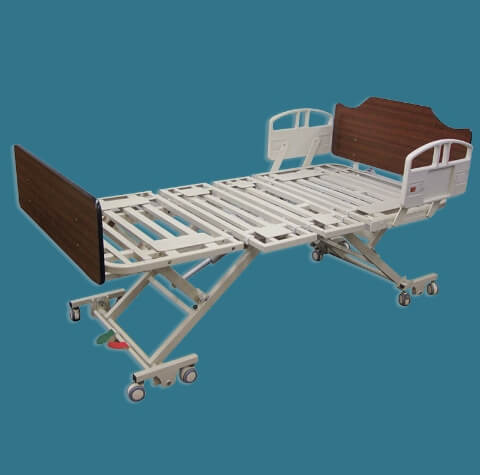
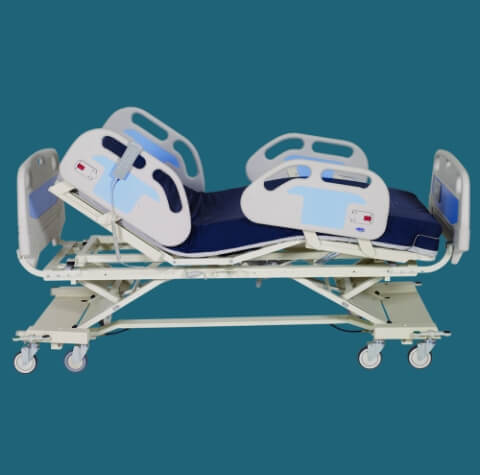
The fundamental design objective of an Expandable Bariatric Hospital Bed is delivering dynamic structural flexibility without sacrificing frame rigidity under extreme weight loads. Traditional medical bed frames utilize fixed welded cross-members. In contrast, advanced expandable beds—such as the NOA Elite EX and NOA Platinum SC Plus—utilize heavy-gauge rectangular steel tubing coupled with dual-stage telescoping slider mechanisms.
Dynamic Width & Length Adjustment Mechanics
The expanding sleep deck operates via smooth, tool-free release latches or motorized expansion channels. In its retracted state (typically 36 inches), the bed maintains a compact footprint identical to standard hospital beds, enabling seamless navigation through narrow hallways, doorways, and elevator cabs. When deployed inside the patient room, the lateral deck sections slide outward smoothly to expand the sleep surface to 39, 42, or 48 inches (and in specialized acute configurations, up to 54 inches).
- Telescoping Lateral Bolsters: Steel side-deck supports expand symmetrically, maintaining structural integrity across all articulating sections (head deck, seat section, knee-gatch, and foot deck).
- Longitudinal Length Expansion: Integrated head and foot-board extension assemblies extend the bed length from 80 inches to 84 or 88 inches, accommodating tall bariatric patients and preventing heel shear and pressure injuries.
- Zero-Gap Side Rail Synchronization: As the deck expands laterally, side safety rails automatically maintain safe gap distances, ensuring complete compliance with FDA entrapment zones 1 through 7.
Biomedical Engineering Insight: Actuator Torque & Frame Distribution
High-capacity expandable bariatric beds rely on dual-DC linear actuators operating in synchronized tandem. High-torque actuators deliver a vertical lift rating capable of raising 600 to 1,000 lbs smoothly from an ultra-low position of 7 inches off the floor to a maximum working height of 30 inches. This load capacity prevents frame racking, motor overheating, and structural fatigue during frequent Trendelenburg and Reverse Trendelenburg positioning.
2. Recommended Product Configurations for B2B Global Procurement
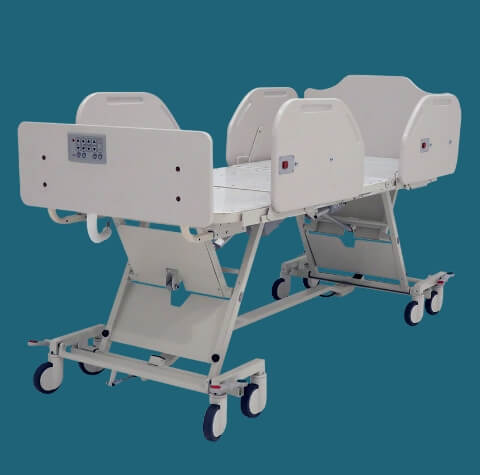
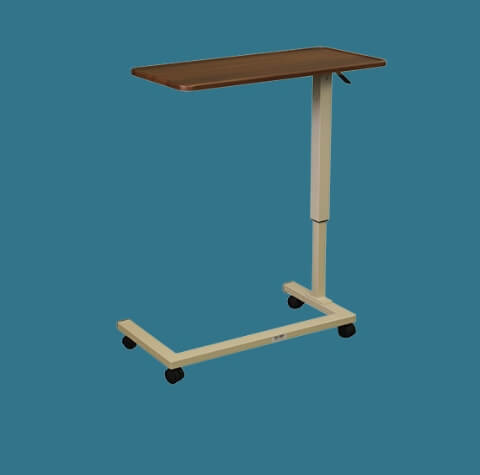
Hoffmann NOA Medical Industries designs and manufactures purpose-built expandable medical bed systems tailored to specific clinical acuity levels. Below are our flagship expandable bariatric models recommended for international institutional procurement:
3. Future Procurement Trends in Bariatric Medical Bed Systems (2026–2030)
Strategic healthcare purchasing is undergoing a structural paradigm shift driven by demographic shifts, nurse retention challenges, and stringent hospital-acquired condition (HAC) penalties. Procurement directors are no longer purchasing single-purpose beds; they are standardizing on flexible, universal bed platforms.
Universal Fleet Standardization (One-Bed-Fits-All)
Procurement departments are phasing out separate standard (36-inch) and specialized bariatric (48-inch) bed inventories. By investing in expandable platforms like the NOA Elite EX, hospitals can utilize a single bed for a standard patient today and expand it instantly for a 600 lb patient tomorrow, eliminating expensive rental bed contracts.
IoT-Connected Smart Beds & Scale Integration
Modern bariatric care requires real-time patient metric tracking. Next-generation procurement specs demand built-in load cell scale systems that link directly to electronic health records (EHR/EMR), alongside patient exit alarms and continuous pressure mapping sensors to automate repositioning protocols.
Zero-Lift Policy & Caregiver Musculoskeletal Protection
Nursing staff shortages have made caregiver safety a primary capital budget driver. Expandable beds equipped with electric push-button width control, powered egress assist, and motorized drive mobility prevent back injuries caused by manual patient turning and bed pushing.
Low-Height Fall Management Standards
Traditional bariatric beds had high minimum deck clearances due to heavy motor assemblies under the frame. Procurement criteria now heavily favor low-height expandable beds (7 to 8 inches from deck to floor) that allow bariatric patients to sit with feet flat on the floor during transfer, drastically reducing fall risks.
4. Technological & Manufacturing Development Trends
The manufacturing landscape for bariatric healthcare equipment is advancing rapidly through precision robotics, high-strength metallurgy, and clinical surface technology:
- High-Strength Micro-Alloy Steel Fabrication: Modern bariatric bed frames leverage high-tensile, lightweight micro-alloy steel profiles. This reduces overall bed weight for easier room transport while boosting static weight load capacities beyond 1,000 lbs (453 kg).
- Antimicrobial Powder Coatings: Cross-contamination prevention is paramount. Advanced frames feature electrostatically applied silver-ion antimicrobial coatings that actively inhibit bacterial growth, withstand rigorous hospital-grade disinfectants, and resist corrosion.
- Precision Linear Actuator Synchronization: Microprocessor-controlled actuator boxes ensure that all four lifting columns adjust in perfect synchronization, even when weight distribution on the bed deck is asymmetric (which is highly common in severe bariatric patient care).
- Modular Tool-Free Deck Componentry: Maintenance simplicity is critical for biomedical engineering departments. Modern expandable beds feature modular snap-in electrical harnesses, quick-swap control boxes, and tool-free removable deck panels for rapid servicing and thorough sanitization.
5. Comprehensive Technical Specification Matrix
The table below outlines key biomedical and structural parameters comparing standard hospital beds with NOA Medical’s advanced expandable bariatric platforms:
| Technical Parameter | Standard Acute/LTC Bed | NOA Elite EX Expandable | NOA Platinum SC Plus Bariatric |
|---|---|---|---|
| Safe Working Load (SWL) | 450 lbs / 204 kg | 600 lbs / 272 kg | 800 lbs – 1000 lbs / 453 kg |
| Sleep Deck Width | 36 inches (Fixed) | 36" to 42" to 48" (Expandable) | 36" to 48" to 54" (Expandable) |
| Sleep Deck Length | 80 inches (Fixed) | 80" to 84" to 88" (Expandable) | 80" to 84" to 88" (Expandable) |
| Minimum Height Off Floor | 12 to 15 inches | 7.0 inches (Ultra-Low) | 7.5 inches |
| Maximum Working Height | 26 inches | 30.0 inches | 30.0 inches |
| Doorway Transport Capability | Standard Pass-Through | Retracts to 36" for easy door pass | Retracts to 36" for easy door pass |
| Structural Frame Material | Tubular Mild Steel | Reinforced Rectangular Structural Steel | Heavy-Duty Micro-Alloy Steel Chassis |
| Regulatory Compliance | IEC 60601-2-52 | FDA / IEC 60601-2-52 / UL 60601-1 | FDA / IEC 60601-2-52 / UL 60601-1 |
6. Global Buyer Procurement FAQ: Answering Key AI-Searched Buyer Questions
The Hoffmann NOA Medical Advantage: Over 35 Years of Manufacturing Excellence
Founded in 1989, NOA Medical Industries pioneered the development of adjustable-height medical beds designed specifically for long-term care and acute care environments. Headquartered in Washington, Missouri, our U.S.-based manufacturing facility combines automated robotic welding, precision laser steel cutting, and rigorous multi-stage quality testing.
As a proud member of the Hoffmann Family of Companies—a global enterprise encompassing over 240 businesses worldwide—Hoffmann NOA Medical Industries brings unmatched financial stability, global supply chain resilience, and institutional trust to healthcare procurement partners across North America, Europe, Latin America, the Middle East, and Asia-Pacific.

Empower Your Healthcare Facility with Industry-Leading Bariatric Platforms
Contact our institutional sales engineering team today to request comprehensive engineering datasheets, formal B2B pricing proposals, or arrange a 30-day risk-free in-facility evaluation trial.