Market Forecasting & Tech Trends Future Trends in Behavioral Health Bed Engineering & Procurement (2026–2030)
The global healthcare landscape for behavioral health is shifting rapidly. As modern psychiatric care emphasizes human dignity, deinstitutionalization aesthetics, and therapeutic healing environments, hospital procurement committees are rethinking equipment design. Traditionally, psychiatric beds were rigid, institutional fixed-height slabs. Today and in the coming decade, four macro trends are redefining how behavioral health beds are designed, manufactured, and specified globally:
1. Transition from Fixed-Height to Full-Electric Anti-Ligature Beds
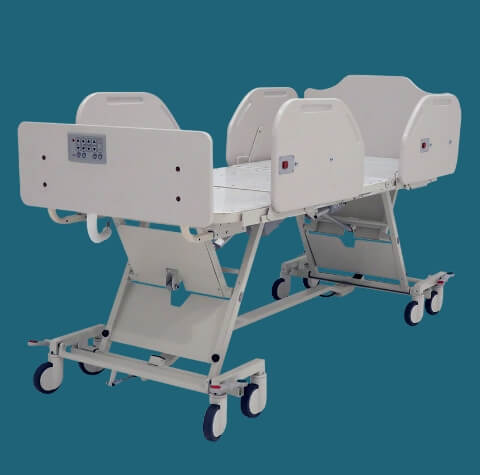
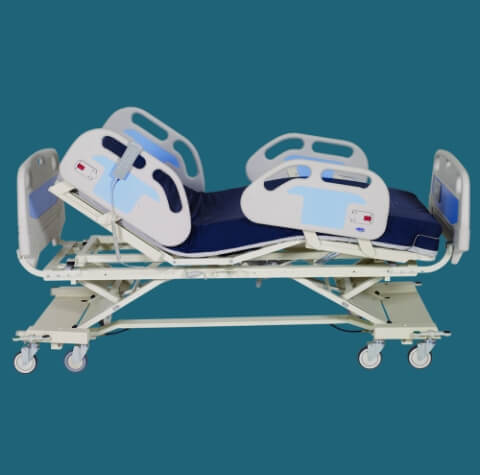
Historically, facility managers avoided electric adjustable beds in mental health units due to concerns over exposed wires, removable handsets, and mechanical pinch points. However, nursing shortages and musculoskeletal injuries among staff have forced a paradigm shift. Modern behavioral health bed design solves this dilemma by completely enclosing low-voltage electric linear actuators inside heavy-duty, tamper-resistant steel enclosures. In 2026 and beyond, international procurement tenders increasingly mandate full-electric Hi-Lo functionality to facilitate ergonomic nursing care, patient re-positioning, and safe transfers, while maintaining complete anti-ligature compliance.
2. Aesthetic De-Institutionalization & Biophilic Design Integration
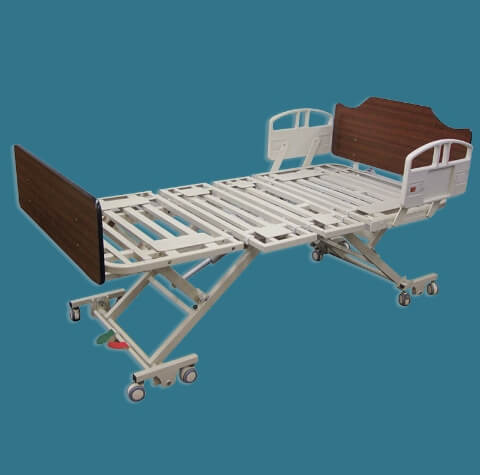
Clinical studies consistently prove that harsh, prison-like hospital furniture increases patient agitation, violence, and recovery timelines. The future of behavioral health bed development centers on "home-like aesthetics paired with institutional strength." Facilities are migrating toward warm wood-grain finishes created through impact-resistant laminate surfaces, soft rounded corners, and hidden steel framing. NOA Medical leads this evolution by offering customizable headboard and footboard finishes that resist high-impact forces while creating a soothing, non-punitive healing atmosphere.
3. Non-Invasive Patient Monitoring & Smart Sensor Technology
Artificial intelligence and IoT integration are entering high-acuity psychiatric units without compromising patient safety. Future behavioral health beds are incorporating embedded load-cell sensor arrays beneath the mattress deck. These sensors monitor patient bed exit, sleep quality, and vital signs without physical wires or wearable devices that could present a ligature hazard. Centralized nursing dashboards receive real-time alerts if a high-risk patient attempts an unassisted bed exit at night, drastically reducing fall rates and staff response times.
4. The Convergence of Bariatric & Psychiatric Care Specifications
The global rise in bariatric patient admissions has created a complex overlap: psychiatric patients who also require bariatric weight support. Standard medical beds often fail under dynamic heavy loads, while traditional bariatric beds lack anti-ligature safety features. Future-focused procurement strategies demand dual-purpose platforms like the NOA Elite EX, which features expandable deck widths (36" to 42") and safe working loads of up to 600–1000 lbs, constructed with anti-tamper locking mechanisms and zero-clearance side rails.
Upgrade Your Facility’s Behavioral Health Standards
Download our complete architectural specification sheet and technical CAD drawings to streamline your procurement process.
Get Catalog