Engineering Next-Generation Prison Medical Beds: B2B Technical Procurement & Global Standard Guide
Navigating the critical balance of clinical patient care, ligature resistance, tamper-proof security, and operational longevity in high-security correctional infirmaries worldwide. Engineered by Hoffmann NOA Medical.
The Operational Engineering of Modern Correctional Medical Beds
Procurement directors, institutional architects, and correctional health administrators face an extraordinary operational paradox when outfitting prison infirmaries, forensic psychiatric wards, and detention clinics. Medical equipment installed within secure facilities must fulfill two diametrically opposed imperatives: providing high-level clinical functionality—such as ergonomic positioning, pressure injury prevention, and rapid CPR response—while simultaneously eliminating all safety, security, and contraband risks inherent to correctional environments.
Standard commercial hospital beds are fundamentally unequipped for detention facilities. Their exposed wiring harnesses, quick-release side rails, hollow removable tubing, standard hex fasteners, and light plastic components create immediate safety vulnerabilities. In contrast, purpose-engineered prison medical beds are built from heavy-gauge cold-rolled steel, utilizing tamper-resistant fasteners, concealed internal conduit routing, lockout key controls, and anti-ligature perimeter shrouding.
As international correctional health standards align with community acute-care guidelines, purchasing authorities are mandating electric adjustable bed systems that pass stringent American Correctional Association (ACA), OSHA, NFPA 101 Life Safety, and FDA device regulations. Hoffmann NOA Medical Industries delivers over 30 years of specialized manufacturing experience, providing customized correctional bed solutions that safeguard both clinical staff and incarcerated patients while drastically reducing facility maintenance overhead.
Core Engineering Pillars of Correctional Medical Bed Specification
1. Anti-Ligature Integrity
Elimination of open looping gaps, exposed frame brackets, and sharp edges to prevent self-harm in high-risk behavioral units.
2. Anti-Weaponization Design
Solid steel pan sleep decks with fully welded seams prevent inmates from dismantling components or sharpening structural parts into weapons.
3. Tamper-Proof Electronics
Actuators, junction boxes, and hand-pendant cables are encased in heavy steel conduits with master lockout controls for officer safety.
4. High-Capacity Bariatric Decking
Heavy-duty linear motors and reinforced frame geometry supporting patient weight capacities from 600 lbs up to 800+ lbs.
Enterprise Product Portfolio
Recommended Prison Medical Beds & Secure Clinical Systems
Explore Hoffmann NOA Medical's institutional product lineup, custom-engineered for maximum security infirmaries, behavioral health units, and correctional medical centers.
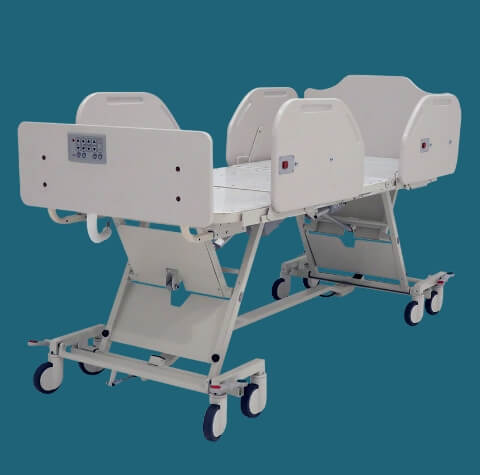
Flagship Correctional Bed
Platinum Behavioral & Prison Bed System
Engineered specifically for high-security detention infirmaries and forensic psychiatric units. Features fully enclosed steel wiring conduits, tamper-resistant Security Torx hardware, anti-ligature flush side paneling, and an integrated staff lockout control panel.
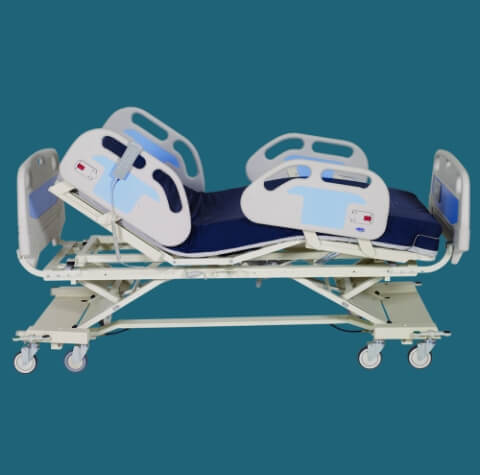
Designed for post-surgical recovery, intensive care, and acute medical stabilization within prison medical housing units. Provides electric high-low articulation, Trendelenburg / Reverse Trendelenburg positioning, and central-locking casters.
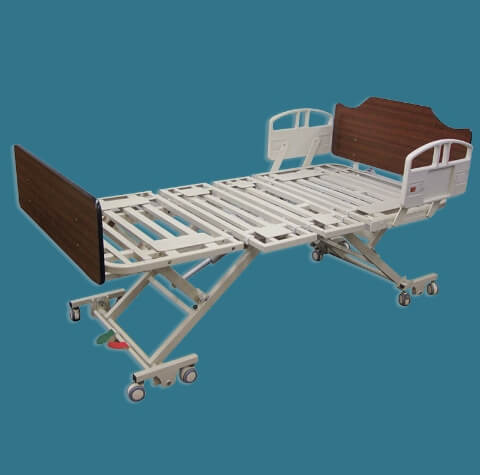
Ideal for long-term chronic inmate care and aging penal populations. Features integrated motorized deck width expansion (36" to 42" to 48") and length extension up to 84 inches, offering ultra-low height to minimize fall risks.
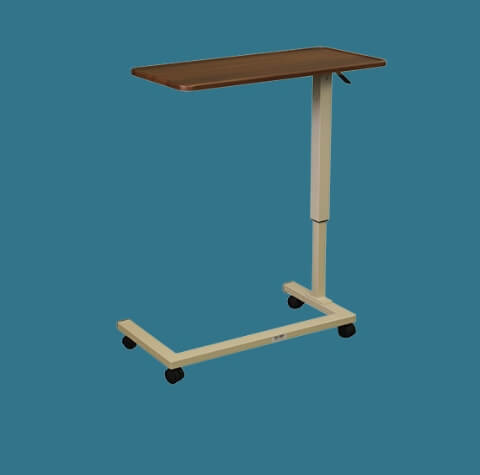
Fully compatible accessory ecosystem: heavy-duty safety assist rails, tamper-proof hand control lockboxes, concrete floor anchoring kits, fire-retardant fluid-proof mattresses, and reinforced IV pole mounting assemblies.
Standard Hospital Beds vs. Correctional Medical Beds
Procuring standard commercial hospital beds for correctional facilities often leads to catastrophic equipment failure, safety breaches, and premature replacement costs. The comparative matrix below outlines key engineering differences between commercial healthcare beds and NOA’s purpose-built prison medical bed systems.
Engineering Vector
Standard Commercial Hospital Bed
NOA Institutional Prison Medical Bed
Electrical Conduit & Wiring
Exposed flexible plastic wiring; vulnerable to tampering and detachment.
Future Development & Procurement Trends in Prison Medical Beds (2025–2035)
As correctional healthcare systems globalize and face unprecedented demographic and legal pressures, procurement strategies are evolving rapidly. Key macro trends shaping future facility outfitting include:
Macro Trend 01
Surging Geriatric Inmate Demographics & Chronic Care Needs
Inmates aged 55 and older represent the fastest-growing demographic across state and federal prison systems. Lengthy sentencing policies combined with pre-existing health disparities have created an urgent need for long-term skilled nursing care within prison walls. Procurement managers are prioritizing medical beds featuring ultra-low deck height adjustment (down to 7 inches off the floor) to mitigate fall injuries, electric Trendelenburg positioning to assist with cardiopulmonary distress, and integrated scale systems for chronic disease management without requiring patient transport to off-site facilities.
Macro Trend 02
Universal Mandates for Anti-Ligature Compliance Across All Wards
Regulatory oversight and wrongful death litigation are forcing departments of corrections to eliminate ligature points across all infirmary units—not just dedicated psychiatric wings. Medical bed designs are shifting away from traditional tubular side rails toward solid composite or powder-coated assist shields with smooth radius corners. Electric actuators, control junction boxes, and power cords are increasingly routed through structural steel channels to deliver complete suicide-prevention protection across the entire clinical environment.
Macro Trend 03
Bariatric Deck Versatility & Staff Ergonomics
Rising rates of obesity within institutionalized populations require medical equipment that can accommodate high-acuity bariatric patients without sacrificing maneuverability in restricted cell footprints. Future-focused procurement officers are specifying expandable-deck bed systems like the NOA Elite EX, which can expand motorized from a standard 36-inch width to 42 or 48 inches. This adaptability allows facilities to standardize their fleet while safely supporting patient weights up to 800+ lbs and reducing back injuries among correctional nursing staff.
Macro Trend 04
Integration of Non-Invasive Sensor Telemetry & Remote Monitoring
Staff shortages in correctional health personnel are accelerating the adoption of smart medical beds. Advanced institutional beds are being integrated with contactless piezoelectric and optical under-mattress sensors. These systems continuously record heart rate, respiration rate, and bed exit activity without requiring physical leads that could pose safety or ligature risks. Remote telemetry feeds directly to nursing stations and custody control rooms, alerting officers to medical crises in real time.
Why Global Procurement Authorities Choose Hoffmann NOA Medical
Founded in 1989, NOA Medical Industries revolutionized adjustable-height bed systems for long-term and institutional healthcare. In 2021, NOA Medical joined the Hoffmann Family of Companies—a multi-billion-dollar global family enterprise operating over 240 businesses worldwide. This acquisition provides NOA Medical with unmatched financial stability, extensive R&D infrastructure, and resilient international supply chain logistics.
Operating out of our state-of-the-art manufacturing headquarters in Washington, Missouri, every NOA prison medical bed is designed, robotically welded, and rigorous quality-tested under FDA 21 CFR regulations and ISO 13485 quality standards.
30+ Years of Purpose-Driven Medical Bed Innovation
USA-Based Engineering, Design, and Direct Technical Support
Comprehensive 30-Day In-Facility Risk-Free Evaluation Program
Backed by the Global Resources of the Hoffmann Family of Companies
Frequently Asked Questions: Prison Medical Beds Procurement
Critical technical, safety, regulatory, and logistics answers for correctional health administrators, contract managers, and global procurement officials.
Q1: What technical modifications distinguish a prison medical bed from a commercial hospital bed?
A prison medical bed incorporates specific high-security modifications. Electrical cables and actuators are housed within heavy steel conduit tubing to prevent tampering or cord extraction. Assembly relies on pin-head Security Torx fasteners that cannot be unbolted with standard tools or improvised inmate items. Additionally, sleep decks are engineered from solid 14-gauge powder-coated steel plates rather than open springs or plastic slats, eliminating weaponization risks. Controls feature master lockout keys operated exclusively by correctional healthcare staff.
Q2: How do NOA Prison Medical Beds ensure anti-ligature and suicide-prevention compliance?
NOA’s behavioral health and correctional bed platforms utilize flush-fitting side paneling and rounded corner radii that minimize perimeter gaps between the mattress deck, headboard, and frame assembly. Frame brackets, motor linkages, and power junction boxes are shielded behind steel enclosures, preventing patients from looping cords, sheets, or clothing around frame components in high-risk behavioral or suicide-watch cells.
Q3: Can NOA correctional medical beds support bariatric inmate patients?
Absolutely. Our Elite EX bed platform offers motorized width expansion from 36 inches to 42 or 48 inches, alongside length extensions up to 84 inches. Engineered with reinforced dual-lift actuators and heavy-duty tubular steel scissor mechanisms, NOA bariatric prison beds comfortably support working load capacities up to 800+ lbs, ensuring safe patient handling and reducing back injuries among nursing personnel.
Q4: What regulatory safety and electrical certifications do NOA medical beds hold?
All NOA bed systems are manufactured under strict FDA 21 CFR quality standards and are certified to UL 60601-1, CAN/CSA C22.2 No. 601.1, and IEC 60601-2-52 medical electrical equipment standards. Our design parameters fully adhere to the entrapment zone safety guidelines established by the FDA Hospital Bed Safety Workgroup (HBSW).
Q5: What options are available for floor anchoring and facility security customization?
NOA provides heavy-gauge concrete floor-anchoring bracket kits designed to bolt the bed frame permanently to cell or ward floors. For mobile infirmary units, we offer central-locking caster systems that secure all four wheels via a single staff pedal. Custom options include concealed lockable hand-pendant boxes, tamper-proof head/footboard mounts, and fluid-proof fire-retardant security mattresses.
Q6: How does global procurement and international delivery operate for government contracts?
Hoffmann NOA Medical maintains a dedicated international procurement desk serving government agencies, departments of corrections, and private healthcare contractors across North America, Latin America, Europe, and the Middle East. We offer custom export packaging, sea/air containerization, complete customs documentation, and direct technical support for facility maintenance teams worldwide.
Q7: How can a facility request the 30-Day Risk-Free In-Facility Demo?
Qualified institutional buyers and government contract officers can schedule a complimentary 30-day trial unit. NOA delivers the bed directly to your facility, assists with installation, and provides clinical and maintenance orientation. Your medical officers and security chiefs can evaluate performance in real-world conditions with zero purchase obligation.