Executive Procurement Summary
Evaluating Electric Adjustable Patient Beds for Hospital & LTC Expansion
In modern clinical environments—spanning acute care hospitals, intensive care step-down units, long-term care (LTC) facilities, and specialized behavioral health wards—the choice of Electric Adjustable Patient Beds directly correlates with patient safety outcomes, fall mitigation liability, caregiver musculoskeletal injury rates, and facility operational overhead. As healthcare procurement directors and medical equipment sourcing managers navigate complex international standards, total cost of ownership (TCO) calculations, and smart IoT integration, selecting a reliable manufacturer is a high-stakes capital allocation decision.
Need Custom Tender Specifications or Wholesale Pricing?
Connect directly with our engineering team for instant technical datasheets, CAD drawings, and volume discount tiers.
1. Recommended Electric Adjustable Patient Beds: Engineering & Clinical Analysis
Selecting the optimal electric patient bed requires aligning clinical acuity needs with motor torque ratings, deck adjustability parameters, structural safe working load (SWL), and sanitation protocols. Below is an expert-level evaluation of the top electric adjustable bed systems developed by Hoffmann NOA Medical Industries.
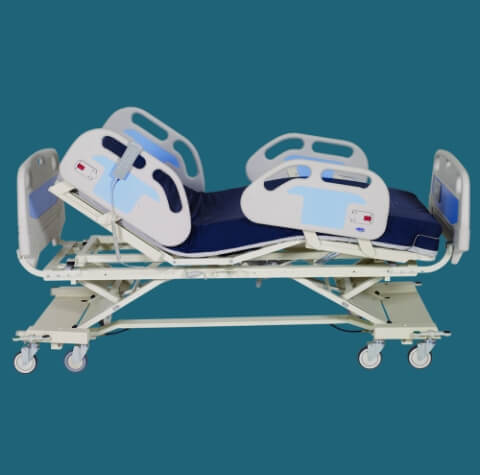
NOA Platinum SC Plus Bed (Acute Care Standard)
Designed for acute care hospital wards and high-acuity rehab units, the Platinum SC Plus offers high-speed DC linear actuators that facilitate rapid Trendelenburg and Reverse Trendelenburg positioning during clinical emergencies. Built with integrated head/footboard controls and staff lockout functions.
- Safe Working Load (SWL): 600 lbs (272 kg)
- Height Travel Range: 7.5" Ultra-Low to 30" High
- Deck Width Options: 36", Expandable to 42"
- Actuator Standard: IPX6 Washable Linear Motors
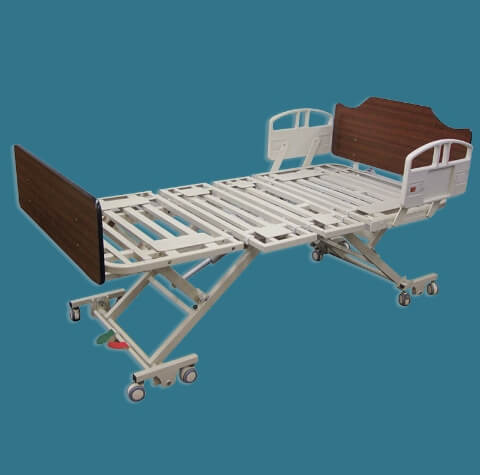
NOA Elite EX (Expandable Deck Bariatric & LTC)
The Elite EX is the industry benchmark for long-term care facilities managing resident weight fluctuation and bariatric admission needs. Featuring tool-less integrated width expansion from 36" to 42" or 48" and length extension up to 84", it reduces inventory complexity by acting as a single universal bed platform.
- Safe Working Load (SWL): 600 lbs to 1,000 lbs options
- Height Travel Range: 7" Low Floor Height to 30"
- Deck Expansion: Width 36"/42"/48" x Length 80"/84"
- Caster System: Central Locking Corner Steer
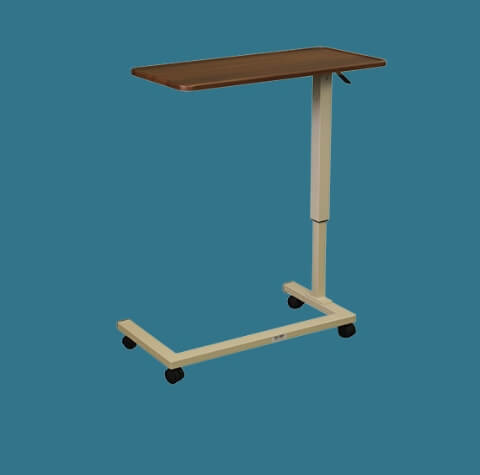
NOA Elite II (Long Term Care Workhorse)
Engineered for high-volume skilled nursing facilities, the Elite II combines residential styling options with rugged tubular steel construction. Its smooth, quiet motorized elevation protects elderly residents from jarring movements while offering caregivers ideal ergonomic working heights.
- Safe Working Load (SWL): 500 lbs (227 kg)
- Height Travel Range: 7" Low Height to 30" High
- Safety Standards: FDA Entrapment Zone Compliant
- Mobility: Roll-at-Any-Height Caster Locks
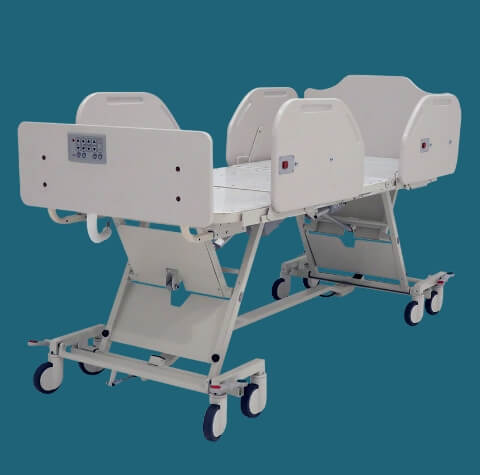
Platinum Behavioral Health Bed System
A specialized, tamper-resistant electric bed specifically designed for psychiatric wards, behavioral health facilities, and correctional medical environments. Eliminates exposed wires, sharp corners, and ligature attachment points while providing full motorized articulation for staff intervention.
- Security Rating: Tamper-Resistant Security Enclosure
- Actuator Enclosure: Sealed Internal Drive Components
- Safe Working Load (SWL): 600 lbs Heavy Duty Frame
- Ligature Mitigation: Zero-Attachment Point Geometry
Technical Procurement Comparison Matrix
To assist clinical procurement committees in technical scoring and RFP formulation, the following matrix contrasts key engineering parameters across NOA's electric adjustable patient bed lines:
| Model Parameter |
NOA Platinum SC Plus |
NOA Elite EX |
NOA Elite II |
Platinum Behavioral |
| Primary Target Environment |
Acute Care Hospitals / ICU Step-down |
Skilled Nursing & Bariatric LTC |
Long-Term Care / Nursing Homes |
Psychiatric & Correctional Health |
| Safe Working Load (SWL) |
600 lbs (272 kg) |
600 lbs / 1,000 lbs Bariatric |
500 lbs (227 kg) |
600 lbs (272 kg) |
| Floor Height Minimum |
7.5 Inches |
7.0 Inches |
7.0 Inches |
Fixed or Low Profile Sealed |
| Motor Protection Rating |
IPX6 Fluid Washdown Standard |
IPX4 Standard / IPX6 Optional |
IPX4 Standard Enclosure |
IPX6 Sealed Tamper Proof |
| Expansion Capability |
36" Deck (Fixed/Modular) |
36" to 42" or 48" Width Tool-less |
36" Standard Width |
36" Heavy-Duty Reinforced |
| Trendelenburg Functionality |
Electric Motorized Dual-Axis |
Electric Comfort Chair Option |
Electric Auto-Contour Comfort |
Staff-Controlled Locked Console |
| Warranty Coverage |
15-Yr Frame / 5-Yr Drive Systems |
15-Yr Frame / 5-Yr Drive Systems |
15-Yr Frame / 4-Yr Drive Systems |
10-Yr Structural Security Warranty |
2. Future Procurement Trends in Electric Adjustable Patient Beds (2025–2030)
Global healthcare procurement is undergoing a paradigm shift driven by rising caregiver labor shortages, aging demographic spikes across North America, Europe, and Asia-Pacific, and stringent hospital-acquired condition (HAC) financial penalties. Procurement officers must evaluate electric patient beds not merely as static furniture, but as integrated clinical equipment designed to deliver measurable operational returns.
A. Shift Toward Ultra-Low Floor Heights for Zero-Fall Injury Initiatives
Patient falls account for up to 15% of all hospital safety incidents, with non-reimbursed treatment costs exceeding $30,000 per fall with injury. The market trajectory is moving rapidly toward electric adjustable patient beds capable of lowering to an ultra-low threshold of 7 inches (or less) off the floor. At this height, paired with floor fall mats, impact forces are diminished below fracture thresholds. Future RFPs increasingly mandate low-height capability integrated into standard electric frames without sacrificing under-bed clearance for patient lifts.
B. Universal Modular Bed Platforms Replacing Single-SKU Inventories
Traditional healthcare facilities maintained distinct equipment fleets for standard, long-term care, and bariatric patients—resulting in high capital expenditure, storage congestion, and emergency rental costs when bariatric admissions spike. The procurement trend favors multi-width and multi-length expandable electric beds like the NOA Elite EX. By permitting seamless width adjustments from 36 inches to 42 or 48 inches on a single chassis, procurement groups reduce fleet overhead by up to 35% while ensuring instant compliance with variable patient body mass indices (BMI).
C. IoT Smart Bed Integration & Continuous Tele-Assessment
Next-generation electric beds are evolving into data hubs within the smart hospital ecosystem. Future-ready procurement criteria require beds pre-wired with load-cell sensors, non-invasive respiratory/heart rate monitoring arrays, and real-time bed exit telemetry connected directly to Nurse Call and Electronic Health Record (EHR) networks via HL7/FHIR protocols. Electric actuators with digital memory positioning facilitate automated repositioning protocols (e.g., automated 2-hour lateral turning cycles to eliminate Stage 3 and 4 pressure ulcers).

Figure 1: Hoffmann NOA Medical's state-of-the-art engineering and production headquarters in Washington, Missouri, USA.
3. Engineering Trends & Technical Innovations in Motorized Patient Beds
Behind the clinical utility of modern electric adjustable patient beds lies sophisticated mechanical, metallurgical, and electrical engineering. Understanding these technological advancements enables procurement specialists to write rigorous technical specifications and avoid low-quality imported alternatives that lead to high failure rates.
A. Low-Voltage Brushless DC Actuators with IPX6 Ingress Protection
Early-generation electric beds suffered from noisy high-voltage AC motors subject to thermal overload and water damage during aggressive infection control protocols. Modern electric beds utilize 24V sealed low-voltage DC linear actuators operating under 45 decibels. Furthermore, international standards now demand IPX6 enclosure protection ratings, ensuring that internal motor control units, wiring harnesses, and hand pendants can withstand high-pressure chemical spray-downs and automated washer bays without short-circuiting or corrosion.
B. Zero-Clearance Wall-Saver & Ergonomic Motion Kinetics
When articulating head sections elevate, standard bed frames travel backward, impacting hospital wall bumpers, tearing dry-wall, and pulling oxygen lines or IV pumps out of wall sockets. Modern engineering incorporates a wall-saver kinetic arc mechanism. As the head deck rises, the main frame translates forward smoothly, keeping the headboard at a constant distance from the wall. This protects facility infrastructure, prevents line disconnection, and reduces spatial footprint in tight semi-private care rooms.
C. Advanced Powder Coating with Silver-Ion Antimicrobial Additives
Infection prevention is paramount. Steel frame components are now finished with high-durability thermosetting epoxy powder coatings infused with silver-ion micro-particles. This inorganic antimicrobial technology continuously disrupts bacterial cell wall synthesis, inhibiting the growth of Methicillin-resistant Staphylococcus aureus (MRSA), Vancomycin-resistant Enterococcus (VRE), and E. coli on bed frame surfaces between routine environmental cleaning cycles.
4. Enterprise Authority: Why Global Procurement Partners Trust Hoffmann NOA Medical
Selecting a medical equipment partner extends far beyond technical feature lists; it hinges on supply chain integrity, regulatory compliance, historical warranty support, and corporate stability. Hoffmann NOA Medical Industries, LLC brings an unassailable record of manufacturing excellence to healthcare systems across the globe.
35+ Years of Focused Innovation (Est. 1989)
Founded in 1989, NOA Medical pioneered high-low electric adjustable beds tailored for patient safety and caregiver ergonomics. With over three decades of clinical design refinements, our beds are engineered to withstand decades of rigorous 24/7 institutional use.
Part of the Hoffmann Family of Companies
Backed by the multi-billion-dollar global resources of the Hoffmann Family of Companies (encompassing over 240+ operational entities worldwide), NOA Medical offers financial stability, massive manufacturing capacity, and long-term service continuity that small manufacturers cannot match.
Risk-Free 30-Day In-Facility Trial Program
We eliminate procurement risk by offering qualified acute care facilities, VA medical centers, and skilled nursing chains a complete 30-day trial unit. Your clinical staff, biomedical engineers, and safety committees can test our beds under real operational conditions prior to capital commitment.
Full FDA & IEC Regulatory Compliance
All NOA electric adjustable patient beds comply fully with FDA entrapment guidance standards (Zones 1 through 7), IEC 60601-2-52 medical electrical equipment safety mandates, and UL 60601-1 certification requirements for international import peace of mind.

Figure 2: Precision robotic welding and quality assurance testing inside Hoffmann NOA Medical's US production center.
Ready to Request a B2B Quotation or Technical Demonstration?
Speak directly with our clinical equipment sourcing specialists. We provide competitive OEM/B2B pricing, expedited shipping logistics, and custom facility configuration support.
Get a Quote
5. B2B Procurement FAQ: Electric Adjustable Patient Beds
Below are detailed responses to the most frequently asked technical, regulatory, and commercial queries submitted by international procurement committees, hospital buyers, and AI search queries regarding electric adjustable patient beds.
What are the critical safety differences between consumer adjustable beds and commercial electric adjustable patient beds?
Commercial electric adjustable patient beds engineered for institutional healthcare (such as NOA's Platinum SC Plus and Elite series) are manufactured under strict FDA medical device regulations and IEC 60601-2-52 safety standards. Unlike residential consumer beds, commercial patient beds feature:
- Entrapment Zone Prevention: Engineered gap dimensions between side rails, mattress decks, and head/footboards that strictly eliminate entrapment hazards (FDA Zones 1–7).
- Low-Voltage Sealed Actuators: IPX4/IPX6 fluid-resistant drive systems designed for intense hospital sanitization protocols and continuous 24/7 duty cycles.
- Emergency Manual CPR Release: Rapid mechanical quick-release levers to instantly flatten the head deck for emergency resuscitation procedures.
- Central Locking & Brake Systems: High-grade 5-inch casters with steer/brake lock pedals operational at any deck height for safe patient transport.
How do low-height electric patient beds reduce healthcare facility operating costs and liability?
Patient falls in hospitals and nursing homes represent significant clinical liabilities and uncompensated costs. When a patient attempts unassisted bed egress from a traditional bed height (20–26 inches), impact forces frequently cause hip fractures or head trauma. Ultra-low electric beds lower the mattress deck down to 7 inches above the floor. Combined with impact-absorbing fall mats, falling distance is minimized, drastically reducing injury severity, emergency transfer costs, worker compensation claims for nurse lifting injuries, and non-reimbursable hospital readmissions.
What electrical and structural certifications are mandatory when importing electric patient beds globally?
For international procurement into North America, Europe, Latin America, and the Middle East, electric patient beds must carry validated compliance credentials:
- IEC 60601-1: General requirements for basic safety and essential performance of medical electrical equipment.
- IEC 60601-2-52: Particular requirements for the basic safety and essential performance of medical beds.
- UL 60601-1 / CAN/CSA C22.2: Electrical safety listing for United States and Canadian health authority facilities.
- FDA 21 CFR 880.5100: Class II Medical Device listing for hospital and long-term care beds.
Hoffmann NOA Medical provides complete regulatory documentation, CE mark documentation, and ISO 13485 quality system certificates upon request during formal tender submissions.
How does expandable deck technology (width and length) optimize facility Total Cost of Ownership (TCO)?
Facilities using fixed 36-inch standard beds are forced to rent specialized bariatric beds at high daily rates ($50–$150/day) whenever wider or heavier patients are admitted. Expandable beds like the NOA Elite EX feature integrated pull-out frame extensions that adjust from 36" to 42" or 48" wide without tools. This allows a single bed fleet to serve standard, tall, and bariatric patients seamlessly. The total cost of ownership (TCO) savings typically offset the initial capital expenditure within 18 to 24 months through rental elimination and simplified spare parts stocking.
What preventive maintenance schedule is recommended for maintaining electric adjustable patient beds over a 10-15 year service life?
To maximize service life, Hoffmann NOA Medical recommends a semi-annual inspection protocol:
- Bi-Annual Actuator & Cable Inspection: Inspect drive cables for strain, check motor connection seals, and verify soft-start/soft-stop controller calibration.
- Annual Structural Torque Checks: Inspect weld points, pivot pin retainers, and deck hinge bolts to ensure structural integrity under load.
- Caster & Brake Calibration: Lubricate caster bearings, clean debris from wheel housings, and test central locking linkages.
- Pendant & Battery Backup Test: Verify battery cell health for uninterrupted operation during emergency facility power outages.
Can NOA Electric Adjustable Patient Beds be customized for specific tender requirements or private labeling?
Yes. As an OEM manufacturer with deep domestic fabrication infrastructure in Missouri, USA, Hoffmann NOA Medical offers extensive customization options for institutional buyers and global distributors. This includes custom head/footboard laminate finishes, integrated scale systems, custom rail geometry, specific Nurse Call interface pinouts, and custom branding options for large healthcare system orders.
Direct Global B2B Support
Upgrade Your Facility Fleet with Industry-Leading Electric Adjustable Beds
Contact Hoffmann NOA Medical today to request comprehensive pricing schedules, receive formal tender spec sheets, or initiate a 30-day risk-free in-facility trial for your acute or long-term care facility.