In-depth technical and operational answers to common procurement questions raised by healthcare executives, biomedical engineers, and global purchasing agents.
Q1: What exact low-height specification is required to effectively lower fall-related injury risks?
Clinical research indicates that a mattress deck height of 7 to 8 inches (17.8 to 20.3 cm) above floor level represents the optimal threshold for fall mitigation. At this height, a resident rolling out of bed experiences minimal impact force ($PE = mgh$), virtually eliminating high-impact fractures. Combined with a 2-inch high-density bevel-edged floor mat, the total effective impact drop is reduced to under 5 inches, providing an ideal zero-restraint fall containment environment.
Q2: How do electric low height riser beds balance low deck positioning with under-bed equipment clearance?
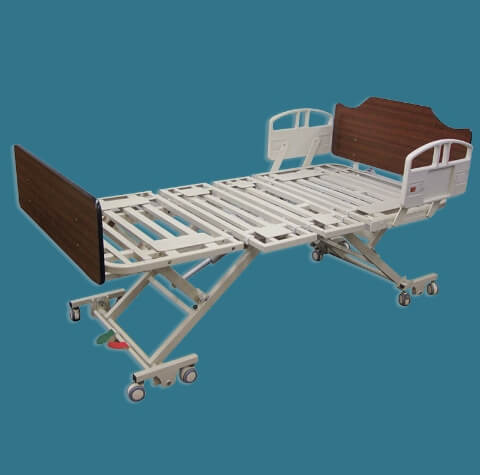
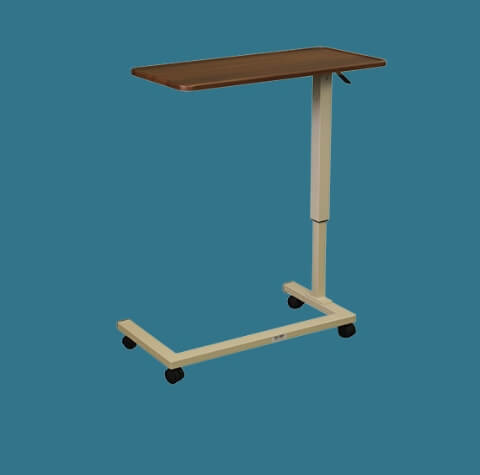
Advanced riser beds, such as the NOA Elite EX, utilize synchronized dual-scissor or linear lifting linkages that retract flush within the perimeter frame profile when lowered to 7 inches. When elevated above 12 inches, the frame creates open clearance beneath the chassis, allowing standard overbed tables, mobile patient lifts, and floor-based patient transfer equipment to slide under the bed smoothly without mechanical obstruction.
Q3: What mechanical mechanisms are used to ensure true vertical elevation without wall damage?
Traditional low beds elevated along an angled arc trajectory, causing the bed headboard to shift horizontally 4 to 8 inches during lifting. This horizontal drift repeatedly scuffed wall paint, damaged drywall, and collided with wall-mounted medical gas outlets. Modern NOA low height riser beds feature precision zero-drift vertical elevation geometry. The bed frame moves strictly perpendicular to the floor, protecting wall surfaces and maintaining a fixed room footprint.
Q4: Are NOA low height riser beds fully compliant with FDA HBSW side-rail entrapment safety standards?
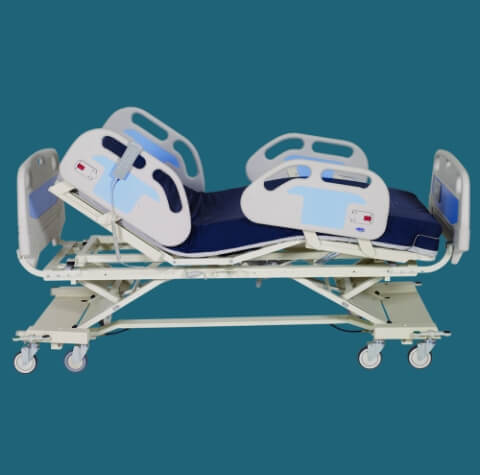
Yes. Every NOA low height riser bed system and assist rail configuration is designed and tested to comply with FDA Hospital Bed Safety Workgroup (HBSW) dimensional guidelines for Zones 1 through 7. This ensures critical gap tolerances between the rails, mattress surface, and frame structure are strictly maintained, preventing patient head, neck, or chest entrapment hazards.
Q5: How does an expandable-width low riser bed reduce capital expenditure (CapEx) for long-term care facilities?
Facilities typically maintain separate bed fleets for standard residents (36-inch width) and bariatric residents (42 to 48-inch width), leading to excess inventory and rental fees during demand spikes. An expandable riser bed like the NOA Elite EX features an integrated deck that expands tool-lessly from 36 to 42 or 48 inches with a 600 lb weight capacity. This dual-capability standardizes your room equipment fleet, lowers total bed inventory requirements, and eliminates expensive emergency bed rentals.
Q6: What motor electronics and actuator duty cycles are integrated into NOA riser beds?
NOA low height riser beds utilize medical-grade, splash-resistant (IP54 or IP66 rated) Linak electric linear actuators with thermal overload protection and low-voltage DC operation. These motor drive packages deliver smooth, whisper-quiet articulation (<45 dB noise levels) and are engineered for high-frequency duty cycles, ensuring reliable performance in demanding 24/7 care environments.
Q7: What is the expected total lifespan and warranty coverage for institutional low height riser beds?
NOA Medical beds are constructed with heavy-gauge welded steel frames built for a 15+ year operational lifespan. We support institutional purchases with comprehensive warranty programs, including lifetime coverage on frame welds, multi-year coverage on linear motor actuators, and dedicated access to replacement parts stocked at our Missouri facility for rapid dispatch.
Q8: How does Hoffmann NOA Medical handle international B2B shipping, containerization, and customs support?
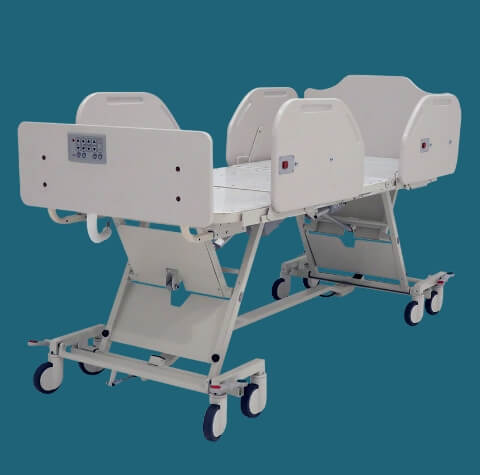
We maintain dedicated international logistics operations supplying hospital groups across North America, the Caribbean, Latin America, Europe, and the Middle East. Our beds feature modular knock-down frame options and optimized packaging geometries designed to maximize 40ft High-Cube container loading efficiency, significantly lowering per-unit ocean freight costs.