1. Executive Summary & Clinical Context for Bariatric Procurement
The global demand for high-capacity, specialized medical equipment has expanded exponentially. Clinical procurement teams, hospital administrators, and long-term care Directors of Nursing (DONs) face mounting pressures: managing higher patient Acuity levels, preventing caregiver musculoskeletal injuries caused by manual handling, and controlling equipment life-cycle costs. At the center of this operational dynamic is the Bariatric Care Nursing Bed.
A Bariatric Care Nursing Bed is not simply a standard hospital bed scaled to larger dimensions. It represents a specialized biomechanical environment. Standard patient beds—typically designed for Safe Working Loads (SWL) of 450 to 500 lbs—are prone to structural fatigue, motor burnout, and stability failure when utilized for bariatric care. Furthermore, narrow deck widths (35 inches) restrict patient movement, accelerate pressure injury formation (Category II–IV pressure ulcers), and impede nursing care during routine turning and hygiene procedures.
Hoffmann NOA Medical Industries, LLC. has led healthcare bed manufacturing since 1989. With over 30 years of engineering innovation, NOA Medical delivers purpose-built bariatric care systems that balance heavy-duty structural integrity with resident comfort, low-height fall prevention, and intuitive caregiver controls.

Engineered & Built in Washington, Missouri
Founded over three decades ago, NOA Medical pioneered low-height adjustable medical beds for long-term care facilities. As a key member of the Hoffmann Family of Companies—which encompasses over 240 global businesses—NOA Medical combines artisanal American manufacturing quality with global supply chain capabilities.
Every Bariatric Care Nursing Bed produced in our ISO-compliant, FDA-registered facilities undergoes rigorous static and dynamic load testing to exceed international safety benchmarks, including IEC 60601-2-52 standards for medical bed safety and entrapment prevention.
2. High-Performance Bariatric Care Nursing Bed Portfolio
When selecting a Bariatric Care Nursing Bed, procurement officers must evaluate specific operational environments—ranging from sub-acute long-term care facilities to high-acuity hospital wards and secure behavioral health units. Below are NOA Medical's recommended bariatric care bed configurations engineered to meet distinct clinical needs.
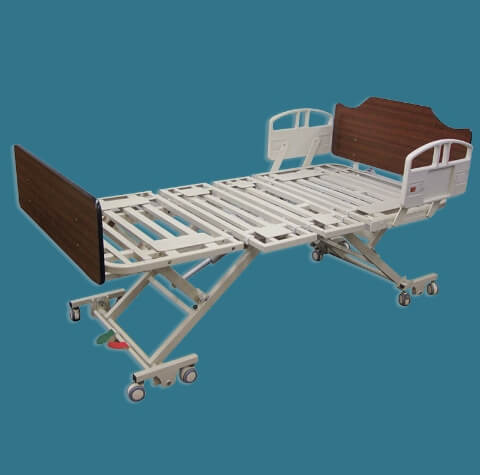
NOA Elite EX Expandable Bed
The industry benchmark for expandable bariatric nursing beds. Features a multi-width deck that smoothly expands from 36" to 42" or 48", and expands in length from 80" to 84" or 88". Designed with an ultra-low height of 7 inches to virtually eliminate fall-related injuries among bariatric residents.
- Safe Working Load: 600 lbs - 800 lbs
- Height Range: 7" low height to 30" high working height
- Deck Widths: 36", 42", 48" Integrated Width Expansion
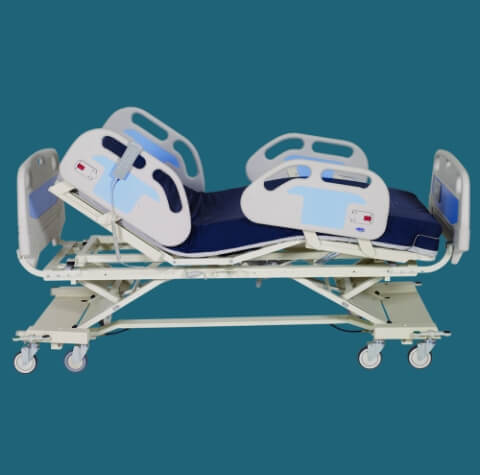
NOA Platinum SC Plus Bed
Engineered for high-acuity hospital wards and step-down units. Equipped with integrated digital load-cell scale systems, Trendelenburg/Reverse Trendelenburg positioning, electronic CPR rapid release, and heavy-duty high-torque DC linear actuators.
- Safe Working Load: Up to 1,000 lbs SWL
- Clinical Features: In-Bed Scale, Trendelenburg, CPR Release
- Mobility: Central Locking Brake System with 5" Casters
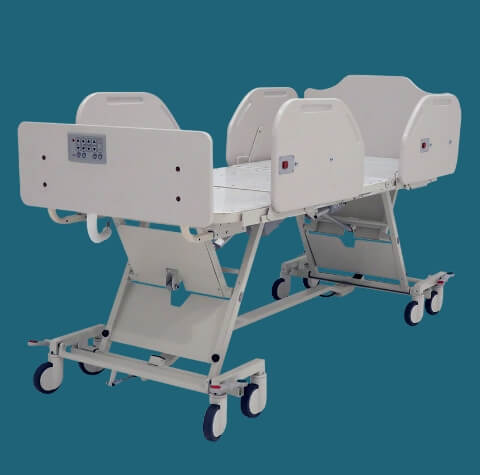
Platinum Behavioral Bariatric Bed
A heavy-duty bariatric nursing bed specifically modified for psychiatric, behavioral health, and correctional medical environments. Combines high weight capacity with anti-tamper hardware, enclosed wiring conduits, and ligature-resistant side rail configurations.
- Safety Rating: Tamper-resistant & Ligature-resistant design
- Construction: Heavy-gauge reinforced structural steel frame
- Controls: Lockable caregiver master console
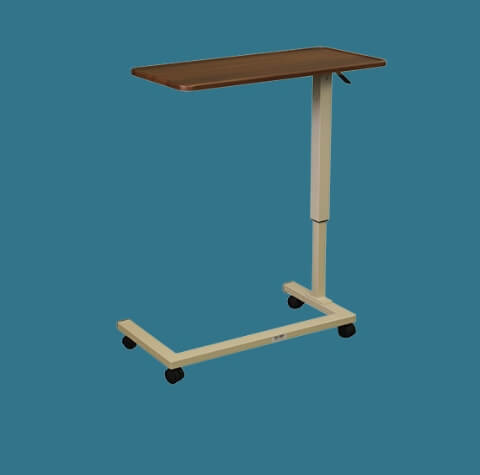
Bariatric Mattresses & Accessories
Comprehensive range of clinical accessories optimized for bariatric care nursing beds. Includes pressure-redistributing low-air-loss alternating pressure mattresses, heavy-duty overhead trapeze units, and expandable safety assist rails.
- Mattress Tech: Dynamic low-air-loss shear management
- Assist Devices: Heavy-duty trapeze & side rails
- Compliance: Meets FDA Entrapment Zones 1-7
Technical Matrix: Bariatric Nursing Bed Comparison
To assist healthcare procurement specialists in making data-driven capital equipment decisions, the following matrix compares structural parameters across primary NOA bariatric and heavy-duty care platforms:
| Specification / Feature | NOA Elite EX Bariatric | NOA Platinum SC Plus | NOA Platinum Behavioral |
|---|---|---|---|
| Safe Working Load (SWL) | 600 lbs / 800 lbs option | 800 lbs to 1,000 lbs | 600 lbs / 800 lbs heavy-duty |
| Deck Width Options | 36", 42", 48" Expandable | 36" to 48" Expandable Deck | 36" to 42" Fixed / Expandable |
| Deck Length Options | 80", 84", 88" Adjustable | 80" to 86" Adjustable | 80" Standard |
| Height Travel Range | 7" Low Height to 30" High | 8.5" Low Height to 31" High | 10" Low Height to 28" High |
| Integrated Scale System | Optional External / Integrated | Precision Load-Cell Built-in | N/A (Tamper-Proof Design) |
| Actuator Motors | Quad-Motor DC Low Voltage | Heavy-Duty Synchronized Actuators | Enclosed Anti-Vandal Actuators |
| Trendelenburg / Reverse | Standard Electronic Feature | Full Clinical Electronic Range | Caregiver Locked Control |
| Warranty Coverage | 15-Yr Frame / 5-Yr Motors | 15-Yr Frame / 5-Yr Motors | 15-Yr Frame / 3-Yr Security Components |
Request Custom Bariatric Bed Specifications & Pricing
Our clinical equipment specialists provide direct factory quotes, architectural floor plan consultations, and volume procurement discounts for healthcare systems worldwide.
3. Future Procurement Trends for Bariatric Care Nursing Beds (2025–2035)
Procurement in healthcare is transitioning from reactive purchasing to strategic forecasting based on patient demographic shifts, technological convergence, and strict labor safety regulations. Over the next decade, several key procurement trends will define the acquisition of Bariatric Care Nursing Beds:
A. Integration of Smart Sensors & EHR Continuous Telemetry
Modern healthcare facilities are abandoning standalone beds in favor of connected medical devices. Future bariatric nursing bed procurement mandates continuous patient monitoring integration. NOA Medical's next-generation bariatric platforms incorporate load-cell technology that communicates real-time weight shifts, bed occupancy data, and tilt angles directly to electronic health record (EHR) systems via Wi-Fi and Bluetooth protocols.
- Automated Weight Tracking: High-capacity bariatric patients often suffer from acute fluid retention (edema) due to congestive heart failure or renal dysfunction. Precision load-cell scales built into the bed frame eliminate the dangerous process of transferring patients to external scales, recording daily weight fluctuations automatically.
- Predictive Fall Prevention Alarms: AI-powered weight distribution sensors analyze bed edge pressure vector changes, notifying nursing staff before a patient attempts an unassisted egress.
B. "Universal Room" Modular Deck Architecture
Facilities historically maintained a small, dedicated fleet of bariatric beds in storage, bringing them out only when a high-weight patient was admitted. This practice created logistical bottlenecks, damaged equipment during transport, and led to idle capital assets.
The emerging procurement standard favors Universal Deck Architecture—such as the NOA Elite EX—where standard nursing beds feature built-in, toolless width expansion (expanding from 36 inches to 42 or 48 inches in seconds). Facilities can deploy a single bed model across all resident rooms, adjusting deck dimensions dynamically based on immediate clinical needs without purchasing separate equipment.
C. Strict Caregiver Ergonomics & Zero-Lift Compliance
Workplace injury statistics confirm that healthcare workers suffer higher rates of musculoskeletal disorders than workers in construction or manufacturing, primarily due to manual patient repositioning. Regulatory bodies globally are enforcing stringent "Zero-Lift" policies.
Future bariatric care bed acquisitions require integrated motorized assist features, including push-button Trendelenburg positioning, power-assisted lateral tilting to aid patient turning, ultra-high elevation (reaching 30+ inches) to allow caregivers to perform dressing changes without stooping, and low-profile caster bases compatible with mobile patient lifts.
4. Industry Development Trends: Biomechanics, Hygiene & Fall Risk Mitigation
The engineering of bariatric medical beds has evolved beyond raw structural reinforcement. Manufacturers must address complex interdisciplinary challenges combining biomechanics, tissue viability, infection control, and behavioral acoustics.
A. Shear-Reduction Articulation & Tissue Viability
When a standard articulated bed deck elevates the patient's head, high-weight individuals experience immense downward gravity drag. This force pulls tissue across the mattress surface, generating intense friction and shear force at the sacral region—the primary trigger for pressure sores. Advanced bariatric nursing beds utilize auto-contouring slide-back deck geometry. As the backrest elevates, the bed deck retracts backward, preserving anatomical alignment and expanding the pelvic seat region to reduce shear friction by up to 65%.
B. Ultra-Low Height Engineering for High-Capacity Frame Systems
Traditionally, bariatric beds were restricted to high minimum deck heights (16 inches or more) due to the bulky structural steel scissors mechanism and powerful linear actuators required to lift 800+ lbs. Falling from a height of 16 to 18 inches onto a hard floor carries severe injury risks for high-BMI individuals.
NOA Medical achieved an engineering breakthrough by developing high-torque, low-profile lift mechanics that lower heavy-duty bariatric beds down to an ultra-low height of 7 inches from the floor. Combined with floor safety mats, this ultra-low posture mitigates fall severity while retaining the structural capacity to raise patients to a 30-inch ergonomic working height for nursing staff.
C. Advanced Antimicrobial Hygiene Surfaces
Infection control officers play an essential role in medical bed selection. Bariatric nursing beds feature complex frame geometry that can harbour multi-drug resistant organisms (MDROs) if not properly disinfected. Modern development trends incorporate seamless, high-density polyethylene (HDPE) removable deck panels, non-porous powder-coated steel frames treated with silver-ion antimicrobial coatings, and fully sealed IP66-rated actuator motors that withstand high-pressure washdowns.
5. The Hoffmann NOA Medical Advantage: E-E-A-T & Manufacturing Superiority
Choosing a long-term manufacturing partner for bariatric medical equipment requires confidence in the manufacturer's operational stability, engineering expertise, and warranty fulfillment. Here is why leading healthcare systems partner with Hoffmann NOA Medical Industries:
1. 30+ Years of Focused Innovation (Est. 1989)
Since 1989, NOA Medical has focused exclusively on long-term care and acute care patient bed systems. Our decades of direct field experience mean our designs are informed by real-world feedback from thousands of nurses, biomedical engineers, and facility operators.
2. Backed by the Hoffmann Family of Companies
As a portfolio enterprise of the Hoffmann Family of Companies—a world-class conglomerate operating over 240 businesses—NOA Medical possesses unparalleled financial strength, operational resilience, and supply chain reliability. Procurement partners enjoy absolute peace of mind knowing their long-term warranties and service contracts are backed by a global corporate leader.

3. USA-Engineered Quality & FDA Compliance
All NOA bariatric bed systems are engineered, welded, assembled, and tested in Washington, Missouri. We adhere to rigid FDA Quality System Regulations (QSR) and ISO 13485 medical device standards, ensuring every unit delivered meets strict structural load tolerances.
4. Risk-Free 30-Day In-Facility Evaluation Program
We eliminate capital purchasing risk by offering qualified healthcare facilities a complimentary 30-day in-facility demo trial. Experience the structural rigidity, expandable width versatility, and ease of operation of our bariatric care nursing beds firsthand before making a final procurement decision.
6. Bariatric Care Nursing Bed Procurement FAQ
Below are authoritative answers to the most frequently asked questions submitted by global procurement teams, clinical directors, and biomedical engineering managers regarding bariatric medical beds.
Safe Working Load (SWL) encompasses the total combined weight supported by the bed frame structure and actuator motors. This includes the patient's body weight PLUS the weight of the mattress, bed rails, IV poles, trapeze units, bedding, and any medical devices attached to the deck. Maximum Patient Weight represents strictly the individual's weight. When procuring a bariatric nursing bed rated for 800 lbs SWL, facilities should subtract approximately 80–100 lbs for mattress and accessory loads to calculate the true maximum recommended patient body weight (approx. 700–720 lbs).
Expandable width decks offer critical operational versatility. A fixed 48-inch wide bed cannot pass through standard 36-inch room doorways or elevator openings without removing door frames or disassembling the bed frame. Expandable beds like the NOA Elite EX allow staff to retract the deck sides to 36 inches for smooth corridor transport, then expand the deck to 42 or 48 inches inside the resident room to provide optimal spatial comfort and pressure relief for the patient.
Unintended weight loss or rapid fluid accumulation are major clinical indicators of nutritional deficit, congestive heart failure, or renal complications. Transferring a bariatric patient to a standing or wheelchair scale requires multiple caregivers and carries severe fall and strain risks. An integrated load-cell scale (such as that on the NOA Platinum SC Plus) allows nurses to obtain precision weight measurements (accurate to within 0.1 lb or 100 grams) with the patient resting comfortably in bed, storing historical trends in memory.
Bariatric medical beds must comply with IEC 60601-2-52 (the international safety standard specifically governing medical bed performance and structural integrity). Additionally, beds must satisfy FDA Hospital Bed Entrapment Guidelines across all 7 entrapment zones to prevent head, neck, or limb entrapment between the mattress, side rails, and head/footboards. NOA Medical beds are thoroughly tested to exceed both US FDA and international CE/IEC compliance benchmarks.
NOA Medical operates an established global logistics network serving healthcare facilities across North America, the Caribbean, Latin America, Europe, and the Asia-Pacific region. All bariatric beds are backed by a comprehensive factory warranty (15-year frame structure, 5-year electronic actuators). We maintain a complete inventory of OEM replacement components ready for immediate dispatch, supported by dedicated toll-free phone and live digital consultation teams.