Healthcare & Industry Insights

Medical Bed Innovations & Caregiver Resources

Explore expert articles, clinical guides, safety standards, and product updates from NOA Medical Industries.

0%

Selecting the right Prison Medical Beds requires more than comparing prices, dimensions, or delivery promises. A prison clinic may serve a crowded intake unit, a long-term infirmary, or a secure observation room. Each setting demands different levels of adjustability, durability, infection control, and patient safety. The World Prison Brief reports that more than 11 million people are held in prisons worldwide, creating sustained pressure on limited healthcare facilities. Prison medical equipment must therefore support both routine treatment and continuous observation.

The World Health Organization’s Prisons and Health guidance describes prison health as part of public health. This principle makes bed quality a clinical concern, not merely a procurement decision. The right frame should allow safe transfers, comfortable positioning, and practical cleaning around casters, joints, and side rails. It should also withstand repeated use by staff with different training levels. Small details matter.

This guide reviews seven Prison Medical Beds for global buyers. It considers load capacity, electric or manual adjustment, corrosion resistance, emergency positioning, mattress compatibility, and maintenance access. Standards such as ISO 13485 can help buyers assess a manufacturer’s quality-management system, while IEC 60601-2-52 may assist evaluation of electrically operated medical beds. However, compliance claims require careful verification. A certificate alone does not prove suitability for every correctional environment. No ranking fits every facility. That is the uncomfortable part. Budget, local service coverage, room size, and clinical workload can change the best choice. Buyers should confirm specifications directly, request technical documents, and test cleaning procedures before purchase.
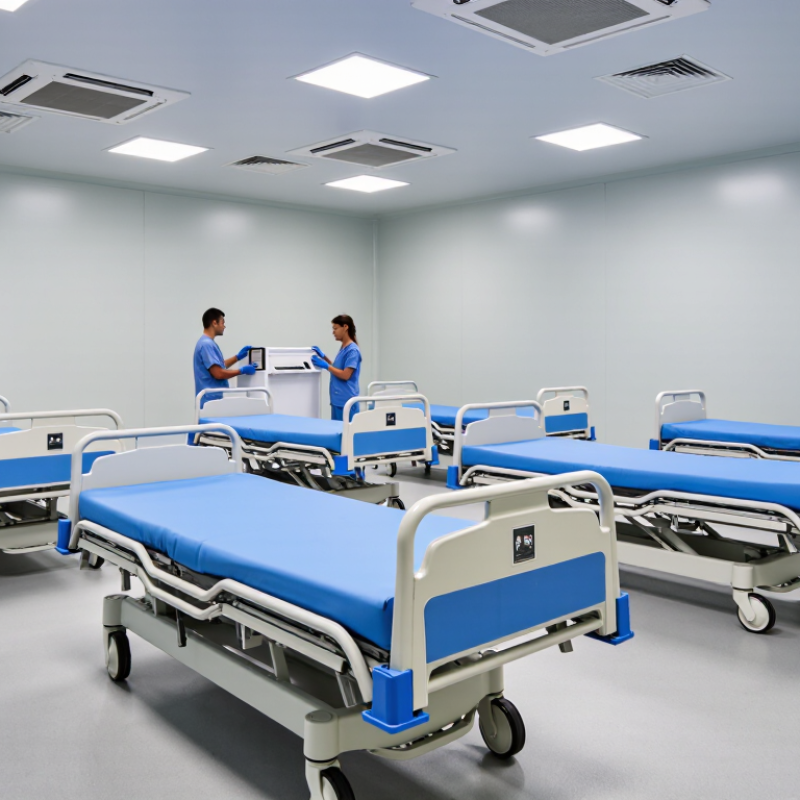
7 Best Prison Medical Beds for Global Buyers

What Defines a Prison Medical Bed for Institutional Healthcare

A prison medical bed is not simply a hospital bed placed behind a secure door. It must support clinical care, controlled movement, infection prevention, and daily institutional routines. The World Prison Brief reports that more than 11 million people are held in prisons worldwide. That scale makes durability and maintainability practical healthcare concerns, not optional features.

A suitable bed usually has a reinforced frame, tamper-resistant controls, sealed surfaces, and smooth edges that reduce injury risks. Its mattress should resist fluid penetration and tolerate frequent cleaning with approved disinfectants. Height adjustment matters, especially when staff transfer patients or provide care beside the bed. Lockable casters can stabilize the bed during treatment, while accessible emergency controls support rapid response. WHO’s Prisons and Health guidance stresses equivalent healthcare standards, yet prison rooms often have less space and fewer staff than conventional wards. Design must acknowledge that difference.

The best model also fits local workflows. Measure door widths, corridor turns, power points, and cleaning access before purchasing. World Health Organization reports on prison health consistently identify higher burdens of chronic disease, mental health conditions, and communicable illness among incarcerated populations. A bed should therefore accommodate observation, repositioning, and basic clinical equipment. It should not create blind corners or difficult cleaning zones. Not every answer is clean. Some “secure” features can slow emergencies, while overly complex electronics may fail without technical support. Global buyers should test prototypes with nurses, custodial staff, and maintenance teams, then document weaknesses before approval.

7 Best Prison Medical Beds for Global Buyers

What Defines a Prison Medical Bed for Institutional Healthcare?

The chart compares seven procurement criteria commonly used when evaluating institutional medical beds for correctional healthcare. Safety, cleanability, patient positioning, emergency access, durability, infection control, and serviceability are aligned with the principles of IEC 60601-2-52 and common hospital-bed procurement practice. The percentages represent a practical evaluation framework rather than manufacturer-specific performance claims.

Key Types of Medical Beds Used in Correctional Facilities

7 Best Prison Medical Beds for Global Buyers

Correctional healthcare units need beds that support treatment, observation, cleaning, and controlled movement. The right choice depends on patient needs, room design, and local safety requirements. A fixed medical platform bed offers strong stability and simple maintenance. It suits routine observation rooms and reduces moving parts. An electric adjustable bed helps staff position patients during examinations or recovery. Manual versions may be better where power access is unreliable. Details matter.

A low-height medical bed can reduce injury risks during transfers and nighttime movement. A bariatric bed provides a wider sleeping surface and reinforced support for heavier patients. A psychiatric-safe bed uses concealed components and rounded surfaces, reducing avoidable attachment points. A transport stretcher supports short clinical transfers between secure areas and treatment rooms. A pediatric medical bed adds higher side protection and closer observation for younger patients. A hydraulic bed is useful when staff need height adjustment without depending on electricity. No bed is perfect.

Buyers should check load ratings, mattress compatibility, corrosion resistance, cleanability, and spare-part access. These factors often matter more than appearance. Facilities should also confirm emergency lowering, locking systems, and staff handling space. Requirements differ across regions, so independent clinical and engineering review remains essential. I would not approve a purchase from photographs alone. Hands-on testing can reveal difficult controls, noisy casters, or awkward cleaning gaps. That lesson is easy to overlook.

Seven Leading Prison Medical Beds for Global Buyers

Seven Leading Prison Medical Beds for Global Buyers

Seven leading prison medical beds can support safer, more efficient healthcare in secure facilities. A manual medical bed offers dependable operation when power access is limited. An electric adjustable bed improves positioning and reduces staff strain. A low-height bed helps protect patients with limited balance. Bariatric beds provide stronger frames and wider sleeping surfaces. Intensive-care beds support monitoring equipment and emergency access. Examination beds suit routine checks, while transport stretchers improve movement between clinical areas.

From practical healthcare procurement experience, buyers should inspect more than weight capacity. Look for smooth, sealed surfaces that withstand frequent cleaning. Rounded edges can reduce injury risks. Lockable casters should hold firmly on hard floors. Tamper-resistant controls may be appropriate for secure environments. Check mattress compatibility, spare-part access, warranty terms, and local electrical requirements. Documentation matters.

Tips: Request sample specifications, cleaning instructions, and maintenance schedules before ordering. Compare total ownership costs, not only purchase prices. A cheaper frame may create problems later. Local climate also deserves attention; humidity can expose weak coatings or poor ventilation. No bed is perfect. Staff feedback from daily use should influence the final choice, even when it challenges the original procurement plan.

7 Best Prison Medical Beds for Global Buyers - Seven Leading Prison Medical Beds for Global Buyers
Comparative reference table based on commonly specified features for secure healthcare and correctional medical environments. Final specifications should be verified against local regulations, facility layouts, and procurement requirements.
Rank Prison Medical Bed Type Recommended Patient Use Main Adjustments Safe Working Load Typical Bed Size Security and Safety Features Mobility Best Application
1 Three-Function Electric Secure Care Bed General medical observation, recovery, and short-term inpatient care Backrest, knee break, and overall height adjustment Approximately 200–250 kg Overall length about 215 cm; mattress platform about 90 × 200 cm Enclosed electric controls, tamper-resistant fasteners, rounded surfaces, and secure side-rail options Four lockable castors, usually 100–125 mm Medical units requiring flexible positioning and easier caregiver access
2 Manual Two- or Three-Crank Institutional Bed Routine treatment where electrical infrastructure is limited Backrest, leg section, and optional height adjustment by crank Approximately 180–220 kg Overall length about 210–220 cm; mattress width about 85–90 cm Detachable or fixed security panels, protected crank handles, and cleanable steel frame Lockable castors or fixed-leg configuration Facilities prioritizing low maintenance, durability, and power independence
3 Anti-Ligature Fixed-Height Medical Bed High-security housing, mental-health observation, and self-harm risk areas Usually fixed platform; optional assisted backrest depending on risk assessment Approximately 180–220 kg Typically 205–215 cm long and 80–90 cm wide Minimal ligature points, sealed joints, concealed hardware, rounded edges, and robust mattress retention Fixed to the floor or configured with concealed mobility hardware High-security cells and specialist behavioral-health accommodation
4 Electric Hi-Low Bariatric Medical Bed Bariatric patients, complex transfers, and extended clinical care Backrest, knee break, overall height, and often Trendelenburg positioning Approximately 300–450 kg, subject to the selected configuration Overall length about 220–235 cm; mattress width about 100–120 cm Reinforced frame, protected control system, heavy-duty locking castors, and wide safety rails Heavy-duty castors, commonly 125–150 mm Prison hospitals and referral units treating patients with higher body weight
5 Low-Height Fall-Reduction Medical Bed Older adults, mobility-limited patients, and fall-risk observation Backrest, knee break, and low-to-standard height range Approximately 180–220 kg Overall length about 210–220 cm; mattress width about 90 cm Low platform, smooth perimeter, removable safety rails, and protected adjustment controls Four lockable castors with central or individual braking Healthcare units managing fall prevention and assisted transfers
6 Transport and Examination Medical Bed Medical screening, diagnostic procedures, and movement between secure areas Adjustable backrest and height; some versions include leg support Approximately 160–220 kg Overall length about 190–210 cm; width about 65–80 cm Compact frame, secure side supports, tamper-resistant controls, and easy-clean upholstery Four large lockable castors and directional steering function Reception clinics, treatment rooms, and secure patient transfers
7 Intensive-Care Secure Medical Bed Critical care, post-operative monitoring, and advanced clinical support Backrest, knee break, hi-low, Trendelenburg, and emergency flat positioning Approximately 220–300 kg Overall length about 220–235 cm; mattress width about 90–100 cm Protected electrical system, emergency release, enclosed accessories, secure rails, and easy-clean surfaces Central-locking castors, commonly 125–150 mm Prison hospitals requiring ventilator, infusion, monitoring, and emergency-care compatibility

How to Compare Safety, Mobility, and Patient-Care Features

7 Best Prison Medical Beds for Global Buyers
How to Compare Safety, Mobility, and Patient-Care Features

Choosing among the seven best prison medical beds requires more than checking price. Buyers should compare fixed steel beds, electric adjustable beds, low-height beds, bariatric beds, intensive-care beds, transport beds, and isolation beds. Each design serves a different clinical need. The right choice depends on patient weight, injury severity, cleaning routines, and available staff.

Safety starts with a stable frame, rounded edges, secure casters, and strong side rails. Rails should reduce fall risks without trapping patients or blocking care. Electrical parts need protection from moisture and repeated cleaning. Lockable controls can prevent unintended movement, but staff must still reach essential adjustments quickly. A bed that feels secure may become difficult during an emergency. That matters.

Mobility deserves equal attention. Large medical casters can cross uneven floors, while central locking can reduce staff effort. Transport beds should turn smoothly through narrow doors and include oxygen-cylinder holders when clinically required. Patient-care features may include adjustable backrests, height control, drainage-bag hooks, removable panels, and pressure-relieving surfaces. Materials should resist corrosion and disinfectants.

Procurement teams should request load tests, cleaning instructions, spare-parts plans, and staff training. Ask how often actuators, brakes, and rail mechanisms require inspection. User feedback from nurses can reveal problems that brochures hide. I would not assume the most advanced bed is the best option. Complex controls can create delays, and cheaper frames may need earlier replacement. A trial period is useful, though not always practical for smaller facilities.

International Standards, Procurement Factors, and Maintenance Needs

7 Best Prison Medical Beds for Global Buyers

International Standards, Procurement Factors, and Maintenance Needs

The best prison medical bed depends on patient needs, room size, and local compliance. Seven practical options include manual, electric, low-height, bariatric, pediatric, treatment, and transport beds. Each type supports a different clinical situation. A transport bed needs strong casters and secure brakes. A bariatric model requires verified load capacity, reinforced frames, and wider access routes. Low-height beds can reduce injury risks during transfers.

Global buyers should request documented testing, material specifications, and service records. IEC 60601-2-52 may guide medical bed safety, but national requirements can differ. Confirm electrical voltage, plug design, emergency controls, and applicable certification before ordering.

Staff should inspect side rails, mattress platforms, and locking systems. Small gaps can create serious safety concerns. They should not rely on photographs alone.

Procurement also requires practical maintenance planning. Ask about spare actuators, wheels, control units, and mattress covers. Check whether technicians can replace parts without removing the bed from service. Stainless steel surfaces may simplify cleaning, but seams and moving joints still collect contamination.

A written inspection schedule should cover brakes, fasteners, cables, and lifting mechanisms. Monthly checks may be suitable, but actual frequency depends on usage.

One assumption often fails: durable does not mean maintenance-free. Trial installation can reveal doorway problems, cleaning delays, or uncomfortable working heights before full deployment.

FAQS

What should buyers compare when choosing a medical bed for secure healthcare settings?

Compare frame stability, patient weight, injury severity, room size, cleaning routines, and staff availability. Price alone is insufficient. A complex bed may slow emergency adjustments.

Which safety features help reduce patient falls?

Look for rounded edges, stable frames, secure casters, and properly designed side rails. Rails should reduce falls without trapping patients or blocking essential care. Small gaps deserve careful inspection.

How can staff evaluate a bed’s mobility?

Test large casters on uneven floors and check whether central locking reduces staff effort. Transport models should turn smoothly through narrow doorways. Brakes must hold firmly.

What patient-care features may improve daily treatment?

Useful features include adjustable backrests, height control, drainage-bag hooks, removable panels, and pressure-relieving surfaces. The best combination depends on clinical needs. More features are not always better.

What should buyers check for heavier patients?

Select a bariatric bed with verified load capacity, a reinforced frame, and suitable width. Measure doorways and access routes before ordering. A strong bed is useless if it cannot enter the room.

What electrical and emergency details require attention?

Confirm local voltage, plug design, emergency controls, and applicable certification before purchase. Electrical parts should resist moisture and repeated disinfection. Locked controls must not delay urgent adjustments.

How should facilities plan cleaning and maintenance?

Request cleaning instructions, service records, spare parts, and inspection guidance. Check brakes, fasteners, cables, actuators, rails, and lifting mechanisms regularly. Moving joints can collect contamination.

Is a trial installation worthwhile before full deployment?

Yes, when practical. A trial can reveal doorway problems, awkward working heights, cleaning delays, and difficult controls. Smaller facilities may lack this option, so assumptions become riskier.

Conclusion

Prison Medical Beds are specialized healthcare solutions designed to support safe, efficient, and dignified patient care in correctional facilities. Unlike standard hospital beds, they must combine durability, cleanability, tamper-resistant construction, and practical operation in demanding institutional environments. This overview explains what defines these beds and examines key categories, including fixed medical platforms, adjustable beds, transport beds, bariatric models, and emergency-care options. It also presents seven leading types of Prison Medical Beds for global buyers, focusing on how each supports different patient needs and facility layouts.

The article further provides a practical framework for comparing safety features, mobility, adjustability, infection-control surfaces, weight capacity, and caregiver access. It discusses international quality expectations, procurement considerations such as certifications, shipping, installation, staff training, warranty support, and replacement parts, as well as maintenance planning for long-term reliability. Together, these insights help healthcare administrators and purchasing teams select suitable medical beds that balance patient comfort, operational efficiency, safety, and total cost of ownership.

Seraphina

Seraphina

Seraphina is a highly accomplished marketing professional dedicated to helping businesses communicate their value with clarity, credibility, and purpose. With a deep understanding of the company’s products, services, and customer needs, she develops thoughtful strategies that connect practical......