Explore expert articles, clinical guides, safety standards, and product updates from NOA Medical Industries.
Choosing a Low Height Riser Bed is not just a matter of style. It changes how easily you sit, stand, and reach the floor. A frame that looks right in a showroom may feel awkward beside your own mattress and bedroom furniture. Measure carefully.
Safety deserves equal attention. The CDC reports that about one in four adults aged 65 and older falls each year. This figure covers falls generally, not bed-related incidents, but it underlines why stable, easy access matters. A bed’s final height depends on its frame, mattress, risers, and the person using it. Check the assembled height, confirm the risers fit the bed legs, and test that the bed does not wobble. Small details matter.
Sleep scientist Matthew Walker has said, “Sleep is the single most effective thing we can do to reset our brain and body health each day.” His comment is about sleep, not bed design. Still, comfort and access are practical parts of creating a bedroom that works. The tips ahead consider mattress and frame compatibility, riser stability, room measurements, materials, weight limits, and everyday mobility. There is no universal ideal height. Your first estimate may be wrong; remeasure after assembly, then check how the bed feels when sitting and standing.
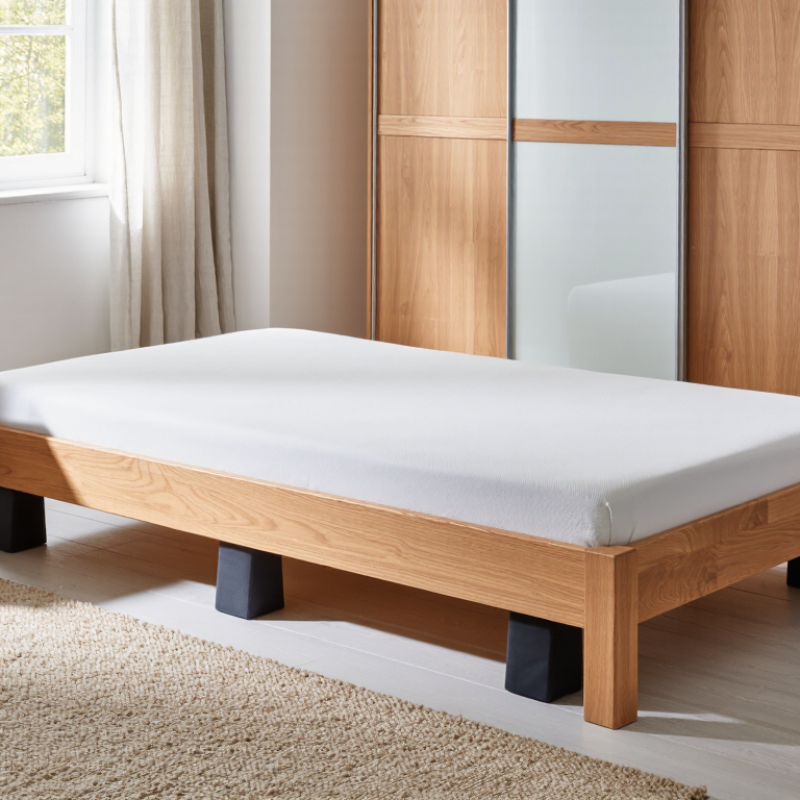
Measure the room before choosing a low-height riser bed. Record the floor-to-wall dimensions, door swing, radiator position, and walking routes. Measure the full frame, not just the mattress: a queen mattress is typically 60 by 80 inches, according to Sleep Foundation’s mattress-size guide. Headboards and rails can add several inches. Small details matter.
Tips: Measure required bed clearance from the floor to the lowest frame rail. Check whether storage bins or a cleaning tool will fit underneath; measure their height too. For a clear walking route, the U.S. Access Board’s 2010 ADA Standards specify 36 inches for an accessible route. That is an accessibility benchmark, not a universal bedroom requirement, but it can help when planning comfortable passage. Keep doorways and drawers in mind.
Mark the planned bed outline with painter’s tape, then walk around it. Open nearby doors and drawers fully. If the space is tight, leave extra room where people turn or get in and out of bed. I remeasure after marking the layout; the first estimate is often optimistic. Check floor level as well, since an uneven surface can change the usable clearance beneath a low frame.
A low height riser bed should make getting in and out easier, not turn it into a climb. Measure from the floor to the top of your mattress, then consider how much extra height you actually need. Sit on the edge with your feet flat and knees comfortably bent. If your toes barely touch, or you have to push yourself up, the bed may be too high. Small differences matter.
Tip: Try a firm chair at the height you are considering before buying risers. Notice whether you can sit down and stand up without rocking or straining. Your ideal height depends on your leg length, mattress feel, and mobility. There is no single measurement for everyone. This test is useful, but not perfect; a mattress may compress differently once you lie on it.
Choose risers that add only the height needed, and check that every bed leg sits securely in its support. Avoid stacking risers, since an unstable bed can shift when you move. Tip: Recheck the height after making the bed and sitting on its edge. A thick comforter can hide the frame, but it will not change the support underneath. If access still feels awkward, lower the setup and try again.
A low-height riser bed can make a room feel more open, but its frame must safely support the mattress and sleepers. Check the exact frame model’s manual before buying risers. Look for the stated maximum load and confirm whether it includes the mattress, bedding, and occupants. Add those weights together; don’t assume the advertised capacity applies to people alone. A heavy mattress can use up more of the allowance than expected.
Tip: Measure each frame leg and compare its shape and width with the riser’s cup. Check for a secure fit, not just a matching height. EN 1725, the European standard for domestic beds, sets safety, strength, and durability test methods. ASTM F1566 covers mattress-set testing, not a universal load rating for raised bed frames. These standards help clarify what was tested, but the frame maker’s capacity and compatibility instructions still matter.
Inspect the frame joints, center support, and feet for looseness or damage before raising it. Uneven floors can leave one riser carrying more load; that small detail is easy to miss. If the frame has a center leg, make sure it also rests securely on a suitable riser or stable surface. I’d recheck the fit after a few nights, especially if the bed shifts. If the instructions don’t specify riser use, ask the manufacturer rather than guessing.
| Tip | What to Check | Practical Guideline | Why It Matters |
|---|---|---|---|
| 1 | Measure the bed legs | Measure each leg’s width and shape where it will sit in the riser. Compare those measurements with the riser’s stated opening dimensions. | A riser that is too narrow or too loose may not support the leg securely. Check every leg, since some frames have different supports at the head and foot. |
| 2 | Confirm frame compatibility | Identify whether the bed has separate legs, a center support, a platform base, or a wheeled frame. Confirm that the riser is designed for that type of support. | Risers made for individual legs may not work safely with a continuous base, casters, or an unusual support layout. |
| 3 | Choose a suitable lift height | Measure the current clearance under the bed and decide how much additional height is needed. Low-profile risers commonly add a few inches, but the exact lift varies by product. | The added height affects ease of getting in and out of bed, under-bed clearance, and the final bed height. Check the riser’s actual lift measurement before buying. |
| 4 | Check total weight capacity | Include the bed frame, mattress, bedding, and the maximum combined weight of the people using the bed. Compare that total with the capacity stated for the complete set of risers. | Capacity ratings differ by design and may be listed per riser or for a set. Do not assume that multiplying a per-riser rating gives a safe total unless the instructions say so. |
| 5 | Look for a stable, secure seat | Choose a riser with a level base and a recessed or otherwise secure area for the bed leg. Follow the installation instructions and check that all supports sit flat on the floor. | A secure fit helps reduce shifting or rocking. Avoid using risers on uneven flooring or with legs that do not sit fully inside the support area. |
| 6 | Consider floor protection | Check whether the base has a non-slip surface or floor-protective material suitable for the floor type. Make sure the floor is clean and dry before installation. | Suitable contact surfaces can help limit movement and reduce the chance of scratches. Floor protection does not replace a correctly fitted riser. |
| 7 | Inspect after setup | Once installed, check that every leg is centered and fully seated. Apply gentle pressure to test for rocking, and recheck the setup periodically and after moving the bed. | Regular checks can reveal a loose fit, a shifted riser, or a change in floor contact before continued use. |
A low-height riser bed should add useful clearance without making the mattress feel perched. Compare the materials closely. Solid wood can feel substantial, while metal risers may be lighter and easier to reposition. Neither is automatically safer; inspect joints, surface finish, and the shape of each contact point. Smooth, broad tops help reduce slipping. Small details matter.
Stability depends on more than the riser itself. Check that every bed leg fits fully inside its cup, and confirm the stated weight capacity includes the mattress and sleepers. Uneven floors can leave one corner loose, so test the setup gently before use. If the bed shifts, stop and reassess. A guard or retaining edge may help, but it cannot fix a poor fit. I’d be cautious about choosing by appearance alone; that’s an easy mistake.
Tips: Measure bed-leg width; measure desired lift; check weight limits; match risers to leg shape; choose non-slip contact surfaces; inspect for cracks or loose parts; retest stability after moving the bed. Keep the lift modest if you need easy entry and exit. Riser height can vary slightly between products, so verify actual dimensions rather than relying on a product’s name.
Compare material density as a reference—not as a measure of strength or safety.
Approximate reference densities: steel 7.85, aluminum 2.70, polypropylene 0.90, and pine wood 0.50 g/cm³. Actual values vary by alloy, grade, species, and moisture. Density alone does not indicate a riser’s load capacity or stability. Check the product’s stated load rating and bed-leg compatibility, and look for a wide, level base and features that help keep the bed legs securely in place.
Measure the bed frame and each riser before installation; a small height difference can leave one corner unsupported. Check that the risers suit the frame’s legs and stated load capacity. Assemble on a clear floor, then press gently on each corner to check for rocking. Do not rush. A level-looking setup can still shift when someone sits on the edge, so recheck it after the first few nights.
Protect the floor with pads made for its surface, such as felt for many hard floors or suitable non-slip pads where extra grip is needed. Keep each pad centered under the leg, not folded or partly exposed. Dust and grit trapped underneath can scratch a floor over time. Small details matter. Still, pads may compress or slide, so inspect them periodically rather than assuming they will stay put.
Think about daily use, not just the extra clearance. A low riser may make getting into bed easier, but measure the finished height with the mattress in place. Consider where your feet land, whether sheets are still easy to tuck, and if a vacuum can reach beneath the frame. That gap may be too low for a robot vacuum. If the bed moves during ordinary use, stop and correct the fit before relying on it.
Measure from the floor to the mattress top. Sit on the edge with feet flat and knees bent. If your toes barely touch, lower the setup. Small differences matter.
Try sitting on a firm chair at a similar height. Stand up without rocking or straining. It is a useful test, but mattresses compress differently.
Measure each frame leg and compare its shape and width with the riser cup. Every leg should sit securely. A close-looking fit may not be enough.
Read the frame instructions and check whether the limit includes the mattress, bedding, and sleepers. Add those weights together. A heavy mattress can use much of the allowance.
No. Stacked risers can make the bed unstable and prone to shifting. Choose risers that add only the height you need.
Assemble the bed on a clear floor, then press gently on each corner. Check again after sitting on the edge and during the first few nights. Do not rush.
Use pads suited to the floor, such as felt on many hard surfaces. Keep each pad centered beneath its leg. Dust and grit can scratch floors over time.
Measure the finished height with the mattress in place. Check where your feet land, whether sheets are easy to tuck, and if a vacuum fits underneath. That gap may be too low.
Choosing a Low Height Riser Bed starts with measuring the available space and deciding how much clearance you need beneath the bed. Select a riser height that provides useful storage or easier cleaning while keeping the bed comfortable to get in and out of. Consider who will use the bed and how the added height may affect everyday access.
Before buying, check that the risers fit the bed frame’s leg shape and size, and confirm their weight capacity can safely support the bed, mattress, and occupants. Compare materials and look for a stable design with features that help keep the legs securely in place. Also consider how easy the risers are to install, whether they may scratch or mark the floor, and how well they work with your daily routine. Careful checks can help you choose a practical, stable setup that suits your space.