Engineered Medical Stretcher & Patient Transfer Solutions
Explore our ISO-certified emergency transport stretchers, manual and hydraulic patient trolleys, and high-strength plastic spine boards engineered for hospital, EMS, and trauma center deployments.
Why Leading Global Health Systems Trust Our OEM Capabilities
Leveraging over 30 years of specialized manufacturing experience, backed by the global industrial infrastructure of the Hoffmann Family of Companies, we deliver uncompromised quality, structural integrity, and OEM customization.
ISO 13485 & FDA Certified Manufacturing
Our state-of-the-art production facilities strictly operate under ISO 13485 Quality Management Systems and FDA 21 CFR Part 820 regulations. Every stretcher chassis undergoes automated robot-laser welding, electro-static antimicrobial powder coating, and load-bearing stress validation.
30+ Years Heritage & Hoffmann Backing
Founded in 1989 and expanded as a core member of the Hoffmann Family of Companies—encompassing 240+ global operations—our enterprise blends deep specialized clinical heritage with immense global supply chain stability and financial strength.
Modular OEM/ODM Custom Engineering
From custom frame dimensions and radiolucent carbon-fiber deck inserts to tailored hydraulic actuators and private-label branding, our engineering teams provide complete end-to-end contract manufacturing services tailored to your market requirements.
Technical Architecture & Engineering Standards of Modern Medical Stretchers
In acute care environments, emergency medical services (EMS), and surgical patient transport, the mechanical performance of a medical stretcher directly dictates patient safety outcomes and caregiver ergonomic efficiency. A high-specification medical stretcher trolley is not merely a transport surface; it is a complex structural assembly integrating lightweight metallurgy, hydraulic fluid dynamics, radiolucent polymer chemistry, and high-precision directional locking systems.
1. Metallurgical Selection: 6060-T6 Aluminum Alloy vs. 304 Stainless Steel
When engineering custom OEM stretchers, material selection establishes the foundational trade-offs between tare weight, corrosion resistance, structural rigidity, and payload capacity. Modern emergency stretchers rely heavily on specialized architectural alloys:
- 6060-T6 Extruded Aluminum Alloy: Subjected to artificial aging (T6 tempering), this alloy delivers a yield strength exceeding 160 MPa while maintaining an exceptional strength-to-weight ratio. It is the gold standard for self-loading ambulance stretchers and portable folding stretchers where manual lifting by EMS personnel is mandatory.
- 304 / 316L Electro-Polished Stainless Steel: Specified primarily for heavy-duty hospital transport trolleys, operating room (OR) transfer beds, and morgue stretchers. 316L stainless steel provides total resistance against aggressive chlorine-releasing disinfectants, quaternary ammonium compounds, and hydrogen peroxide vapor sterilization protocols.
2. Hydraulic Elevation & Trendelenburg Mechanisms
Clinical efficacy during intra-hospital transport requires rapid position transitions. High-tier OEM stretcher trolleys incorporate dual-pedal hydraulic pump systems that allow caregivers to seamlessly execute elevation changes, Trendelenburg positioning (15° to 18° inclination for shock management), and Reverse Trendelenburg positioning without requiring manual lifting force. Hydraulic cylinders are hermetically sealed and filled with wide-temperature synthetic fluid to prevent pressure degradation across extreme operational ambient temperatures (-20°C to +50°C).
| Stretcher Category | Primary Alloy / Material | Safe Working Load (SWL) | Radiolucency Level | Target Clinical Setting |
|---|---|---|---|---|
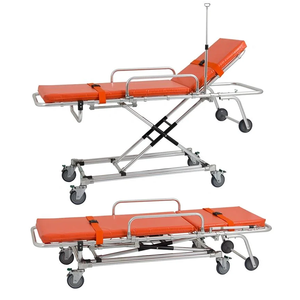
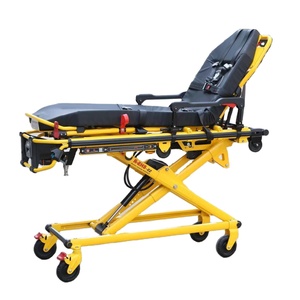
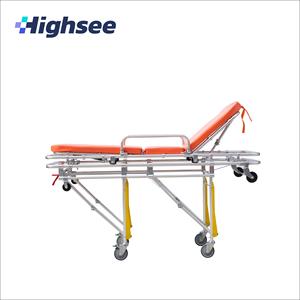
| Ambulance Auto-Loading Stretcher | 6060-T6 Anodized Aluminum | 250 kg (550 lbs) | Partial (Backrest Area) | Pre-Hospital EMS & Ambulance Fleets |
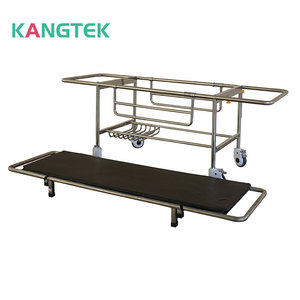
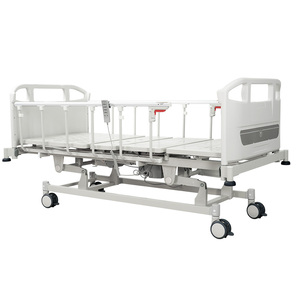
| Emergency Room Patient Trolley | Cold-Rolled Steel / 304 Stainless | 300 kg (660 lbs) | Full Deck (C-Arm Compatible) | Trauma Bays, ER, ICU Transfer |
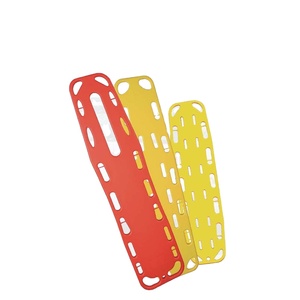
| PE Modular Spine Board | High-Density Polyethylene (HDPE) | 205 kg (450 lbs) | 100% Radiolucent (X-Ray, CT, MRI) | Spinal Immobilization & First Aid |
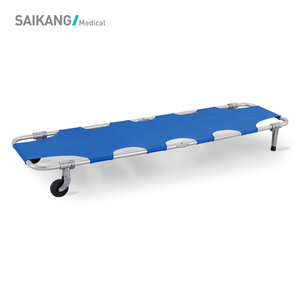
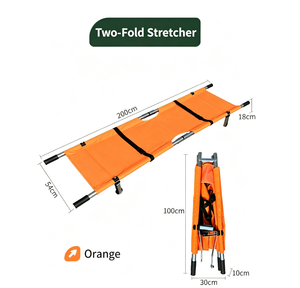
| Compact Double Folding Stretcher | High-Strength Aluminum Alloy | 160 kg (350 lbs) | N/A (Emergency Canvas) | Military, Field Rescue, Disaster Response |
Next-Generation Technology Trends in Medical Stretcher Manufacturing
Driven by rising healthcare acuity, an aging global demographic, and an elevated focus on caregiver occupational health (specifically lowering musculoskeletal injuries among nurses and paramedics), the medical stretcher manufacturing sector is undergoing rapid technological evolution. OEM suppliers must align their product roadmaps with several key technological vectors:
1. Motorized Power-Assist Drive Systems
Integrating battery-powered electric drive wheels into patient transport stretchers drastically reduces push/pull start-up friction. Microprocessor-controlled force sensors dynamically adjust motor torque based on caregiver input, allowing a single operator to steer a 250kg patient up 10° inclines effortlessly.
2. Complete Radiolucency for Trauma C-Arm Imaging
Modern ER stretchers are increasingly designed with full-length radiolucent resin or carbon-fiber mattress decks. This allows emergency trauma teams to perform fluoroscopy and digital X-ray diagnostics directly on the stretcher without transferring critical patients, saving vital minutes during the "Golden Hour."
3. Smart Telemetry & In-Bed Scale Integration
Next-gen OEM stretchers feature integrated strain-gauge load sensors connected to digital display modules. These allow real-time patient weight monitoring for precise medication dosage calculation in acute care, alongside wireless IoT connectivity for hospital asset-tracking networks.
4. Advanced Infection Prevention Chemistry
Surface technology has progressed beyond basic paint to non-porous antimicrobial silver-ion powder coatings and seamless ultrasonic-welded mattress covers. These eliminate stitch holes where bio-fluids can pool, curbing hospital-acquired infections (HAIs).
Future Procurement Trends for Global Hospital Networks & OEM Buyers
B2B procurement of medical equipment has shifted dramatically from short-term unit price evaluation toward holistic Total Cost of Ownership (TCO), supply chain resiliency, and strict regulatory compliance verification. Healthcare procurement directors and medical equipment distributors should evaluate the following structural procurement shifts:
1. Total Cost of Ownership (TCO) vs. Initial Capital Expenditure
While low-cost manual stretchers may present attractive initial invoice numbers, higher failure rates in caster wheel bearings, hydraulic seals, and side-rail locking pins lead to severe downtime and maintenance overhead. Leading procurement networks now demand 10-year total cost calculations that factor in spare parts availability SLAs, seal degradation rates, and modular component interchangeability across product generations.
2. Rigorous Supply Chain Audit & MDR/FDA Regulatory Traceability
With the implementation of the European Union Medical Device Regulation (EU MDR 2017/745) and strict FDA Unique Device Identification (UDI) requirements, medical stretchers must maintain full material traceability. Qualified OEM suppliers must provide complete Device Master Records (DMR), raw material batch certifications, biocompatibility reports (ISO 10993), and risk analysis documentation (ISO 14971).
3. Customized Modular OEM Platforms
To reduce inventory complexity, regional healthcare distributors are moving toward single modular stretcher chassis designs that accept plug-and-play accessories. A standardized frame can be configured as a basic patient transfer trolley, upgraded with hydraulic pumps for ER trauma duty, or fitted with specialized patient restraint systems for behavioral health transport.
Frequently Asked Questions (FAQ) for OEM Stretcher Sourcing
Clear, authoritative technical answers to common questions asked by hospital purchasing managers, EMS equipment directors, and medical device distributors.
Partner with a Leading Custom OEM Medical Stretcher Supplier
Empower your hospital network, EMS fleet, or medical device brand with high-performance, clinically validated patient transport stretchers. Contact our engineering and procurement team today to request technical drawings, custom OEM quotations, or comprehensive product catalogs.