OEM/ODM Bariatric & Acute Care Bed Portfolio
Explore our certified medical bed manufacturing lines built for ICU, bariatric, and long-term care environments.
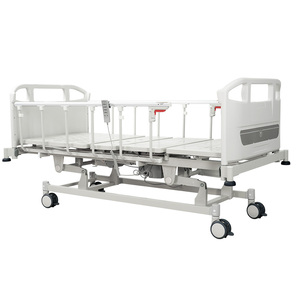
- ISO13485 & CE Certified
- High-strength Steel & ABS Frame
- 3-Function Precision Motors
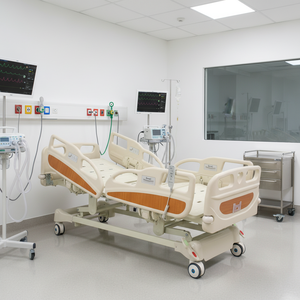
- Multi-Function Custom Configuration
- Heavy-Duty Bariatric Rating
- Central Braking System
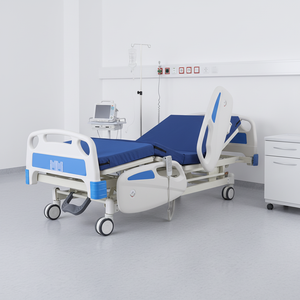
- Ultra-Low Height Adjustment
- Ergonomic Positioning Controls
- OEM Color & Finish Options
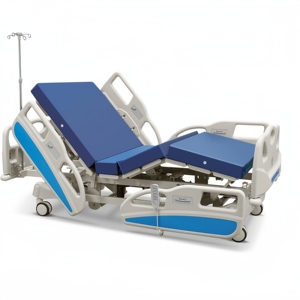
- 5-Zone Ergonomic Articulation
- Integrated Mattress System
- Emergency CPR Quick Release
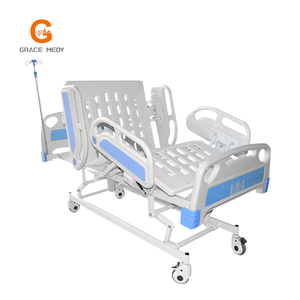
- Hybrid Manual/Electric Drive
- Impact-Resistant Side Rails
- Clinical Examination Deck
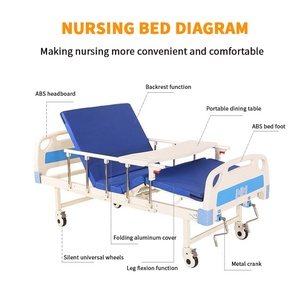
- Smooth Mechanical Crank Gear
- Durable Powder-Coated Steel
- High Weight Capacity Deck
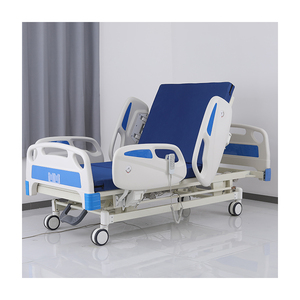
- Stainless Steel Structure
- Class II Medical Device Grade
- Factory Direct Pricing & OEM
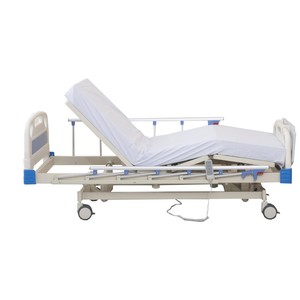
- Premium L&K Linear Actuators
- CE & FDA Compliance Ready
- Quiet Actuation (<45dB)
Engineering Standards in Bariatric Bed OEM/ODM Manufacturing
As global healthcare systems experience an unprecedented surge in bariatric patient admissions, hospital procurement officers, medical equipment distributors, and healthcare facility managers face growing challenges in securing durable, safety-compliant, and clinically advanced patient handling systems. Standard hospital beds—typically rated for safe working loads of 350 to 500 lbs—are structurally inadequate and clinically risky when applied to bariatric care. The demand for specialized OEM/ODM bariatric beds manufacturers and factories capable of engineering heavy-duty systems with dynamic load capacities ranging from 600 lbs to over 1,000 lbs has transitioned from a niche requirement to a core imperative in modern healthcare infrastructure.
Original Equipment Manufacturing (OEM) and Original Design Manufacturing (ODM) in the bariatric bed sector require rigorous structural metallurgy, sophisticated linear actuation systems, advanced pressure redistribution integration, and stringent compliance with international medical device standards including IEC 60601-2-38, IEC 60601-2-52, ISO 13485, and FDA 21 CFR Part 820. This comprehensive guide outlines the technical paradigms, procurement models, technology roadmaps, and manufacturing criteria essential for establishing high-yield OEM/ODM partnerships.
Key Engineering Insight: Information Gain in Bariatric Structural Integrity
Unlike standard medical beds, true bariatric beds cannot simply be "scaled-up" versions of conventional frames. They require re-engineered center-of-gravity kinematics, high-yield steel tubing (such as Q345B cold-drawn structural steel), dual-linear actuator drives per articulation zone, and reinforced perimeter expansion decks that prevent frame twisting under asymmetric lateral loads.
Structural Architecture & Metallurgy Specifications Matrix
When evaluating a prospective OEM/ODM manufacturing partner, engineering teams must evaluate raw material specifications, welding automation, and stress analysis protocols. The table below illustrates the minimum OEM engineering specifications for heavy-duty bariatric medical beds compared to standard ward beds:
| Engineering Parameter | Standard Hospital Bed | OEM Heavy-Duty Bariatric Bed | High-Capacity ODM Custom Spec |
|---|---|---|---|
| Safe Working Load (SWL) | 175 kg – 230 kg (385 – 500 lbs) | 360 kg – 450 kg (800 – 1000 lbs) | 540 kg+ (1200 lbs+) Custom |
| Frame Material | Standard Mild Steel (Q235) | Reinforced High-Yield Steel (Q345B) | Automotive-Grade Cold Rolled Alloy |
| Sleep Deck Width | 36 inches (900 mm) Fixed | 39" to 48" Expandable Deck | 36" to 54" Powered Width Expansion |
| Linear Actuator Rating | 4,000N - 6,000N Thrust | 8,000N - 12,000N Heavy Drive | Dual Synchronized 10,000N Drives |
| Caster & Braking Grade | 5" Individual / Central Brake | 6" Heavy Duty Twin Wheel Central Brake | 6" Electronic Steer & Motorized Drive Assist |
| In-Bed Scale Precision | Optional (± 0.5 kg) | Integrated OIML Class III (± 0.1 kg) | Multi-Zone Load Cell with BMI Tracking |

Over 30 Years of Engineering & Production Heritage
With an established legacy dating back to 1989, our medical bed production eco-system—backed by the Hoffmann Family of Companies operating across 240+ global enterprises—combines state-of-the-art robotic welding, automated powder coating, and rigorous quality management systems.
Our OEM/ODM capabilities encompass every phase of contract manufacturing: from initial CAD prototyping, Finite Element Analysis (FEA) stress testing, and tooling fabrication, to electronic system integration, safety compliance verification, and global logistics packaging.
Custom Modular ODM Design
We work with global healthcare brands to design proprietary bed frames, custom side-rail geometries, ergonomic hand-pendant interfaces, and customized brand aesthetic finishes.
Strict Clinical QA Protocols
100% of manufactured frames undergo 150% static load stress testing, 10,000-cycle continuous articulation fatigue analysis, and high-voltage dielectric insulation checks prior to export shipping.
Global OEM Supply Chain
Optimized containerized packaging, knock-down (CKD/SKD) modular logistics configurations, and fast-track spare parts fulfillment across North America, Europe, Asia, and Latin America.
Future Development Trends in Bariatric Bed Technology
The global bariatric bed market is undergoing rapid technological evolution driven by changing clinical demands, hospital digitalization, and caregiver injury-prevention mandates. OEM/ODM buyers must align with factories actively investing in next-generation research and development. Key technology trends shaping the future of bariatric patient beds include:
1. Powered Width & Length Deck Expansion
Traditional manual deck expansion mechanisms are being superseded by motorized, single-touch width expansion systems. Modern ODM beds allow nurses to electronically expand sleep deck width from 36 inches up to 48 or 54 inches without relocating the patient. Length extension features integrated into the foot section accommodate taller patients while automatically adjusting mattress surface pressure.
2. AI-Driven Smart Load Cell Systems & Patient Monitoring
Future-ready bariatric beds act as data-gathering hubs within the smart hospital ecosystem. Integrated multi-zone load cells provide continuous real-time weight measurement accurate to ±100 grams, automatically logging patient metrics directly to Electronic Health Record (EHR) platforms via Wi-Fi or Bluetooth Low Energy (BLE). Furthermore, AI algorithms analyze micro-movements to provide early bed-exit alerts, reducing fall risks for impaired patients.
3. Automated Lateral Rotation & Pulmonary Therapy
Immobile bariatric patients face elevated risks of ventilator-associated pneumonia (VAP), atelectasis, and stage 4 pressure ulcers. Next-generation ODM designs incorporate continuous lateral rotation therapy (CLRT) actuators capable of tilting the mattress deck up to 30 degrees at programmable intervals. This automated movement promotes pulmonary drainage and eliminates manual patient turning by healthcare staff, drastically reducing caregiver spinal injury rates.

4. Motorized Drive Assist & Intelligent Casters
Transporting a 900 lbs bariatric bed with a patient requires substantial physical force, often exceeding safe manual handling guidelines. Advanced ODM bariatric beds integrate retractable motorized drive wheels controlled via pressure-sensing push handles. These motorized assist drives allow a single caregiver to maneuver heavy beds through hospital corridors and into elevators effortless.
Future Procurement & Supply Chain Trends (2025–2035 Insights)
Global procurement strategies for medical furniture are shifting away from off-the-shelf spot purchasing toward long-term strategic OEM/ODM partnerships. Strategic buyers are prioritizing suppliers that mitigate total cost of ownership (TCO) and ensure long-term operational resilience. Key sourcing trends include:
Shift to Total Cost of Ownership (TCO) Procurement
Procurement directors increasingly look beyond initial unit purchase prices to calculate lifetime maintenance costs, actuator availability, warranty terms, and modular component interchangeability. Standardizing motor actuators (e.g., Linak or Dewert systems) across bed fleets significantly reduces spare parts inventory overhead.
Semi-Knocked-Down (SKD) & Modular Shipping
Rising ocean freight costs have incentivized OEM buyers to request SKD or CKD structural bed configurations. By shipping compact, pre-assembled sub-frames that can be rapidly assembled at regional distribution hubs, shipping volume costs are reduced by up to 40% per container.
Regulatory Harmonization & Traceability
With stricter FDA Unique Device Identification (UDI) regulations and European Medical Device Regulation (MDR 2017/745) mandates, medical bed factories must supply complete device master records (DMR), material certificates, and ISO 13485 audited quality records for every batch shipped.
Flexible OEM Customization & Private Label Branding
Distributors require high product differentiation. Leading factories offer custom color matching for side-rail ABS covers, localized control panel translations, tailored hand-pendant graphics, and customized packaging options for direct brand integration.
Frequently Asked Questions (FAQ) for B2B OEM/ODM Procurement
Essential technical and commercial answers for hospital buyers, brand owners, and medical supply distributors.
Our standard MOQ for baseline customized OEM beds begins at 20 units per order batch. For complete ODM custom-engineered designs requiring dedicated mold tooling and specialized FEA validation, MOQs typically range from 50 to 100 units depending on frame customization depth. Standard factory models with branding customization can be fulfilled in smaller batch quantities.
All bariatric bed frames undergo static load testing at 150% of rated safe working capacity (e.g., 1,500 lbs static test for a 1,000 lbs SWL bed) in accordance with IEC 60601-2-52 requirements. In addition, our manufacturing facilities hold ISO 13485 certification, CE marking, and FDA registration. Full testing documentation, dielectric insulation test reports, and material mill test certificates are provided with each production run.
We partner with industry-leading motor and actuator manufacturers including Linak, Dewert, L&K, and Jiecang. Depending on target market price points and technical requirements, buyers can specify actuator brand, IPX4 or IPX6 washdown water-ingress protection ratings, emergency battery back-up capacities, and hand-pendant layout configurations.
Yes. Our advanced ODM engineering team routinely integrates high-precision strain-gauge load cell systems into the bed deck sub-frame. These systems feature OIML Class III accuracy, one-touch tare functions, auto-zeroing, and dual-zone bed exit monitoring alarms that interface directly with standard hospital nurse call systems via RJ45 or wireless protocols.
Initial CAD design and engineering review take 1 to 2 weeks. Prototype fabrication and preliminary load testing require approximately 3 to 4 weeks. Once prototype approval and clinical validation are signed off by the client, mass production lead times generally range between 30 to 45 days, depending on raw material availability and custom tooling requirements.
We guarantee spare parts availability (including actuators, control boxes, casters, gas springs, and circuit boards) for a minimum of 10 years post-production. Standard OEM contracts include a 3-year structural frame warranty and a 1-to-3-year linear actuator warranty. Replacement parts can be shipped via express air freight or bundled into scheduled sea freight container shipments.
To maximize container space utilization and prevent transit damage, beds are packaged using heavy-duty honeycomb cardboard cartons, reinforced corner guards, and vacuum-sealed anti-corrosion polybags on fumigated wood or steel pallets. We offer both Fully Assembled (CBU) packaging and Semi-Knocked-Down (SKD) modular packaging depending on client handling preferences.