Featured Manual & Multi-Function Clinical Bed Systems
Evaluated based on structural load capacities, ergonomic crank torque metrics, anti-microbial surface durability, and international regulatory compliance (ISO 13485 / CE / FDA standard frameworks).
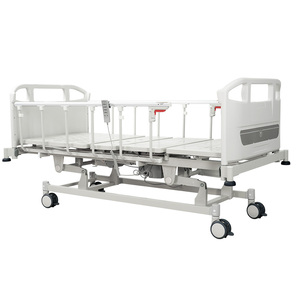
YXZ-C3(y302) 3-Function Manual & Hybrid ICU Clinical Bed
- ISO 13485 & CE Medical Certified
- ABS Tuck-Away Safety Side Rails
- Dual Manual Crank / Hybrid Drive
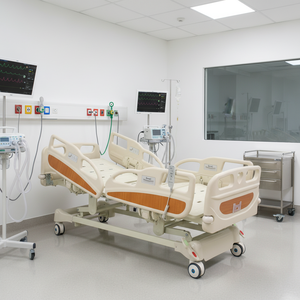
Hospital Patient Nursing Clinical Bed 3/5/7 Function ICU System
- Heavy-Duty Steel Cold-Rolled Frame
- Multi-Position Trendelenburg Tilt
- Central Braking Caster Network
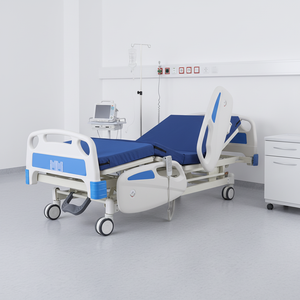
Height Adjustable Luxury 3-Function Patient Ergonomic Bed
- Smooth Precision Screw-Crank System
- Low-Height Fall Prevention Profile
- Anti-Microbial Electrostatic Finish
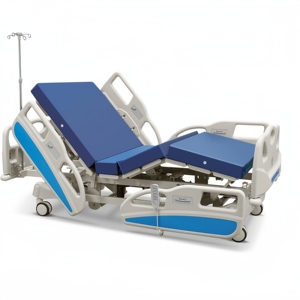
Cama Clinica Medical Bed 5-Function ICU Platform + Mattress
- Integrated Pressure-Relief Mattress
- Emergency CPR Quick Release Lever
- High-Capacity 250kg Safe Load
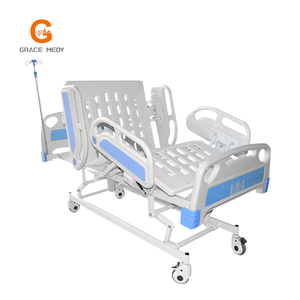
Multi-Function Manual & Electric Examination ICU Bed
- Reinforced Stainless Steel Subframe
- Multi-Segment Articulating Deck
- Removable ABS Head/Foot Boards
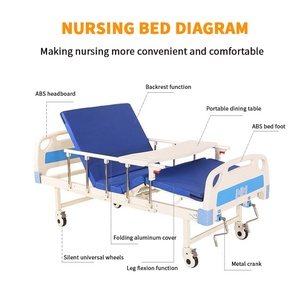
Hospital Patient Bed Two-Crank Ergonomic Manual Recovery System
- Foldable Hidden Crank Handles
- Backrest & Knee-Rest Precision Control
- Ultra-Durable Ward Recovery Design
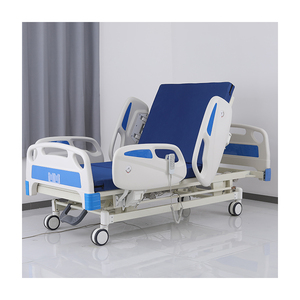
Chenhong CH-C8 Double-Shaking Stainless Class II Medical Bed
- High-Grade Stainless Steel Chassis
- Class II Medical Device Approval
- Anti-Collision Corner Buffer Wheels
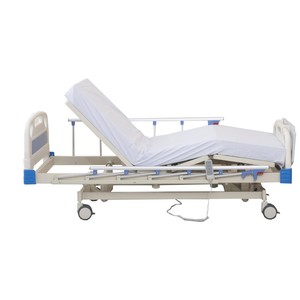
GRACEMED 3-Function Electronic & Manual Override Ward Bed
- Silent Medical Motor + Manual Override
- Fully Certified CE & ISO Manufacturing
- Comprehensive 1-Year Factory Warranty
Hoffmann NOA Medical Industries: Engineering Trust & Safety
Founded in 1989 and integrated into the global Hoffmann Family of Companies (encompassing over 240 enterprise operations worldwide), Hoffmann NOA Medical Industries, LLC stands as a premier authority in medical furniture engineering. Operating out of our modern facility in Washington, Missouri, we combine heavy-duty metallurgy, clinical ergonomics, and strict quality assurance protocols.
- FDA & ISO 13485 Certified Manufacturing: All manual and hybrid bed frameworks undergo stringent stress-testing and microbiological surface verification.
- Global Freight & Sourcing Matrix: Delivering turn-key medical logistics to hospital systems across North America, Europe, Latin America, and Asia.
- Zero-Failure Screw-Crank Mechanisms: Mechanical drives tested to withstand over 100,000 continuous full-articulation cycles under maximum rated load.
Manual vs. Electric Hospital Beds: Total Cost of Ownership (TCO) & Operational Reliability
While full-electric hospital beds offer push-button convenience, manual crank hospital beds remain the foundational backbone of worldwide clinical infrastructure. This comparative matrix outlines critical evaluation metrics for healthcare procurement managers.
| Evaluation Metric | Manual Crank Beds | Electric Beds | Hybrid (Manual Override) Beds |
|---|---|---|---|
| Initial Capital Expenditure (CapEx) | Low ($300 – $800 / unit) | High ($1,800 – $5,500 / unit) | Moderate ($900 – $1,600 / unit) |
| Power Grid Dependency | 0% (100% Fail-Safe Manual Operation) | 100% (Requires continuous power / battery) | Dual Redundancy (Electric + Manual Backup) |
| Annual Maintenance Cost (OpEx) | Ultra-Low (< $25/year mechanical grease/inspect) | Moderate to High ($150–$400/year PCB & Motor) | Low to Moderate ($60–$120/year) |
| Mean Time Between Failures (MTBF) | > 7 Years under continuous clinical use | 3.5 – 5 Years (Electronic component life) | > 6 Years |
| Disaster Relief & Emergency Utility | Essential / Unrestricted mobility & deployment | Limited without specialized power backup | High versatility in emergency surge care |
| Sanitation & Washdown Resiliency | High resistance to chemical spray & water | Requires IPX4/IPX6 sealed enclosures | Protected drive housings required |
Future Sourcing & Technological Trends in Medical Bed Manufacturing
Understanding the macro-shifts in healthcare equipment export standards, material science breakthroughs, and ergonomic regulatory mandates shaping the next decade of medical bed procurement.
1. Modular Mechanical-to-Electric Upgradability
Modern manual beds are no longer static assets. Top exporters are engineering modular chassis designs that accept field-retrofittable electric linear actuators. This allows hospitals to purchase budget-friendly manual beds today and upgrade them into motorized units as capital budgets expand.
2. Nano-Silver Anti-Microbial Coatings
Hospital-Acquired Infections (HAIs) drive stringent hygiene protocols. Leading bed exporters are integrating silver-ion anti-bacterial agents directly into thermosetting epoxy powder coatings. These specialized surfaces actively neutralize 99.9% of surface pathogens, including MRSA and E. coli, over the bed's lifetime.
3. Low-Torque Ergonomic Gear Ratios
Caregiver strain is a primary liability concern in patient handling. Next-generation two-crank and three-crank beds utilize dual-pitch precision lead screws combined with heavy-duty ball-bearing thrust collars. This reduces manual crank effort by up to 60%, allowing effortless elevation adjustment regardless of patient weight.
4. Knock-Down (CKD) Freight Optimization
Global sea freight dynamics demand maximum container utilization. Top exporters design Completely Knocked Down (CKD) and Semi-Knocked Down (SKD) bed frames. By optimizing flat-pack geometry, high-capacity exporters fit up to 140 manual beds in a standard 40ft HQ container, drastically dropping shipping cost per bed.
5. Unified International Compliance Mandates
Regulatory bodies are harmonizing standards under IEC 60601-2-38 and ISO 22867. Compliance mandates require zero-entrapment side rail gap clearances, strict flame retardancy ratings for high-density foam mattresses, and rigorous structural fatigue load testing before issuing export clearance.
6. Ultra-Low Riser Deck Profiles
Patient fall prevention programs have made low-height beds an industry standard. Modern manual beds feature telescopic linkage arms that allow deck heights to lower within 220mm (8.6 inches) of the floor, dramatically reducing fall impact risk while providing high-elevation positions for nursing access.
How to Evaluate & Audit Global Manual Bed Exporters
Selecting a long-term medical bed supplier requires auditing manufacturing capability, raw material integrity, and post-sale technical support systems.
1. Metallurgy & Structural Steel Grade Verification
Always verify that the manufacturer uses standard cold-rolled Q235 carbon steel tubing with minimum wall thicknesses of 1.5mm to 2.0mm. Sub-par suppliers often utilize thin-walled recycled metal, leading to frame sagging under heavy patient loads.
2. Precision Crank Mechanisms & Clutch System
Inspect the hand crank assembly. Premium beds feature neutral-position limit switch clutches that prevent over-winding. Over-winding on low-quality beds strips internal gear threads and locks up elevation mechanisms.
3. Caster Quality & Braking Performance
Hospital floor surfaces demand non-marking, anti-winding polyurethane (PU) casters equipped with precision ball bearings. Test central locking mechanics to ensure rigid stability when the bed is parked during critical patient transfers.
Essential Export Audit Checklist:
- Full ISO 13485 Medical QMS Accreditation
- CE Mark & FDA Class II Registration Filings
- Automated Robotic Weld Seam Uniformity
- 500-Hour Salt Spray Anti-Corrosion Testing
- Guaranteed 10-Year Replacement Parts Availability
- Reinforced Export Plywood Box or Heavy Carton Packing
Medical Bed Procurement & Exporting FAQ
Direct expert answers to key technical, logistical, and commercial inquiries encountered by hospital directors, B2B importers, and government healthcare procurement agents.
What is the standard Safe Working Load (SWL) for commercial manual hospital beds?
Standard clinical manual beds feature a Safe Working Load (SWL) ranging from 175 kg to 250 kg (385 lbs to 550 lbs). Bariatric manual beds engineered with reinforced dual-crossbeams and heavy-gauge steel supports can achieve an SWL of up to 350 kg (770 lbs). When reviewing manufacturer specifications, ensure that the SWL rating encompasses the combined weight of the patient, mattress, IV poles, and attached accessory gear.
How do 1-crank, 2-crank, and 3-crank manual bed configurations differ in clinical functionality?
Single-crank beds control only the backrest section elevation (0° to 75°). Two-crank beds regulate both the backrest section and the knee-rest leg section independently, allowing for basic Fowler's and semi-Fowler's therapeutic positions. Three-crank beds add total vertical height adjustment (hi-lo function), enabling caregivers to raise the bed for ergonomic patient care or lower it for safe patient egress.
What container loading capacities can be expected for bulk sea freight shipments?
Container capacity depends entirely on the packaging design. Completely Knocked Down (CKD) manual beds maximize volume, allowing approximately 120 to 140 units per 40ft HQ container. Semi-Knocked Down (SKD) packing typically yields 60 to 80 units per 40ft HQ container, while fully assembled beds reduce loading volume to approximately 30 to 40 units. Importers balancing assembly labor versus freight rates often favor SKD packaging.
What international quality certifications are required for importing medical beds?
Core export compliance mandates include ISO 13485 (Medical Device Quality Management System), ISO 9001, and the CE Mark under European Medical Device Regulation (MDR 2017/745). For US importation, facilities must maintain FDA Establishment Registration and Class II Device Listings. Additional regional certificates such as South America's ANVISA or Saudi Arabia's SFDA may be required depending on destination customs protocols.
How does anti-microbial powder coating protect medical bed frames against hospital disinfectants?
Hospital-grade cleaning protocols utilize harsh chemical agents including quaternary ammonium, hydrogen peroxide, and sodium hypochlorite bleaches. Standard paint quickly degrades, chips, and exposes raw metal to rust. Electrostatic application of epoxy-polyester powder coat baked at 200°C creates a non-porous chemical barrier that withstands aggressive hospital disinfection schedules without flaking or fading.
What OEM/ODM customization options do qualified exporters typically offer?
Tier-1 exporters provide extensive OEM customization, including custom frame dimensions, specific powder coat color codes (RAL matching), custom-branded ABS head/footboards, integrated IV pole sockets, central braking caster upgrades, anti-entrapment side rail designs, and custom instruction manuals packaged with hospital asset tags.
Request Technical Specifications & Factory-Direct Quotations
Whether equipping a regional hospital project, bidding on a public health tender, or expanding your medical equipment distribution portfolio, our clinical specialists deliver comprehensive support.