Flagship Patient Transport & ICU Equipment
Certified emergency stretchers and acute care medical bed systems engineered for high-durability rescue operations and critical clinical care.
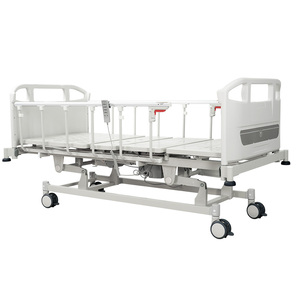
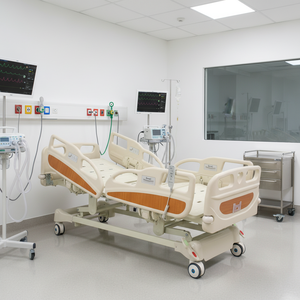
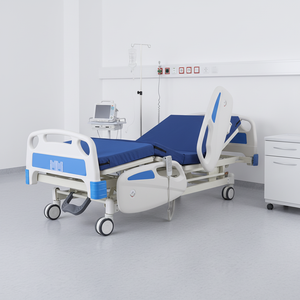
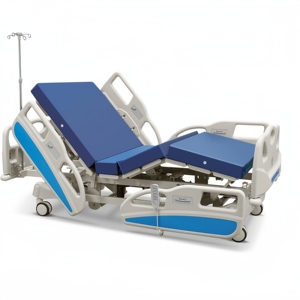
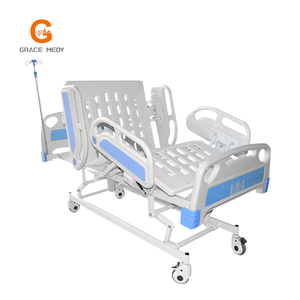
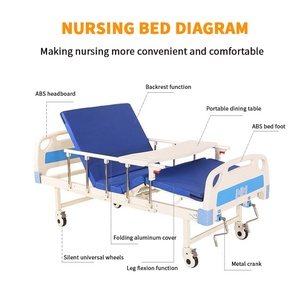
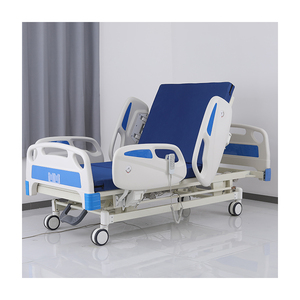
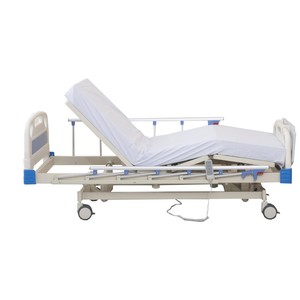
Engineering Excellence in Emergency Transport: Executive Procurement Guide
In high-acuity Emergency Medical Services (EMS) and rapid pre-hospital care, the ambulance stretcher is far more than a transport cot—it is an active patient stabilization platform and an operational tool engineered to safeguard both victims and paramedics. Modern healthcare procurement demand has shifted rapidly from simple mechanical trolleys to high-payload, hydraulic-assisted, and fully automated self-loading electric stretcher systems capable of resisting violent vehicle decelerations while preserving bio-mechanical ergonomics.
As a global pioneer in acute care and patient transfer infrastructure under the Hoffmann Family of Companies framework, our engineering teams synthesize structural metallurgy, impact physics, and clinical ergonomics into every stretcher line. Operating with rigorous adherence to global quality management systems, including FDA compliance and EN 1789 dynamic crash test specifications, our manufacturing facilities deliver unmatched reliability for hospital systems, municipal EMS fleets, and international defense logistics.
Structural Metallurgy & Mechanical Integrity
The core structural framework of our premium stretcher systems utilizes high-tensile 6005A-T6 aircraft-grade aluminum alloy paired with robotic TIG-welded structural joins. This combination yields an optimal strength-to-weight ratio, allowing maximum operational payloads reaching up to 318 kg (700 lbs) while keeping unladen frame weights exceptionally low. Specialized anodized and anti-microbial powder coatings ensure total resistance against corrosive body fluids, harsh chemical disinfectants, and extreme atmospheric exposure during field rescue ops.
Powered Hydraulic Loading
Integrated micro-hydraulic power packs enable single-operator loading and unloading, reducing occupational back injuries among paramedics by up to 68% during high-frequency shift deployments.
10G Dynamic Crash Retention
Engineered locking mechanisms seamlessly integrate with vehicle mounting tracks, certified to endure violent multi-axis forces in accordance with stringent international EMS vehicle safety protocols.
Infection Control Architecture
Seamless high-frequency welded mattresses combined with non-porous ABS drop-down side rails eliminate fluid ingress points, facilitating 3-minute complete decontamination protocols.
Technical Specifications & Performance Matrix
To assist hospital procurement teams and emergency department directors in selecting the optimal platform, the following data visualization details the engineering attributes across our primary stretcher product tiers:
| Stretcher Class / Model Tier | Primary Framework | Safe Working Load (SWL) | Elevation System | Vehicle Loading Mechanism | Compliance Standards |
|---|---|---|---|---|---|
| Elite Auto-Power Stretcher | Aviation Aluminum 6005A-T6 | 318 kg (700 lbs) | Dual Hydraulic Cylinder | Self-Loading Electro-Hydraulic | EN 1789, ISO 13485, FDA Class II |
| Pro-Load Mechanical Roll-In | Reinforced Oval Alloy Tubing | 250 kg (550 lbs) | Multi-Level Mechanical Latch | Foldable Leg Roll-In Ramp | CE Medical Directive 93/42/EEC |
| ICU Transfer Stretcher Trolley | Cold-Rolled Steel & ABS Shell | 220 kg (485 lbs) | Hydraulic Pedal Control | Central Locking Caster System | ISO 9001, ISO 13485 Certified |
| Bariatric Heavy-Duty System | High-Yield Structural Titanium Alloy | 400 kg (880 lbs) | Quad-Actuator Electric Lift | Power-Assist Guided Track | EN 1789 10G Tested, CE, US-FDA |
Future Procurement & Technological Development Trends
The global emergency medical equipment market is undergoing a profound paradigm shift driven by digital integration, workforce ergonomics, and strict infection containment mandates. Procurement teams evaluating 3-to-5-year fleet lifecycle updates must account for the following macro industry trends:
1. Smart Tele-EMS Connectivity & Telematics Integration
Next-generation ambulance stretchers are transforming into intelligent data nodes within the pre-hospital care chain. Integrated load-cell sensors embedded directly within the mattress deck record real-time patient weight data, transmitting figures wirelessly to the ambulance telemetry unit and receiving hospital trauma bay. This enables precision dosage calculation for emergency anesthesia and clot-busting medications prior to hospital arrival.
2. Power-Assisted Autonomous Loading & Zero-Lift Mandates
Occupational health regulations in North America and Western Europe are increasingly placing stringent limits on manual lifting by EMS personnel. Procurement specifications are rapidly phasing out fully manual roll-in cots in favor of electro-hydraulic power-load systems. These advanced platforms feature automated sensors that detect the ambulance floor height, dynamically adjusting leg extensions to execute smooth, zero-lift vehicle loading.
3. Infection Resistant Polymer Science & Modular Components
Post-pandemic healthcare sanitation protocols require medical devices to withstand aggressive broad-spectrum disinfectant chemical agents without degradation. Future stretcher manufacturing trends prioritize silver-ion antimicrobial additive infusion into synthetic mattress polymers and structural ABS shields, permanently inhibiting bacterial and viral growth on contact surfaces.
Why Partner with Our Manufacturing & Global Export Network?
Building on over three decades of clinical innovation and operational excellence, our enterprise group stands as a premier manufacturing destination for healthcare distributors, government health ministries, and private hospital networks worldwide.
30+ Years Heritage & backing
Backed by the Hoffmann Family of Companies with over 240 global enterprise entities, offering financial stability, vast R&D resources, and multi-decade supply chain security.
Seamless OEM/ODM Global Export
Full customization capability covering electrical voltage specs, custom vehicle locking interfaces, multi-lingual branding, and fast ocean/air freight logistics across 120+ countries.
Rigorous Factory Testing Protocol
Every single unit undergoes 100% full-load static weight test, 5,000-cycle actuator stress validation, and electrical safety insulation screening prior to export packaging.
Frequently Asked Procurement Questions (FAQ)
Essential answers for hospital procurement specialists, emergency fleet managers, and international medical supply distributors.
What international safety certifications accompany your stretchers?
Our medical stretchers and acute patient transfer beds are fully certified under ISO 13485 Quality Management Systems, CE Medical Device Directives (Class I/II), and conform to EN 1789 standards for emergency ambulance transport safety.
Can stretchers be customized to fit specific ambulance vehicle loading heights?
Yes. We offer fully customizable drop-frame assemblies, adjustable loading wheel configurations, and custom floor-mount latching systems tailored to European Type A/B/C ambulances, US KKK-A-1822 specs, or custom box-body emergency vehicles.
What is the typical battery lifespan and duty cycle on powered models?
Our powered electric stretcher lines use high-capacity Lithium Iron Phosphate (LiFePO4) battery packs delivering up to 50 continuous full-load lift cycles per charge. The battery packs feature quick-swap capability and intelligent internal battery management units (BMU).
How do you support spare parts supply and international technical service?
We maintain regional spare parts hubs and guarantee 10-year factory replacement part availability for all core stretcher platforms. We also provide complete digital service manuals, technical video guides, and direct engineer-to-engineer remote support.
What is the minimum order quantity (MOQ) and production lead time for export?
Standard model export orders start at low MOQs of 2 to 5 units, while containerized bulk orders (20ft/40ft HQ) benefit from tiered volume discounts. Factory lead times typically range from 14 to 28 days depending on specialized customization options.
Are mattresses radio-translucent for X-Ray and C-Arm compatibility?
Yes. Our ICU transfer stretchers and trauma transport platforms feature carbon-fiber or high-density radiolucent backrest decks, permitting seamless fluoroscopy, C-Arm imaging, and X-Ray procedures without transferring the patient.
Request Factory-Direct Quotation & Technical Engineering Data
Connect directly with our senior EMS equipment specialists to receive detailed product specification sheets, international compliance documentation, and competitive tender pricing.