Industry-Standard Hospital & ICU Bed Solutions
Rigorously certified for high-acuity environments, long-term nursing care, and intensive recovery wards. Below are top-performing OEM/ODM medical bed configurations trusted by global health systems.
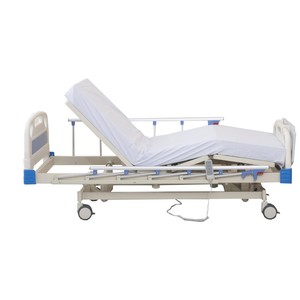
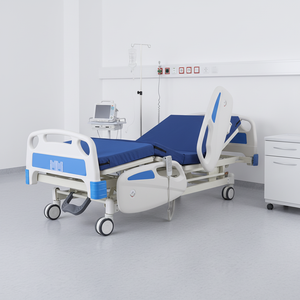
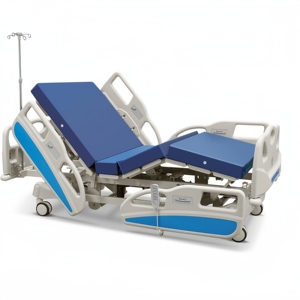
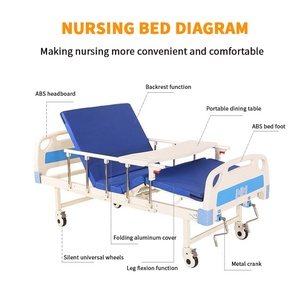
Navigating Modern Medical Bed Procurement: Engineering, Ergonomics, & Safety Regulations
In the contemporary healthcare ecosystem, the procurement of hospital beds has evolved from simple furniture acquisition to a high-stakes clinical decision impact investment. Hospital beds are fundamental therapeutic devices that directly influence patient recovery rates, nosocomial injury risk reduction, and caregiver musculoskeletal wellness. As health systems face rising patient acuity, acute nurse shortages, and stringent accreditation standards, selecting the right medical bed manufacturer requires a deep understanding of mechanical reliability, electrical safety, regulatory compliance, and total cost of ownership (TCO).
This whitepaper provides procurement directors, hospital administrators, biomedical engineers, and long-term care facility operators with an exhaustive evaluation of global medical bed manufacturing benchmarks, technical classifications, future technological trends, and strategic purchasing guidelines.
Comprehensive Technical Evaluation & Product Classification Framework
Modern hospital beds are engineered across specific functional tiers designed for distinct patient acuity levels. Understanding these technical distinctions is crucial for allocating capital budgets effectively without compromising patient safety.
1. Electric ICU & Critical Care Bed Systems
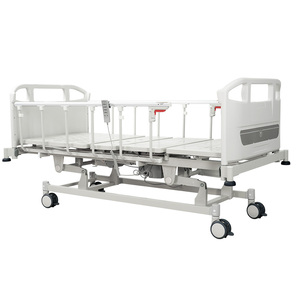
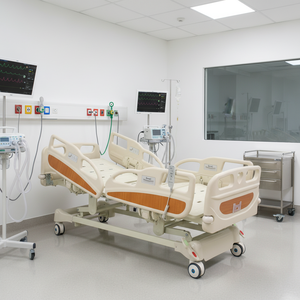
ICU beds represent the pinnacle of medical bed engineering. Designed for critically ill patients requiring continuous monitoring and rapid intervention, these beds feature 3, 5, or 7 independent electric actuators driven by advanced microcontrollers (such as Linak or L&K systems).
- Core Functions: Trendelenburg / Reverse Trendelenburg (±15° to ±20°), Fowler backrest elevation (0–75°), knee-break vascular contouring, and cardiac chair positioning.
- Critical Innovations: One-touch mechanical and electronic CPR quick release, lateral tilting capabilities to aid pulmonary drainage, and integrated load-cell scale systems for real-time patient weight tracking without movement.
2. Long-Term Care (LTC) & Skilled Nursing Beds
Engineered for extended resident stays in nursing homes, assisted living, and rehabilitation centers, LTC beds prioritize fall prevention, resident independence, and home-like aesthetics while maintaining full clinical utility.
- Fall Mitigation Technology: Super-low height risers capable of lowering the bed deck to under 7 inches (18 cm) from the floor, drastically reducing impact kinetic energy in unassisted egress events.
- Adaptability Features: Tool-less deck expansion systems allowing length extension (from 80 to 84/88 inches) and width adjustments to accommodate diverse resident body types.
3. Behavioral Health & High-Security Beds
Psychiatric facilities, behavioral health wards, and correctional medical environments require beds designed to withstand extreme abuse while completely eliminating suicide or self-harm hazards.
- Anti-Ligature Engineering: Smooth, rounded perimeter geometries, concealed mounting hardware, and fully enclosed motor compartments prevent the attachment of cords or bedsheets.
- Tamper-Resistant Build: Heavy-gauge reinforced steel frames, tamper-proof Torx fasteners, and floor-anchoring bolt plates engineered to withstand high dynamic impacts.
4. Expandable Bariatric Medical Bed Systems
With obesity rates climbing globally, bariatric bed procurement has become a core hospital initiative. Bariatric beds feature heavy-duty dual-drive linear actuators supporting safe working loads (SWL) ranging from 600 lbs (272 kg) up to 1,000 lbs (454 kg). Integrated motorized drive assist systems allow a single nurse to transport heavy patients safely without physical strain.
Hospital Bed Classification & Feature Comparison
Quick-reference architectural matrix for clinical purchasing decisions.
| Bed Category | Typical Actuator Count | Safe Working Load (SWL) | Primary Clinical Focus | Key Safety Standard |
|---|---|---|---|---|
| ICU / Critical Care | 4 to 7 Actuators | 250 kg – 350 kg (550–770 lbs) | Hemodynamic stability, continuous monitoring, CPR elevation | IEC 60601-2-52 / FDA 21 CFR |
| General Ward / Acute Care | 2 to 3 Actuators / Manual Cranks | 180 kg – 230 kg (400–500 lbs) | Post-operative recovery, basic patient elevation, mobility assistance | ISO 13485 / CE MDD/MDR |
| Long-Term Care (LTC) | 3 to 4 Actuators | 200 kg – 270 kg (450–600 lbs) | Fall prevention (ultra-low height), pressure injury reduction | IEC 60601-2-52 Entrapment Zones |
| Bariatric Care | 4+ Heavy-Duty Actuators | 350 kg – 454 kg (700–1000 lbs) | Dignified weight capacity, expandable width (39"-54"), caregiver protection | UL 60601-1 / Heavy Structural Load Test |
| Behavioral Health | 1 to 3 Enclosed Motors | 230 kg – 300 kg (500–660 lbs) | Anti-ligature, tamper-resistance, self-harm prevention, security anchorage | Behavioral Health Facility Safety Guidelines |
Strategic Procurement Trends & Product Evolution (2026–2030)
Hospital bed procurement is undergoing a paradigm shift driven by digital health integration, automated nursing workflows, and strict ergonomic legislation. Modern procurement officers must look beyond immediate purchase prices and evaluate how medical bed investments align with upcoming 5-year healthcare trends.
1. IoT Smart Bed Integration & Continuous Monitoring
The transition toward smart hospitals has turned medical beds into continuous data gathering platforms. Modern hospital beds now integrate piezoelectric sensor arrays beneath the mattress deck to track real-time heart rates, respiratory patterns, and patient movement without touching the skin.
Smart bed networks wirelessly connect to Hospital Information Systems (HIS) and Electronic Health Records (EHR) via Wi-Fi/Bluetooth, alerting nursing stations instantly when unassisted bed exit attempts occur, drastically curtailing patient fall rates.
2. Automated Pressure Injury Prevention & Lateral Rotation
Hospital-acquired pressure injuries (HAPIs) cost global health systems billions annually and lead to significant patient morbidity. Next-generation ICU and LTC beds incorporate automated continuous lateral rotation therapy (CLRT) and program-controlled alternating pressure mattress systems.
By automatically tilting the patient deck at programmable intervals (e.g., 20° tilt every 30 minutes), these beds relieve pressure over prominent bony prominences without requiring physical nurse repositioning, conserving vital nursing labor hours.
3. Total Cost of Ownership (TCO) vs. Initial CapEx
Savvy procurement departments are abandoning "lowest upfront price" sourcing strategies in favor of long-term TCO models. Budget line items now factor in replacement part availability, actuator motor lifecycle test cycles (minimum 10,000 continuous lifts), battery backup reliability, and modular maintenance simplicity.
Selecting manufacturers offering standardized, interchangeable components across multiple bed models significantly reduces spare parts inventory holding costs and technician training downtime.
Why Leading Global Healthcare Facilities Partner With Us
Combining over 30 years of medical bed manufacturing expertise with the vast industrial foundation of the Hoffmann Family of Companies (encompassing 240+ global entities), we deliver hospital beds engineered for decades of heavy clinical use.
Hospital Bed Procurement & Technical FAQ
Answers to common technical, regulatory, and supply chain questions encountered during hospital furniture procurement.
A: Functional designations refer to the number of independent motorized adjustments the bed can perform:
- 3-Function Beds: Provide electric Fowler backrest adjustment (0–75°), knee-rest positioning (0–45°), and overall bed height adjustment (hi-low elevation). Ideal for general hospital wards and long-term care.
- 5-Function Beds: Add electric Trendelenburg (head down tilt) and Reverse Trendelenburg (foot down tilt) adjustments to the standard 3 functions. Essential for ICU patient positioning, surgical recovery, and circulatory assistance.
- 7-Function Beds: Include all 5 functions plus automated lateral tilt (left/right rotation to assist in pulmonary therapy) and electrically expandable deck width/length or motorized drive assistance. Designed for critical care and bariatric patients.
A: Hospital bed safety standards (specifically IEC 60601-2-52 and FDA Hospital Bed System Dimensional Guidance) define 7 potential entrapment zones where patients could trap their head, neck, or chest (such as between side rails, between mattress and headboard, or inside side-rail bars). Trusted manufacturers design side rails and bed frames with strict dimensional tolerances—ensuring gaps are either smaller than 4.75 inches (120 mm) or larger than 12.5 inches (318 mm)—and conduct dynamic load testing to verify rails do not flex under pressure.
A: Patient falls are the leading cause of non-fatal injuries in nursing home residents. Low-height riser beds allow the bed deck to lower to approximately 7 to 9 inches off the ground. If an elderly or cognitively impaired resident rolls out of bed, the impact force is significantly lower, preventing hip fractures and head trauma. When combined with floor safety mats, low-bed design reduces fall injury rates by up to 80% without requiring physical restraints.
A: When evaluating hospital bed manufacturers, procurement teams must request and verify:
- ISO 13485 Certification: Demonstrates a quality management system specific to medical devices.
- IEC 60601-1 & IEC 60601-2-52 Test Reports: Ensures electrical safety, electromagnetic compatibility (EMC), and mechanical strength specific to medical beds.
- CE Certificate of Conformity: Mandated for European Union sales under MDR (EU) 2017/745.
- FDA 510(k) or Registration: Required for distribution within the United States market.
A: Yes. Professional OEM/ODM manufacturers provide custom electrical control boxes supporting 110V/60Hz (North America), 220V/50Hz (Europe/Asia), or universal dual-voltage transformers. Furthermore, facility procurement directors can specify custom wooden end-board laminates to match nursing home decors, custom powder-coated frame colors, and custom laser-etched hospital logos on side-rail control panels.
Steps to Request Your Institutional Medical Bed Quote
Streamline your purchasing project by acquiring complete technical spec sheets, CAD drawings, and factory direct price matrices.