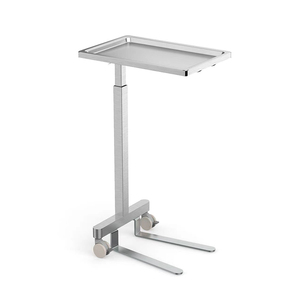
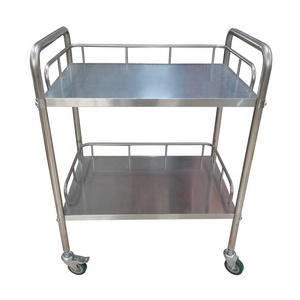
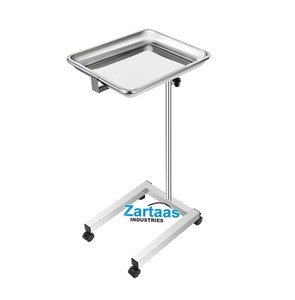
Precision-engineered surgical instrument Mayo stands, foot-operated hydraulic trolleys, and sterile-field mobile support systems for acute hospitals, trauma suites, and surgical centers worldwide.
Precision OR Equipment Catalog
Engineered Surgical Mayo Stands & Mobile Instrument Trolleys
Explore our flagship selection of seamless stainless steel Mayo stands, featuring whisper-quiet hydraulic lifts, reinforced single and dual-column frameworks, and anti-static, fluid-resistant casters built for high-stakes operating rooms.
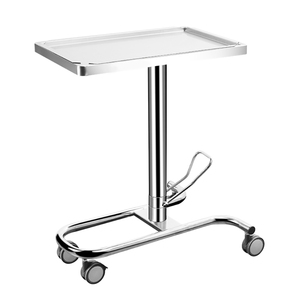
Hydraulic Foot-Pump
304 Stainless Steel Hydraulic Mayo Trolley
Foot-pedal hydraulic height adjustment (36"-54")
Seamless AISI 304 anti-magnetic stainless steel
Reinforced base with low-clearance surgical table fit
Engineering Authority: Clinical Biomechanics & Sterile Field Ergonomics
In modern surgical theaters, the Mayo stand is not merely a utility tray—it is an active extension of the primary sterile operative field. Whether deployed in orthopedic total joint arthroplasty, robotic microsurgery, or acute emergency trauma interventions, a medical-grade Mayo stand must maintain absolute spatial stability, zero cantilever deflection under high static and dynamic instrument loading, and frictionless mobility across complex surgical suite environments.
As a premier global manufacturer, our production philosophy adheres strictly to ISO 13485:2016 quality management standards and FDA Class I medical device regulations. Every Mayo stand chassis is fabricated using fully automated robotic TIG welding, seamless tube extrusion, and electro-chemical passivation to eliminate crevice corrosion, microbial bioburden accumulation, and chemical pitting caused by hospital-grade sporicidal disinfectants and high-temperature autoclave cycles.
Key Biomechanical & Material Criteria for Operating Room Mayo Stands
Austenitic Stainless Metallurgy
Fabricated exclusively with medical-grade AISI 304 and marine-grade 316L stainless steel alloys containing high nickel (8-10.5%) and chromium (18-20%) content. This structural composition delivers unmatched resistance against pitting corrosion induced by chloride-heavy sterilization agents.
Zero-Drift Hydraulic Lifts
Hermetically sealed internal hydraulic cylinders with nitrogen-charged gas assists and stainless steel foot pedals. Enables surgical staff to make instantaneous, unassisted, and hands-free vertical adjustments without breaking the sterile drape perimeter or contaminating surgical gloves.
Conductive Anti-Static Mobility
Equipped with non-marking thermoplastic elastomer (TPE) and neoprene hooded casters featuring precision ball bearings. Casters incorporate electro-conductive grounding channels to continuously dissipate electrostatic discharge (ESD) generated near sensitive electrocautery devices.
Comparative Matrix: Mayo Stand Elevation & Structural Mechanisms
Selecting the optimal Mayo stand configuration depends heavily on procedure specialty, turnover frequency, and infection control protocols. The matrix below outlines the clinical performance parameters of the primary engineering architectures:
Architecture Type
Adjustment Mechanism
Max Dynamic Payload
Sterility Breach Risk
Recommended Clinical Setting
Hydraulic Foot-Pump Pro
Foot pedal actuated, sealed oil/gas cylinder
50 kg (110 lbs)
Near Zero (Hands-Free)
Major General Surgery, Orthopedics, Trauma OR
Pneumatic Air-Assist Stand
Counterbalanced pneumatic strut with thumb lock
35 kg (77 lbs)
Low (Under-Drape Access)
Minimally Invasive Surgery (MIS), Laparoscopy, ENT
Manual Telescoping Screw Lock
Rotary friction collar & knurled lock knob
25 kg (55 lbs)
Moderate (Pre-Op Set)
Day Surgery Clinics, Dental Surgery, Exam Suites
Heavy-Duty Double-Column Cart
Dual synchronous hydraulic columns
80 kg (176 lbs)
Near Zero (Dual Foot Lever)
Spine Surgery, Cardiovascular, Bariatric Theatres
Future Sourcing Trends in Hospital Operating Room Furnishings
Healthcare procurement is undergoing a profound transformation. Hospital supply chain directors, group purchasing organizations (GPOs), and biomedical engineering teams are transitioning away from low-cost, disposable clinic hardware toward Total Cost of Ownership (TCO) optimization, clinical ergonomics, and strict antimicrobial compliance. Sourcing Mayo stands today requires anticipating several critical technological and regulatory shifts:
1. EU MDR & Global Traceability Mandates
Under the European Union Medical Device Regulation (EU MDR 2017/745) and US FDA Unique Device Identification (UDI) mandates, surgical furnishings in direct proximity to the patient envelope must provide full traceability down to raw stainless steel mill heat numbers and biocompatibility certifications.
2. Ergonomic Nurse-Assisted Workflow
With surgical tech fatigue and work-related musculoskeletal disorders (WMSDs) on the rise, modern hospital tenders prioritize Mayo stands that require less than 5 N of foot-pedal activation force and feature cantilever trays that can effortlessly clear modern low-height robotic surgical tables.
3. Antimicrobial Surface Micro-Texturing
Advancements in electro-polishing technology (achieving Ra surface roughness < 0.4 µm) drastically reduce bacterial adhesion (such as MRSA and C. difficile) and biofilm formation, enabling faster operating room turnover times and reduced Chemical Sanitizer Consumption.
By partnering directly with a tier-1 medical equipment manufacturer rather than intermediary trading companies, healthcare systems can secure direct custom engineering adaptations—including bespoke tray dimensions, laser-etched inventory barcodes, custom caster track widths, and consolidated long-term replacement parts supply contracts.
Manufacturing Authority: 35+ Years of Clinical Innovation
Since 1989, our manufacturing organization has pioneered ergonomic patient care furniture, clinical beds, and surgical support systems that redefine healthcare safety. As part of the diversified Hoffmann Family of Companies—operating over 240 businesses globally—we combine the agile engineering capacity of a dedicated medical foundry with the institutional stability, capital strength, and global logistics reach of an international industrial leader.
Why Leading Healthcare Networks Choose Us
We do not compromise on metallurgy, welding tolerances, or dynamic testing. Every single surgical stand is subjected to rigorous 150% static load testing, continuous 10,000-cycle hydraulic actuation verification, and saline mist corrosion validation prior to global dispatch.
US-Engineered Quality Control: Strict ISO 13485:2016, CE Medical Class I, and FDA registered manufacturing protocols.
Direct OEM & ODM Customization: Tailored base profiles, custom tray deep-draws, laser engraving, and custom caster configurations.
Risk-Free 30-Day Clinical Trial Demo: Full in-facility evaluation units available for accredited hospital networks and surgery centers.
Rapid Global Supply Chain: Stocked regional distribution centers across the USA, Canada, Europe, and Asia-Pacific.
Frequently Asked Questions: B2B Mayo Stand Procurement
Clear, direct technical answers addressing common procurement specifications, clinical regulations, and operational considerations encountered by medical distributors, architects, and hospital purchasing officers.
What is the difference between 304 and 201/chrome stainless steel in Mayo stands?
AISI 304 stainless steel contains 18% chromium and 8% nickel, providing superior chemical corrosion resistance and non-magnetic properties essential for sterile processing. Lower-cost 201 steel or chrome-plated alternatives frequently flake, rust after exposure to chlorine-based sanitizers, and introduce bio-hazard risks into the operating room.
How do hydraulic foot-pump Mayo stands prevent hydraulic fluid leaks in sterile ORs?
Our stands utilize double-lip fluoro-elastomer internal seals and closed-circuit hydraulic chambers housed in solid welded stainless steel columns. They undergo 100% helium pressure testing, guaranteeing zero fluid leakage or aerosolization even under maximum static load compression over years of daily service.
Can the removable stainless steel trays be steam autoclaved?
Yes. All instrument trays included with our Mayo stands are manufactured from deep-drawn, heavy-gauge AISI 304 or 316L stainless steel with rounded coved corners. They are fully compatible with steam autoclave sterilization (up to 134°C / 273°F), ethylene oxide (EtO), and hydrogen peroxide plasma sterilization.
How do you calculate the anti-tip stability of cantilevered Mayo stands?
Our stands are engineered in compliance with ANSI/AAMI HE75 and ISO 60601-1 tilt-stability testing requirements. The low-profile weighted base features a widened counterbalanced center of gravity that resists tipping on an incline of up to 10 degrees, even when the tray is extended to its maximum height with an off-center 25 kg load.
What is the minimum order quantity (MOQ) and lead time for OEM/ODM orders?
For standard catalogue models, our factory maintains rapid-fulfillment inventories with typical dispatch lead times of 3 to 7 business days. For customized OEM contracts (custom tray branding, bespoke height elevations, specialized casters), standard MOQ starts at 50 units with a 3-4 week production cycle.
Are these Mayo stands certified for MRI suite environments?
We manufacture dedicated non-ferromagnetic (MRI Conditional up to 3.0 Tesla) Mayo stand models constructed from specialized non-magnetic 316L stainless steel and brass/ceramic caster components. Please specify "MRI Conditional Requirements" in your inquiry form to ensure accurate model quotation.
Upgrade Your Facility's Surgical Capabilities Today
Connect with our technical medical equipment specialists for immediate volume price schedules, comprehensive architectural specifications, CAD/BIM models, or to schedule a 30-day clinical demonstration trial at your medical institution.