Flagship Clinical Orthopedic & Hospital ICU Beds
Certified Class II & Class I medical bed systems engineered for high-acuity trauma care, orthopedic recovery, long-term spinal care, and intensive nursing environments.
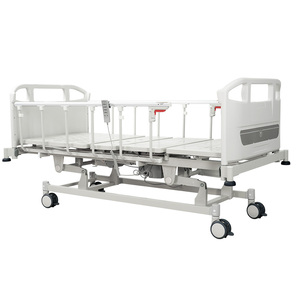
YXZ-C3(y302) 3-Function ICU Electric Hospital Bed
Heavy-duty steel frame with ABS head/footboards, quiet linear motors, ISO/CE certified for ICU alignment.
Get Catalog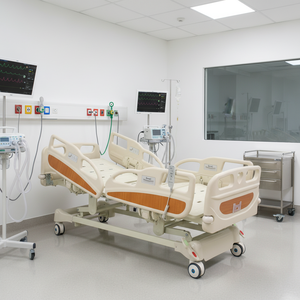
Clinical Nursing Medical Bed (3/5/7 Function Electric)
Multi-segment posture control with optional cardiac chair and Trendelenburg angles for post-op traction.
Get Catalog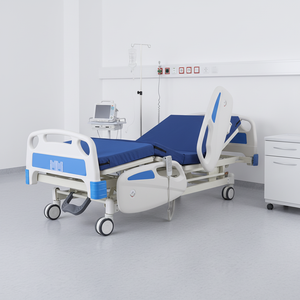
Height Adjustable Luxury 3-Function Orthopedic Care Bed
Ultra-low height adjustment deck designed for fall risk prevention and painless ergonomic patient re-positioning.
Get Catalog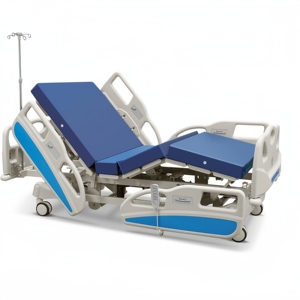
Cama Clinica 5-Function ICU Electric Bed with Pressure Mattress
Full-electric control with integrated pressure redistribution mattress for immobile post-orthopedic surgery recovery.
Get Catalog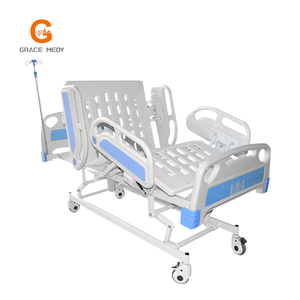
Multi-Function Hybrid Manual/Electric ICU Examination Bed
Versatile hybrid drive system featuring manual override safety cranks alongside responsive electric motorized positioning.
Get Catalog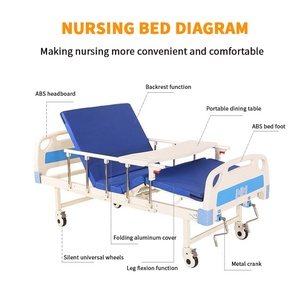
Two-Crank Manual Orthopedic Bed with Backrest & Leg Adjustment
Cost-effective, zero-power-dependent 2-crank bed engineered with reinforced cold-rolled steel channels for ward recovery.
Get Catalog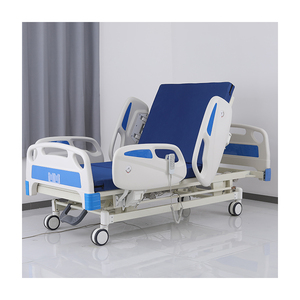
Chenhong CH-C8 Double-Shaking Stainless Steel Ward Bed
Corrosion-resistant stainless steel structural frames with collapsible side rails designed for high-humidity hospital environments.
Get Catalog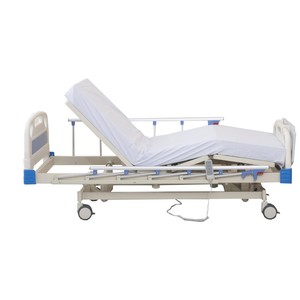
GRACEMED 3-Function Electronic Medical Bed (L&K Motorized)
Equipped with heavy-duty L&K medical linear actuators, CE certified with 1-year comprehensive factory coverage.
Get CatalogExecutive Summary & Biomechanical Foundation of Orthopedic Beds
In modern clinical healthcare, orthopedic recovery and trauma rehabilitation present unique engineering challenges. Unlike standard medical-surgical beds, specialized orthopedic beds must support precise anatomical immobilization, controlled skeletal traction, zero-pressure tissue perfusion, and gradual spinal/articular re-alignment. Sourcing from accredited orthopedic beds factories is a critical capital decision for hospital networks, trauma centers, and medical device importers worldwide.
This whitepaper provides an exhaustive technical analysis of orthopedic bed engineering standards, supply chain dynamics, quality verification frameworks, and strategic procurement trends. Designed for Group Purchasing Organizations (GPOs), biomedical engineers, and international equipment distributors, this guide outlines the benchmark parameters necessary to evaluate prospective manufacturing partners and optimize Total Cost of Ownership (TCO).
"The primary objective of orthopedic bed engineering is to reconcile rigid mechanical stabilization with dynamic ergonomic comfort—minimizing shear forces on healing musculoskeletal structures while providing caregivers with effortless multi-axis positioning."
1. Key Technical Specifications & Structural Engineering Standards
When auditing an OEM/ODM orthopedic bed factory, procurement officers must inspect structural material integrity, motorized linear actuator reliability, and electrical safety certifications. Orthopedic patients—particularly those recovering from total joint arthroplasty, spinal fusion, or complex femur fractures—require ultra-stable platforms with zero deck deflection under load.
Material Selection & Chassis Architecture
Leading factories utilize heavy-gauge Q235 carbon steel or 304-grade stainless steel tubing for the primary sub-frame. Robotic Metal Inert Gas (MIG) welding ensures seamless seam penetration, eliminating stress-concentration points. Furthermore, metal components undergo multi-stage automatic electrostatic powder coating with antimicrobial silver-ion additive additives to prevent hospital-acquired infections (HAIs) and resist aggressive hospital disinfectants.
Actuators & Control Electronics
The operational core of an electric orthopedic bed lies in its linear actuator system. Tier-1 manufacturers integrate medical-grade actuators (such as Linak, Dewert, or L&K) operating at DC 24V with IPX4 or IPX6 water-ingress protection. Noise levels must be maintained below 45 decibels to ensure uninterrupted patient rest. Dual-control interfaces—including caregiver master lockout panels at the footboard and patient hand pendants—are mandatory for patient safety.
| Performance Parameter | Standard Clinical Ward Bed | High-Spec ICU Electric Bed | Heavy-Duty Orthopedic / Trauma Bed |
|---|---|---|---|
| Safe Working Load (SWL) | 175 kg - 220 kg | 250 kg - 300 kg | 300 kg - 450 kg (Bariatric Capable) |
| Deck Articulations | 2 or 3 Sections | 4 Sections (Auto-contour) | 4 to 5 Sections + Traction Mounts |
| Traction Frame Capability | Not Supported | Optional / Limited | Integrated Balkan & Pelvic Frames |
| Lateral Tilting (Left/Right) | N/A | Optional (0° - 15°) | Available (0° - 30° Continuous) |
| Electrical Standard Compliance | IEC 60601-1 | IEC 60601-2-38 / IEC 60601-1-2 | IEC 60601-2-38 Medical Safety |
| Caster System | Individual Brake (125mm) | Central Braking (125-150mm) | Central Dual-Wheel Heavy Lock (150mm) |
2. Enterprise Advantages & Technical Manufacturing Superiority
Leveraging over three decades of medical furniture manufacturing inheritance—rooted in rigorous engineering principles pioneered by industry benchmarks like Hoffmann NOA Medical Industries—our partner facilities represent the pinnacle of automated production. We combine North American clinical ergonomic standards with high-efficiency overseas manufacturing ecosystems to deliver unmatched value for international distributors.
Robotic Automation & Precision Manufacturing
Our production facilities utilize automated laser pipe-cutting machinery, CNC sheet metal punching presses, and fully robotic welding cells. This automated workflow guarantees dimensional tolerances within ±0.5mm across all structural frames, ensuring complete interchangeability of replacement components and zero structural slop in articulated joints.
Rigorous Quality Assurance & Load Testing
Every batch of orthopedic beds undergoes stringent destructive and non-destructive quality testing prior to export dispatch:
- Static Load Testing: Applying 1.5x maximum Safe Working Load (up to 675 kg) across the mattress deck for 24 continuous hours to verify structural zero-deformation.
- Dynamic Actuator Fatigue: Running motor actuators through 10,000 full-cycle movements under maximum operational weight.
- Central Braking Endurance: Wheels and locking mechanisms tested over 5,000 meters of obstacle-laden movement.
- Dielectric Withstand & Earth Bonding: 100% electrical safety testing meeting IEC 60601-1 leakage current boundaries.
3. Global Future Procurement & Technological Trends (2026–2030)
The global medical equipment procurement landscape is transitioning rapidly toward intelligent, connected, and multi-functional care solutions. Equipment sourcing managers must align their long-term supply chain strategies with incoming technology trends to prevent asset obsolescence.
Total Cost of Ownership (TCO) Optimization
Modern hospital procurement departments no longer evaluate orthopedic beds based solely on initial purchase price. TCO factoring accounts for ongoing maintenance, actuator replacement costs, energy consumption, modular repair speeds, and equipment longevity. Direct sourcing from certified factories that provide modular sub-assemblies and standardized spare-part catalogs dramatically reduces lifetime operating costs by up to 35% compared to proprietary closed-loop brands.
4. Step-by-Step OEM/ODM Procurement Guide for Importers
Sourcing orthopedic beds directly from overseas manufacturing facilities requires a structured evaluation framework to ensure regulatory compliance, timely delivery, and product reliability. Follow this 5-step procurement strategy:
- Specify Clinical Requirements: Define required functional axes (3-function, 5-function, or lateral rotation), target safe working load (SWL), mattress deck material (steel mesh, stamped steel slat, or removable ABS), and frame attachment specs.
- Verify Quality Credentials: Audit factory certifications, ensuring active ISO 13485 (Medical Devices Quality Management Systems), FDA Registration, and CE Mark documentation corresponding to Medical Device Regulation (MDR 2017/745).
- Request Structural Sample Evaluation: Conduct physical testing on a pre-production sample to evaluate welding quality, motor sound levels, central brake responsiveness, and side-rail pinch-point safety (IEC 60601-2-38 bed rail gap requirements).
- Audit Export Packaging & Freight Density: Confirm Knock-Down (CKD) or Semi-Knock-Down (SKD) packaging options. SKD packaging increases container loading capacity by up to 40%, significantly lowering ocean shipping costs per unit.
- Establish Technical Support SLAs: Ensure the factory contract includes a minimum 1-3% free warranty spare parts buffer (hand controllers, control boxes, casters) alongside dedicated technical training support.
5. Frequently Asked Questions (FAQ) for Global Procurement Officers
Partner with a Leading Orthopedic Beds Manufacturer Today
Request comprehensive product specifications, factory audit reports, bulk pricing schedules, or technical drawing files for your upcoming hospital tender or distribution network.