Engineered Patient Transfer & Mobility Solutions
Explore our certified lineup of electric sit-to-stand hoists, hydraulic nursing transfer chairs, mobile bariatric lifters, and accessibility platforms built to rigorous ISO 10535 mechanical standards.
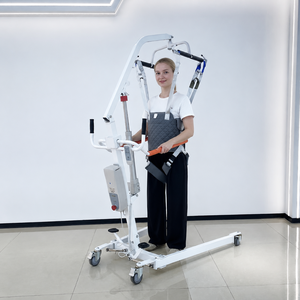
Battery Powered Stand Assist Patient Lift Sit to Stand Electric Patient Hoist
- Dual Linear Actuator Motor Drive
- Adjustable Knee Pad & Footplate
- SWL: 200 kg / 440 lbs
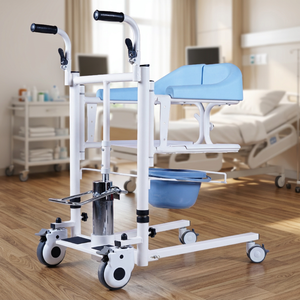
Adjustable Height Hydraulic Patient Moving Transfer Lift Chair
- 180° Split-Seat Easy Lateral Ingress
- Integrated Commode & Shower Proof
- Pedal Hydraulic Lift System
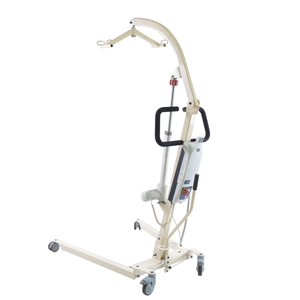
Y407 Clinical Heavy-Duty Electric Mobile Patient Lift
- Heavy-Gauge Reinforced Steel Frame
- Motorized Base Spreader Function
- SWL: 230 kg / 500 lbs
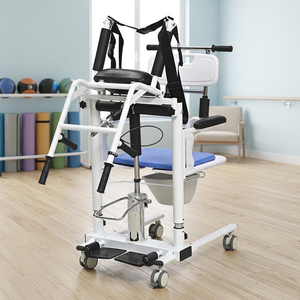
Portable Hydraulic Folding Patient Lift & Transfer Machine
- Fast Tool-Free Foldable Architecture
- Smooth Hydraulic Descent Cylinder
- Space-Saving Domestic & EMS Use
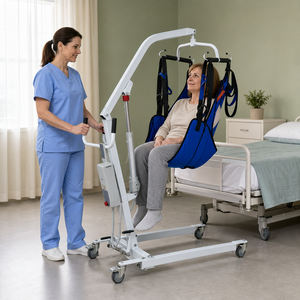
Lithium Battery Powered Mobile Patient Hoist with Multi-Sling
- High-Density LiFePO4 Battery Pack
- Rapid Recharging (Under 2.5 Hours)
- 120+ Continuous Lifts Per Cycle
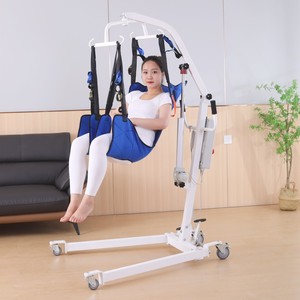
Electric-Hydraulic Dual-Drive Patient Transfer Lift System
- Dual Power Redundancy (Elec + Manual)
- Emergency Manual Lowering Bypass
- High Acuity Ward Dependability
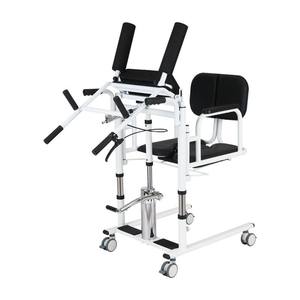
Manual Height Adjustable Transfer Aid & Toilet Transport Chair
- Precision Geared Hand-Crank Elevation
- Waterproof Rust-Resistant Coating
- Zero-Clearance Bedside Ingress
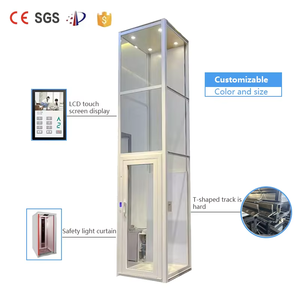
Architectural Hydraulic Wheelchair Lift & Multi-Level Elevator
- Self-Supporting Shaft Architecture
- Anti-Drop Safety Clutch System
- Indoor / Semi-Outdoor Rated (IP54)
1. Global Safe Patient Handling and Mobility (SPHM) Mandates
In modern institutional healthcare procurement, patient transfer equipment is no longer evaluated simply as physical support furniture. It is classified as an active Class I or Class II medical device engineered to protect both dependent patients and clinical nursing teams from musculoskeletal trauma. According to peer-reviewed data from OSHA and the European Agency for Safety and Health at Work (EU-OSHA), nursing personnel suffer from occupational back injuries at rates exceeding seven times the national industrial average. Over 62% of these injuries result directly from manual bedside repositioning, lateral bed-to-chair transfers, and unassisted patient falls.
Leading healthcare infrastructure providers require full compliance with international safety protocols, centered primarily around ISO 10535:2021 (Hoists for the transfer of disabled persons — Requirements and test methods). Under ISO 10535, hoists must demonstrate cyclic fatigue endurance under dynamic overload tests (minimum 10,000 full-load cycles without micro-fissure propagation), structural stability across varied center-of-gravity displacements, emergency lowering mechanical bypass redundancy, and fail-safe electromagnetic braking.
Critical Clinical Takeaway for Health Systems
Standardizing facility fleets with certified electric mobile hoists and stand-assist platforms directly reduces workers' compensation liability by up to 68%, eliminates secondary skin shear during lateral repositions, and supports early mobilization protocols crucial for reducing intensive care delirium and hospital-acquired deep vein thrombosis (DVT).
2. Patient Lift Taxonomy: Engineering Comparative Analysis
Navigating B2B sourcing requirements requires understanding the functional dichotomy between full-passive hoists, active rehabilitation lifters, and multipurpose transfer chairs. Below is the direct structural matrix specifying load parameters, actuator duty cycles, battery chemistry, and primary clinical applications:
| Equipment Category | Safe Working Load (SWL) | Drive System Topology | Base Spreader Control | Emergency System | Certifications |
|---|---|---|---|---|---|
| Electric Stand Assist Lifters | 180 kg – 220 kg (400–485 lbs) | Dual DC 24V Actuator (Linak/Dewert compatible) | Mechanical Foot Pedal or Electric Remote | Mechanical Screw Descent & Dual Cutoff | ISO 10535 / CE MDR |
| Heavy-Duty Clinical Mobile Hoists | 230 kg – 320 kg (500–700 lbs) | High-Torque Linear Actuator (<48 dB whisper-quiet) | Motorized Spreader Bar via Master Pendant | Dual Power Auto-Bypass & E-Stop Dial | FDA / ISO 13485 |
| Hydraulic Multi-Function Chairs | 150 kg – 180 kg (330–400 lbs) | Sealed Oil-Pressure Hydraulic Cylinder | Fixed Narrow-Track (580mm clearance) | Zero-Power Manual Controlled Descent | CE / UKCA |
| Portable Folding Mobile Lifts | 150 kg – 180 kg (330–400 lbs) | Compact Hydraulic Ram or Micro-Actuator | Manual Lever Adjustment with Locking Latches | Pressure Relief Valve Release Knob | ISO 9001 / CE |
| Institutional Platform / Stair Lifts | 250 kg – 400 kg (550–880 lbs) | Rack-and-Pinion Hydraulic / Lead Screw Drive | Architectural Static Guide Rails | Speed Governor, Anti-Drop Wedge, Backup UPS | EN 81-41 / ASME A18.1 |
3. Next-Generation Procurement Trends in SPHM Technology
The global medical transfer device landscape is shifting rapidly. Driven by aging demographics across North America, Western Europe, and East Asia, healthcare organizations are transitioning from decentralized manual nursing tools to unified, telemetry-integrated patient handling ecosystems.
IoT Fleet Management & Preventive Telemetry
Next-gen patient hoists integrate Bluetooth/Zigbee control modules that monitor cycle counts, actuator temperature spikes, battery health, and load distributions. Fleet managers track preventive maintenance schedules via hospital CMMS dashboards, preventing in-service breakdowns.
Lithium-Iron Phosphate (LiFePO4) Battery Paradigm
Traditional Lead-Acid (SLA) batteries are being phased out in favor of high-density LiFePO4 cells. Lithium-powered hoists deliver 3,000+ deep discharge cycles, rapid 2-hour opportunistic charging, and constant voltage output without lifting-speed degradation under bariatric loads.
Precision In-Bed & In-Hoist Patient Weighing
Equipping lifters with OIML/Class III calibrated integrated digital scales allows seamless patient weight logging directly into Electronic Health Record (EHR) systems during routine morning transfers, eliminating dedicated weighing procedures for critical care dosing.
4. Hoffmann NOA Heritage: 30+ Years of Precision Engineering
Formed through decades of clinical field experience since our founding in 1989 and reinforced by the global reach of the Hoffmann Family of Companies (spanning 240+ international operations), our manufacturing facilities represent the pinnacle of medical-grade metal fabrication, robotics, and safety-critical assembly.
Every patient lift, transfer chair, and mechanical hoist exiting our manufacturing plants undergoes a rigorous multi-stage quality assurance protocol:
Robotic CNC Welding & Precision Tubing
High-tensile Q235B and aviation-grade 6061-T6 aluminum alloys are processed using automated 6-axis robotic laser welding stations, ensuring micro-crack-free joints and uniform load distribution under maximal static stress.
1.5x Dynamic Load Static Proof Testing
Prior to packaging, 100% of lifting masts and spreader booms are tested under 150% rated SWL conditions. Actuators, hydraulic seals, and emergency lowering clutches are validated against stringent non-leak pressure criteria.
Antimicrobial Powder Coating
All metal surfaces receive electrostatically applied, thermoset epoxy-polyester antimicrobial powder coating that resists aggressive quaternary ammonium and sodium hypochlorite hospital disinfectants without chipping or yellowing.
5. Total Cost of Ownership (TCO) & OEM/ODM Sourcing Strategy
When evaluating global patient lift suppliers, experienced procurement directors calculate the Total Cost of Ownership over a 7-to-10-year asset lifecycle rather than focusing exclusively on initial FOB unit prices. Substandard hoists sourced from unverified manufacturers often generate hidden costs: high actuator failure rates, non-standard sling connector geometry, missing regulatory audit trails, and 12-to-16-week lead times for basic spare parts.
Direct Sourcing Playbook for Global Distributors
By partnering directly with our OEM/ODM manufacturing facilities, procurement teams secure customized spreader bar dimensions, Linak/Dewert or high-tier proprietary electronics, customer-branded laser engraving, private-label packaging, fully containerized knock-down shipping packaging (reducing maritime freight costs by 40%), and guaranteed 10-year replacement parts availability.
Frequently Asked Procurement & Technical Questions
Direct engineering insights to assist biomedical engineers, procurement directors, and healthcare distributors in selecting the correct patient lifting systems.
1. What is the fundamental difference between a Sit-to-Stand Lift and a Passive Mobile Hoist?
A Sit-to-Stand lift is an active rehabilitation aid for patients who possess weight-bearing capability in at least one leg and adequate torso muscle tone. It utilizes a lumbar harness and knee-pad resistance. A passive mobile hoist (like the Y407) fully supports 100% of the patient’s body weight using a multi-point sling cradle, designed for non-ambulatory, comatose, or post-surgical patients.
2. How do your patient lifts comply with ISO 10535:2021 standards?
Our lifts undergo complete type-testing under ISO 10535:2021 protocols, including a 10,000-cycle continuous mechanical fatigue test at maximum rated SWL, lateral and longitudinal dynamic tilt-table stability tests up to 10°, emergency manual descent speed limitations (<0.15 m/s), and sound power level audits keeping operating noise well below 50 dBA.
3. What linear actuators and control box electronics do you supply?
We offer modular actuator configurations based on market requirements. For premium institutional tenders, we integrate world-class Linak or Dewert linear actuators with IPX6 water protection. For cost-optimized competitive tenders, we supply our proprietary CE/UL-certified medical actuators with guaranteed 5-year operational lifespans.
4. What emergency fail-safe features are built into your electric hoists?
Every electric lifter features four layers of safety: (1) An instant-kill Emergency Stop push-button; (2) An electrical lowering override switch on the control box; (3) A mechanical manual lowering clutch on the actuator cylinder; and (4) An anti-entrapment sensor that halts boom descent immediately if resistance or patient obstruction is encountered.
5. What is the MOQ and lead time for OEM/ODM customized orders?
Standard production batch MOQ is 20 units for standard catalog models, and 50–100 units for fully customized OEM projects (custom frame colors, branded controllers, modified chassis widths). Standard export lead time is 20 to 30 calendar days from CAD sign-off and deposit receipt. Expedited spare parts ship within 48 hours.
6. How does the 180° split-seat transfer lift chair facilitate bathroom hygiene?
The hydraulic nursing transfer chair opens 180 degrees from behind the patient, allowing caregivers to slide the split seat beneath the patient without manual lifting. Once closed and locked with dual safety buckles, the patient is wheeled directly over standard institutional toilets or equipped with a drop-in commode pail. The medical-grade PU waterproof seat allows direct showering.
7. Can your patient lifts be integrated with low-clearance medical beds?
Yes. Our chassis profile is engineered with a maximum base height of 105 mm (4.1 inches), fitted with heavy-duty twin-wheel front casters. This allows the hoist legs to slide under acute care and low-height long-term care hospital beds (such as the NOA Elite series) without frame obstruction.
8. What international shipping packaging is utilized to prevent damage?
Export orders are packed in heavy-duty 7-layer corrugated cartons with custom-molded high-density EPE foam cushions. For LCL shipments or sensitive international air cargo, we utilize fumigated heat-treated plywood crates reinforced with steel corner brackets, ensuring zero transit deformation.
9. Are universal sling attachments compatible with your spreader bars?
Yes. Our standard lifting booms feature multi-hook spreader bars compatible with all standard 4-point, 6-point, loop-style, and clip-style patient transfer slings (mesh, padded, commode-opening, amputee, and bariatric hammock configurations).
10. Do you provide clinical evaluation samples or trial programs for health systems?
In alignment with our heritage, we provide a 30-Day Facility Evaluation Demo Program for qualified health systems, nursing home chains, and authorized medical equipment distributors. Contact our B2B procurement team to arrange on-site demonstration units and technical compliance dossiers.
Partner with a World-Class Medical Equipment Manufacturer
Whether you are procuring full-facility fleet replacements, submitting government hospital tenders, or expanding your regional medical distribution brand, our engineering team provides direct B2B pricing, compliance documentation, and rapid prototyping.