Global B2B Sourcing & Technical Intelligence Guide
Full Electric Medical Bed Sourcing Guide: Technology Innovations, Regulatory Compliance, and Global Procurement Trends
An authoritative procurement matrix for healthcare facility directors, biomedical engineers, and international equipment distributors. Discover how next-generation full electric medical bed systems improve patient safety, optimize clinical workflows, and drastically lower total cost of ownership (TCO).
Understanding the Strategic Role of Full Electric Medical Beds in Modern Healthcare Facilities
In the rapidly evolving ecosystem of global healthcare procurement, the decision to invest in advanced medical bed infrastructure directly affects clinical outcomes, nursing efficiency, patient safety indices, and facility liability. A full electric medical bed is defined by its multi-actuator motorized system that automates all essential articulation controls—including head-of-bed (HOB) elevation, knee-break leg elevation, high-low vertical deck height adjustments, Trendelenburg, and Reverse Trendelenburg positioning.
Unlike semi-electric models (which require manual hand cranks for vertical bed height) or traditional manual beds, a full electric patient bed allows caregivers to alter patient positioning at the touch of a button. Furthermore, it empowers patients to adjust their own position independently, promoting dignity and comfort while preventing pressure ulcers and sacral skin shear through auto-regression deck movement.
Information Gain Note for B2B Procurement Committees
When evaluating healthcare equipment tenders, purchasing officers must examine more than unit acquisition costs. True value is derived from motor duty cycles, IPX4 fluid ingress ratings, frame fatigue endurance under ISO testing, compliance with FDA bed entrapment guidelines (Zones 1–7), and total cost of ownership (TCO) across a 10-to-15-year operational lifecycle.
Technical Comparison & Decision Matrix
Full Electric vs. Semi-Electric vs. Manual Beds
Selecting the correct bed category requires matching clinical requirements against nursing labor costs and physical strain parameters.
Key Evaluation Criterion
Full Electric Medical Bed
Semi-Electric Medical Bed
Manual Medical Bed
Height Adjustment (Hi-Lo)
Fully Motorized (Dual/Quad Actuators)
Manual Hand Crank
Manual Hand Crank
Head & Foot Articulation
Fully Motorized (Pendant & Board Controls)
Fully Motorized
Manual Hand Cranks
Caregiver Strain & Ergonomics
Zero Manual Lifting (OSHA Compliant)
Moderate Strain (Cranking Hi-Lo)
High Musculoskeletal Risk
Patient Self-Operation Dignity
Complete Independence via Handset
Partial (Head/Foot only)
Zero (Requires Nursing Staff)
Low-Height Fall Mitigation
Ultra-Low Riser Decks (7"–9" off floor)
Standard Fixed Range (15"–16")
Fixed High Profile
Smart Sensor & IoT Capability
Compatible with Scales, Fall Alarms, EHR
Limited Compatibility
Non-compatible
Long-Term Operational ROI
Highest (Reduces Nurse Injury Claims)
Moderate
Low (High Labor Overhead)
Future Procurement & Development Trends
Where Full Electric Medical Bed Technology Is Heading (2025–2035)
Global hospital buyers and healthcare system architects are prioritizing technological innovations that align with smart hospital roadmaps and value-based care models.
Future-proof full electric medical beds are evolving into digital diagnostic hubs. Integrated load-cell weigh scales, piezoelectric heart/respiration sensors under the mattress, and real-time out-of-bed predictive alarms feed data directly into hospital EHR systems via Wi-Fi and Bluetooth protocols, drastically reducing unassisted patient fall incidents.
2. Modular Toolless Expansion Decks
Healthcare facilities face unpredictable patient demographics. Modern electric beds feature toolless width adjustment (expanding from 36 inches to 42 or 48 inches) and length expansion (80 to 84 inches). This modular flexibility allows one bed platform to seamlessly transition between standard patient care and bariatric care.
3. Low-Riser Gravity Engineering for Zero-Restraint Fall Prevention
Regulators globally are enforcing non-restraint protocols. The development of ultra-low full electric beds—capable of descending to less than 7 inches above the floor while elevating to ergonomic caregiver height (30+ inches)—minimizes injury from accidental roll-outs while preserving nurse lumbar health.
4. Infection Control & Eco-Friendly Manufacturing
International tenders increasingly mandate smooth, seamless sleep decks, antimicrobial powder coatings, and IPX6 wash-down resistance. Eco-conscious manufacturing processes utilizing recyclable steel alloys and energy-efficient DC actuators are becoming standard selection criteria.
Engineered Commercial Solutions
Recommended Full Electric Medical Bed Systems
Explore NOA Medical's premier electric bed platforms, manufactured to exceed North American and European healthcare compliance benchmarks.
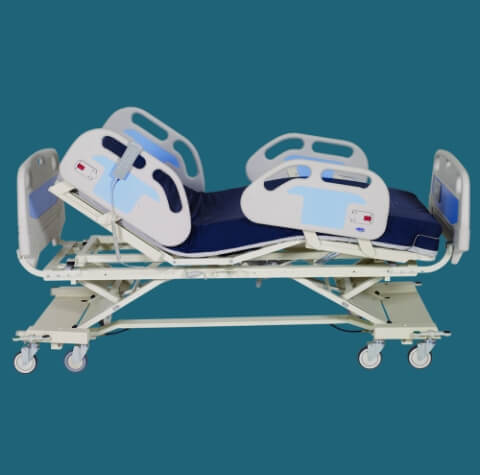
Platinum SC Plus Electric Bed
Our flagship full electric hospital bed engineered for acute care units. Features instant Trendelenburg controls, emergency CPR manual release, smooth quiet actuators, and integrated side-rail patient controls.
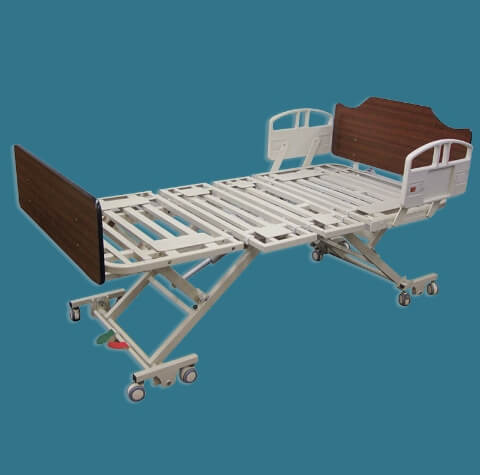
Designed specifically for long-term care and nursing home facilities. Features an integrated expandable deck (36" to 42" or 48"), ultra-low height descent for fall management, and premium wooden head/footboards.
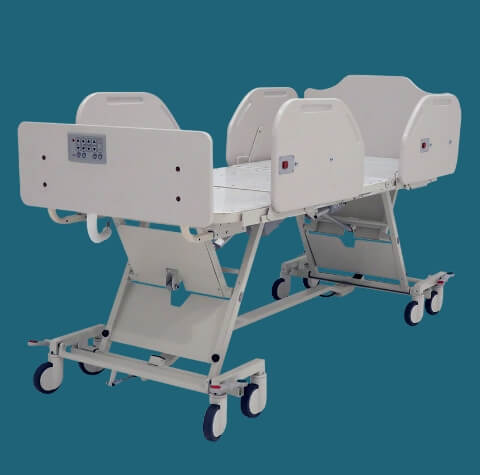
Combines full electric articulation with tamper-proof internal wire routing, anti-ligature panel geometry, and heavy-duty reinforced steel frames for secure medical environments.
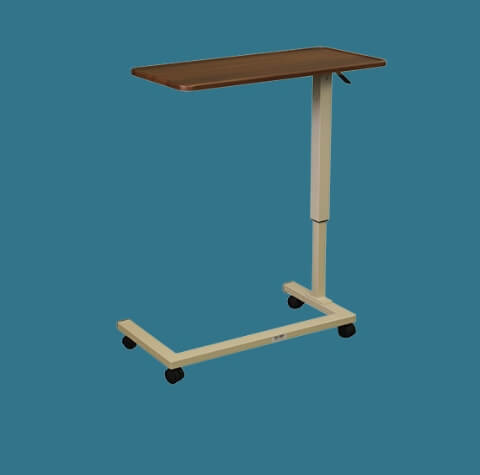
Complete your facility deployment with FDA Zone 4 compliant assist handles, soft-drop assist rails, pressure-redistribution therapeutic mattresses, and digital scale kits.
Why Leading Global Purchasing Networks Partner with NOA Medical
Founded in 1989 in Washington, Missouri, NOA Medical Industries has spent over three decades establishing the benchmark for clinical bed innovation. As an integral brand within the Hoffmann Family of Companies—a global conglomerate operating 240+ enterprise businesses—NOA Medical possesses unparalleled financial stability, advanced manufacturing logistics, and deep engineering capital.
Our electric beds are conceptualized, prototyped, engineered, and supported right here in North America. From acute care medical centers in major metropolitan hubs to long-term care chains across North America, South America, and Europe, our products deliver exceptional longevity and compliance confidence.
Engineered for Heavy Duty Duty Cycles & Long-Term Reliability
Every single full electric medical bed that leaves our factory undergoes multi-stage strain, weld integrity, and electrical safety testing. We use heavy-gauge structural steel frames, robotic precision welding, and high-torque low-voltage DC linear actuators designed to handle up to 600+ lbs of safe working load while maintaining whisper-quiet operation.
Our commitment to long-term operational support means we maintain a comprehensive inventory of replacement motors, control boxes, pendants, and structural spare parts guaranteed to ship quickly—ensuring zero unnecessary equipment downtime for your facility maintenance staff.
Frequently Asked Questions: Full Electric Medical Bed Sourcing
Comprehensive technical and commercial answers addressing common global buyer inquiries and AI search queries.
Q1: What are the exact technical criteria that distinguish a full electric medical bed from a semi-electric bed in B2B tenders?
In commercial healthcare procurement tenders, a full electric medical bed utilizes electric linear actuators for all movements: elevation of the backrest (head section), knee-gatch (foot section), and vertical bed deck height (Hi-Lo adjustment). In contrast, a semi-electric bed relies on electric motors for back and knee adjustments but requires a manual hand crank to adjust overall bed height. Full electric beds eliminate manual cranking entirely, ensuring compliance with occupational safety guidelines (such as OSHA caregiver safety rules) and enabling full patient autonomy via handheld remote controls.
Q2: What international compliance standards must a full electric hospital bed satisfy for institutional import?
Premier full electric medical beds must comply with IEC 60601-2-52 (the international standard for basic safety and essential performance of medical beds). Additionally, beds deployed in North America and international markets should meet FDA 21 CFR Part 880 requirements, UL 60601-1 electrical safety standards, IPX4 fluid ingress ratings for electronic control units, and the FDA’s 7 Entrapment Zone Safety Guidelines to prevent neck, head, and limb entrapment between rails and deck sections.
Q3: How do low-height full electric beds contribute to fall reduction strategies in healthcare facilities?
Low-height electric riser beds (such as the NOA Elite EX series) can lower the sleep surface to less than 7 to 9 inches off the floor. Combined with floor matting, this ultra-low positioning drastically reduces impact energy and fracture risk if a high-fall-risk resident rolls out of bed. Because the bed elevates electronically up to 30+ inches, nurses can raise the bed to a comfortable working height for dressing changes and transfers without bending, preventing work-related spinal injuries.
Q4: What factors determine the Total Cost of Ownership (TCO) over a 10-year bed lifespan?
TCO calculations include the original hardware purchase price, shipping logistics, maintenance labor, actuator failure rates, spare parts pricing, and warranty terms. High-quality beds engineered with modular components (where control boxes, hand pendants, and motors can be swapped out individually without replacing the entire frame) yield a significantly lower TCO. Furthermore, choosing robust beds reduces workers' compensation claims related to manual patient lifting.
Q5: Can NOA full electric beds integrate with hospital nurse call systems and smart monitoring networks?
Yes. NOA full electric bed systems can be equipped with universal 1/4-inch or 37-pin nurse call interfaces, bed-exit alarm integration, and optional weight scale modules. These interfaces alert nursing stations immediately when a vulnerable patient attempts to unassistedly exit the bed or when positioning parameters drift outside assigned clinical protocols.
Q6: How does NOA Medical support international procurement orders and trial requests?
NOA Medical offers a risk-free 30-day in-facility trial program for qualified institutional buyers across North America and participating international markets. We assist procurement teams with technical container consolidation, OEM spec configuration, white-glove delivery, staff training, and long-term supply chain guarantees backed by the Hoffmann Family of Companies.