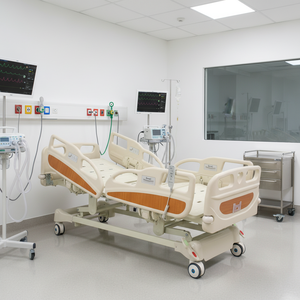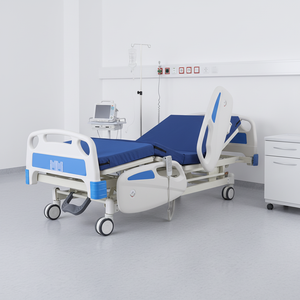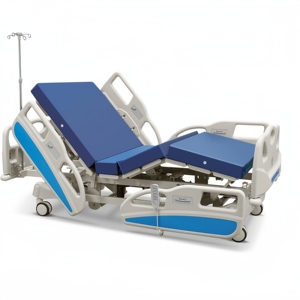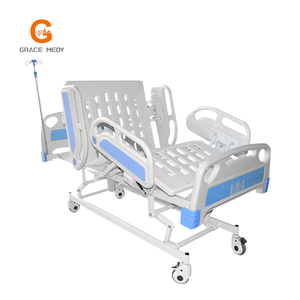
Certified medical bed systems engineered for fall reduction, patient comfort, and seamless clinical elevation in Tokyo hospital wards and long-term care homes.
Quantitative comparative research highlighting the fall mitigation energy dynamics and ergonomic elevation parameters of low height riser bed technology.
Searching for a certified low height riser bed supplier & suppliers in Tokyo requires an in-depth understanding of both biomechanical fall-prevention dynamics and local Japanese medical facility constraints. In acute care, sub-acute rehabilitation wards, and specialized long-term care facilities (such as Tokuyō homes), accidental patient falls from bed remain a major driver of non-syndromic clinical trauma, femoral neck fractures, and subdural hematomas.
Physics dictates that the kinetic energy ($E_k$) transferred to a patient's body upon impact with the floor is directly proportional to the fall height ($h$), expressed by the fundamental energy equation:
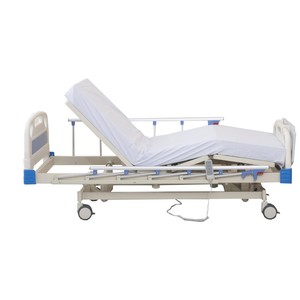
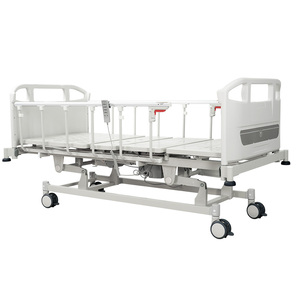
By utilizing electric low height riser beds that drop to an ultra-low resting deck height of under 18 cm (7 inches), medical facilities reduce the potential impact energy of a roll-out fall by over 77% compared to traditional 45 cm fixed-height hospital beds. Furthermore, the integrated electric scissor or vertical tower riser mechanism smoothly elevates the mattress deck to 76 cm (30 inches), allowing nursing personnel in Tokyo hospitals to perform dressing changes, catheter management, and hygiene care without debilitating back strain.
Japanese Ministry of Health, Labour and Welfare (MHLW) directives strongly discourage physical restraints (身体拘束廃止). Low height riser beds combined with soft floor perimeter mats provide a compliant, humanistic approach to patient protection for cognitively impaired or post-stroke patients in Greater Tokyo.
Navigating demographic pressure, room footprint constraints, and regulatory alignment within the Tokyo Metropolitan Area.
Tokyo’s population over age 65 has surpassed 3.1 million residents. The concentration of elderly patients in central wards (such as Shinjuku, Minato, and Setagaya) demands high-density, multi-functional riser beds that support transition between acute hospital stays and long-term community rehabilitation.
Unlike spacious Western medical campuses, medical clinics and nursing homes in central Tokyo operate under extreme square-footage constraints. Procurement officers require low riser beds with zero-displacement vertical movement—where elevation occurs strictly within the bed's perimeter—to maximize available room floor space.
Imports to Tokyo must conform to strict Japanese Industrial Standards (JIS T 9205 for medical and care beds) alongside IEC 60601-2-52 global electrical and anti-entrapment safety regulations. Low riser bed suppliers must provide validated gap clearance profiles to eliminate limb trapping risks.
Engineered versatility to address diverse clinical environments—from high-acuity university hospitals to compact suburban nursing facilities.
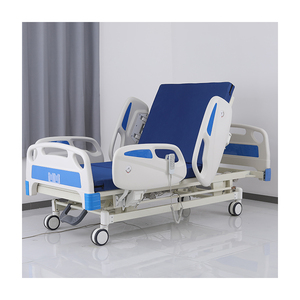
In major university hospitals across Chiyoda and Bunkyo wards, patients transitioning out of intensive care require continuous monitoring and fall mitigation. Electric low height riser beds equipped with 5-function controls (Trendelenburg, reverse Trendelenburg, cardiac chair positioning, and backrest auto-contouring) enable rapid clinical adjustment while providing a low deck height during unmonitored night shifts.
Long-term care facilities in Tokyo’s western Tama district handle high densities of residents with advanced dementia. Traditional high beds present unacceptable risk profiles. Low height riser beds allow these facilities to maintain compliance with Japan’s zero-restraint guidelines by lowering the sleep surface directly to near-floor level, utilizing perimeter sensor mats to alert nursing staff upon resident egress.
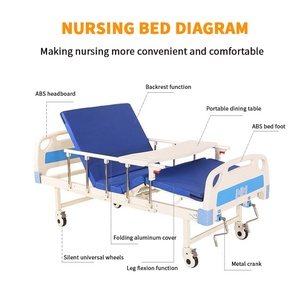
Under Japan's Long-Term Care Insurance (Kaigo Hoken) rental framework, home-care equipment suppliers in Tokyo require compact, disassemblable low height riser beds. Dual-crank and electric models with modular split frames allow smooth transit through narrow Japanese urban doorways, steep residential staircases, and compact residential elevators.
Technical parameter validation for Tokyo healthcare procurement committees and clinical engineering teams.
| Engineering Specification | Advanced Low Height Riser Bed | Standard ICU / Ward Bed | Clinical Advantage for Tokyo Facilities |
|---|---|---|---|
| Lowest Deck Height | 7 cm to 18 cm (2.7" - 7") | 40 cm to 50 cm (15.7" - 19.6") | Prevents severe fall trauma; zero-restraint protocol compliant |
| Max Nursing Working Height | 72 cm to 80 cm (28.3" - 31.5") | 70 cm to 75 cm (27.5" - 29.5") | Ergonomic caregiver positioning; reduces nurse back injury claims |
| Lifting Mechanism Trajectory | Vertical Scissor / Linear Tower (Zero Horizontal Drift) | Arcing / Cantilever Lift (Requires wall clearance) | Saves 15-20 cm of room depth; essential for compact Tokyo rooms |
| Actuator Noise Rating | < 45 dB (Ultra-Silent Linear Actuators) | 55 dB to 65 dB (Standard Actuators) | Promotes restorative sleep in multi-bed Tokyo ward configurations |
| Entrapment Safety Standards | IEC 60601-2-52 & JIS T 9205 (7-Zone Anti-Pinch) | Standard Rail Gap Geometry | Guarantees neck, head, and limb entrapment protection |
| Power Grid & Plug Specs | 100V / 50Hz (Kanto Region Factory Pre-Configured) | 220V / 60Hz (Requires Adapters) | Plug-and-play installation across Tokyo medical infrastructure |
Backed by the extensive resources of the Hoffmann Family of Companies network, our manufacturing facilities specialize in producing hospital beds, long-term care systems, and behavioral health medical furniture that meet rigorous international quality controls.
Every low height riser bed supplied to Tokyo institutions undergoes rigorous load testing, automated robotic weld verification, electrostatic anti-microbial powder coating, and full electrical safety isolation testing prior to export.
Whether you are a Tokyo medical equipment wholesaler, a hospital procurement director in West Tokyo, or an operator of a chain of elder-care facilities, working directly with our manufacturing network offers distinct competitive advantages:
Answers to common technical, regulatory, and logistics queries from healthcare facility buyers in Japan.
Request comprehensive technical CAD drawings, ISO compliance certificates, or schedule an online virtual factory audit with our senior clinical engineering team today.
Contact Us