Standard & Custom Medical Stretcher & Patient Care Platforms
Certified under ISO 13485, CE, and FDA standards. Tailored for emergency response fleets, high-acuity intensive care transport, disaster response units, and specialized clinical transfers in Osaka Prefecture and international markets.
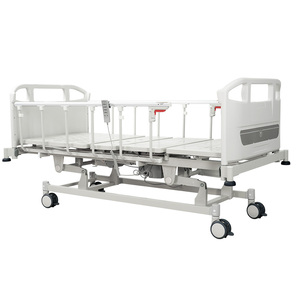
YXZ-C3(y302) 3-Function ICU Electric Bed & Clinical Transport Base
Heavy-duty ABS and electrostatically powder-coated steel chassis. Engineered for critical care patient stabilization and smooth inter-departmental transport in tertiary healthcare hubs.
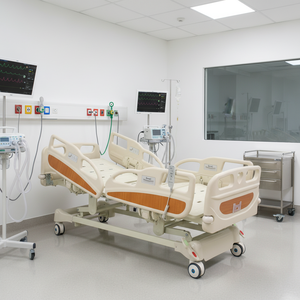
Patient Nursing Clinical Bed 3/5/7 Function Electric ICU Platform
High-end ICU nursing solution with expandable configurations, anti-entrapment split side rails, and ergonomic controls designed to minimize caregiver strain during transfer.
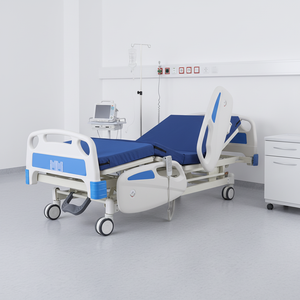
Height Adjustable Luxury 3-Function Nursing & Transfer Bed
Precision height adjustments facilitate zero-gap lateral transfers from ambulance stretchers directly to hospital ward platforms, protecting geriatric patients against fall trauma.
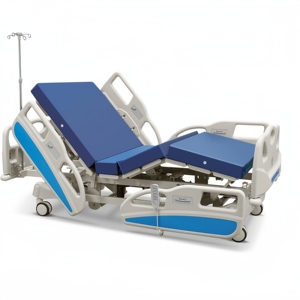
Cama Clinica 5-Function ICU Electric Bed with Pressure Mattress
Designed for clinical resilience, combining one-touch Cardiac Chair positioning, quick-drop CPR release mechanisms, and high-density waterproof antibacterial mattresses.
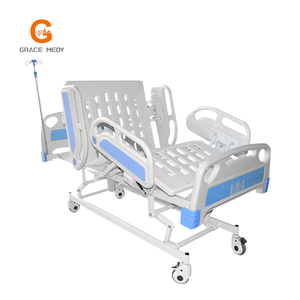
Multi-Function Examination & Clinical Rapid Transit Stretcher Bed
Ideal for field trauma assessment and high-throughput outpatient centers. Features rapid tilt capabilities, seamless sterilization decks, and collapsible IV poles.
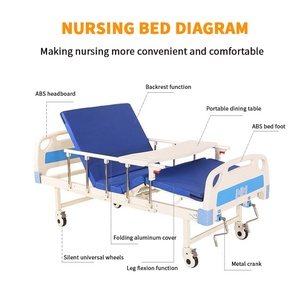
Two-Crank Manual Medical Bed with Precision Backrest Adjustment
Engineered for disaster preparedness stockpiles and secondary recovery wards where mechanical simplicity, structural longevity, and zero power dependency are vital.
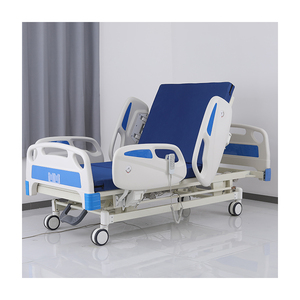
CH-C8 Stainless Steel Class II ICU & Ward Recovery Platform
Rigid stainless steel frame offering complete immunity to aggressive hospital sterilizing chemicals, high coastal humidity, and continuous clinical decontamination cycles.
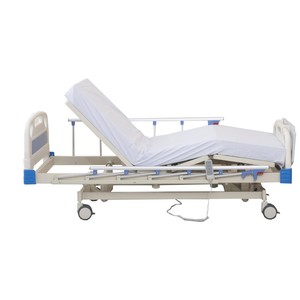
GRACEMED 3-Function Electronic Bed with High-Torque Motor
Equipped with certified medical-grade motor drives, seamless push-button handheld pendant controls, and an ultra-stable base for dependable patient elevation and recovery.
Engineered for Osaka's Unique EMS Infrastructure
From the hyper-dense transit corridors of Umeda and Namba to coastal flood-mitigation zones across Osaka Bay, our OEM/ODM stretchers solve severe regional transit bottlenecks with pinpoint engineering.
Disaster Preparedness & Tsunami Evacuation Resilience
Osaka Prefecture's Nankai Trough contingency protocols demand emergency equipment capable of operating across flood zones and debris-strewn evacuation corridors. Our roll-in ambulance stretchers incorporate high-clearance corrosion-resistant anodized 6061-T6 aluminum tubing, sealed wheel bearings, and optional float-assist rapid-release platforms designed for emergency shelter transfers and rapid loading into disaster-relief vans.
High-Rise & Narrow Alley (Roji) Evacuation Systems
Navigating residential apartment complexes (danchi) and historic narrow alleys across Osaka's traditional districts presents spatial constraints for emergency personnel. We manufacture ultra-compact folding stretchers, stair-chair transformable trolleys, and stretchers featuring 360-degree swivel castor locks with 120mm turning radii, allowing seamless negotiation through 80cm elevator doors and compact stairwells.
High-Acuity Tertiary Hospital Inter-Facility Transfers
Transfers between Osaka University Hospital, Kansai Medical University Hospital, and regional critical care centers require continuous life support maintenance. Our OEM stretchers feature integrated heavy-duty mounting rails for portable ventilators, multi-parameter vital signs monitors, syringe infusion pumps, and dual 10L oxygen cylinders, operating alongside independent damping suspension to eliminate transit vibration.
Geriatric Trauma & Bariatric Specialized Care
With Osaka's accelerating super-aging demographic, ambulance calls frequently involve frail geriatric patients susceptible to secondary spine injuries and pressure sores. Our specialized mattresses utilize multi-layer thermo-viscoelastic foam with antimicrobial, flame-retardant silver-ion infused TPU covers. For bariatric emergencies, reinforced cross-beam frames support payloads up to 320 kg with powered hydraulic lift.
Technological Trends Shaping Osaka's Emergency Logistics
Strategic investments in automated ambulance infrastructure, telemedicine integration, and paramedic ergonomic safety are reshaping municipal procurement across Japan.
Electro-Hydraulic Loading Automation
To address back strain injuries among Japan's aging emergency paramedic personnel, municipal departments are transitioning from manual multi-level roll-in stretchers to powered electro-hydraulic self-loading systems. Our ODM engineering offers brushless DC motor systems capable of lifting 300 kg with one-touch controls, cutting loading cycles from 24 seconds to 8 seconds.
Telemetry & Smart IoT Integration
Kansai's smart medical initiative connects ambulances directly with receiving emergency departments via high-speed 5G networks. We integrate embedded load-cell scale sensors, electronic patient positioning transmitters, and battery telemetry units into our stretcher architecture, providing real-time data feeds to Osaka municipal triage dispatchers.
Compatibility with Japanese Ambulance Bases
Japanese emergency fleets primarily deploy specialized van-based platforms such as the Toyota Himedic and Nissan Paramedic. Stretcher design requires custom floor lock anchor plates, low loading deck height geometry (below 620mm), and strict center-of-gravity stabilization under high centrifugal cornering forces.
OEM/ODM Technical Benchmark & Stretcher Configurations
Comparing core mechanical, electric, and multi-terrain ambulance stretcher systems engineered for Japanese emergency medical services.
| Stretcher Model / Type | Safe Working Load | Actuation Mechanism | Net Weight | Toyota Himedic / Nissan Fit | Certifications |
|---|---|---|---|---|---|
| NOA-EMS Pro PowerLift | 320 kg (705 lbs) | Electro-Hydraulic Brushless | 42.5 kg | Direct Bolt Lock Compatible | EN 1789 (10G), ISO 13485, CE |
| NOA-RollIn Standard 4A | 220 kg (485 lbs) | Mechanical Multi-Level Assist | 31.0 kg | Universal Guide Track | JIS T 9205, CE, FDA |
| NOA-Urban Danchi Compact | 180 kg (396 lbs) | Rapid Stair-Chair Conversion | 16.5 kg | Side-Cabinet Storage | ISO 9001, CE Certified |
| NOA-ICU Transit Platform | 280 kg (617 lbs) | Dual Electric Actuator + Manual | 58.0 kg | Floor Tracking System | IEC 60601-1, PMDA Class II Ready |
| NOA-Disaster All-Terrain 8X | 250 kg (551 lbs) | High-Clearance Mechanical Lift | 28.5 kg | Quick-Release Floor Lock | ISO 13485, CE, MIL-STD Shock |
Why Global Healthcare Procurement Leaders Trust Us
Backed by over three decades of clinical engineering expertise and the robust resources of the Hoffmann Family of Companies.
30+ Years Clinical Heritage
Established in 1989, our manufacturing facilities have pioneered advanced patient-positioning systems, hospital electric beds, and emergency mobility stretchers. We combine deep clinical ergonomics with high-volume industrial capability.
Hoffmann Family of Companies Backing
As an operating unit within the Hoffmann Family of Companies—spanning 240+ businesses across the globe—we leverage unmatched supply chain stability, bulk material procurement advantages, and world-class quality assurance infrastructure.
Bespoke OEM/ODM Customization
From custom CNC chassis fabrication and locking latch geometry to specialized Japanese voltage (100V 50/60Hz) battery charging stations, our R&D engineering team translates bespoke client specifications into rapid production prototypes.
Frequently Asked Questions on Osaka Stretcher Procurement
Essential insights into Japanese PMDA medical device compliance, customs clearance via Port of Osaka, OEM customization timelines, and lifecycle spare parts availability.
Yes. Our manufacturing facilities are fully certified under ISO 13485:2016 and ISO 9001 quality management systems. We provide comprehensive Technical Files, biocompatibility reports (ISO 10993), electrical safety certificates (IEC 60601-1), and CE Declarations of Conformity required by Designated Marketing Business Holders (MAH / D-MAH) for registration with the Pharmaceuticals and Medical Devices Agency (PMDA) in Japan.
Absolutely. Japanese emergency vehicles deploy proprietary vehicle tracking floor fixtures. Through our ODM program, we engineer and supply customized undercarriage locking brackets, guide wheels, and floor locking latches precisely calibrated to Toyota Himedic (TRH220S series) and Nissan Paramedic ambulance specifications, ensuring seamless slide-in and secure lock-in.
Standard OEM production batches typically require 25 to 35 business days from final CAD drawing sign-off. We support standard international Incoterms including FOB, CIF Osaka, and DDP. Direct sea freight to the Port of Osaka (Nanko / Yumeshima container terminals) provides efficient customs transit, with expedited air shipping available for critical clinical prototypes.
Our high-tier ambulance stretchers and vehicle fixation brackets are engineered to meet dynamic crash-test protocols aligned with EN 1789 / AS/NZS 4535 standards (10G acceleration in forward, rearward, left, right, and vertical directions). This guarantees that neither patient nor crew will be compromised during emergency transit maneuvers or sudden collisions.
Yes. Our OEM manufacturing includes customized powder-coat frame colorations (such as safety orange, vibrant signal red, or tactical gray), custom laser-etched agency logos, localized Japanese warning placards, and silk-screened client brand markings on all mattress vinyls and side bumpers.
For standard catalog stretcher and medical bed models, our MOQ starts as low as 5 units to facilitate clinical trials and fleet evaluations. For custom ODM tooling modifications (such as unique chassis dimensions or specialized electronic actuator brackets), the typical MOQ is 20 units, supported by a rapid 1-unit functional prototype approval stage.
We guarantee a minimum 10-year spare parts availability commitment for all structural, mechanical, and electrical components. We maintain modular part kits (castors, hydraulic seals, gas springs, linear actuators, wiring harnesses, and battery packs) with comprehensive exploded-view service manuals for rapid maintenance turnaround.
All our patient mattress covers are constructed from heavy-duty, high-frequency welded seamless polyurethane (TPU) fabric that is 100% waterproof, blood-resistant, and flame-retardant. They are fully compatible with quaternary ammonium compounds, chlorine bleach solutions (sodium hypochlorite up to 10,000 ppm), and medical isopropyl alcohol wipe-downs.
Yes. We offer universal quick-clamp deck anchor points specifically designed to mount standard negative-pressure biological isolation pods. Combined with non-magnetic frame options and antistatic castor wheels, our stretchers ensure safe transport during high-risk bio-containment transfers.
All electric and powered-hydraulic stretcher systems supplied to Japan are configured for 100V AC (50Hz/60Hz) dock charging inputs and 12V/24V DC in-vehicle ambulance alternator trickle charging. We utilize medical-grade lithium-iron-phosphate (LiFePO4) battery packs that offer deep cycle life, rapid charging, and zero thermal runaway hazards.
Initiate Your OEM/ODM Stretcher Project for Osaka
Consult with our medical engineering specialists for technical CAD drawings, sample evaluation units, volume factory-direct pricing, and customized Japanese vehicle compatibility verification.