Featured Clinical Treatment Beds & Examination Platforms
Precision-manufactured medical systems built with heavy-duty structural steel, antimicrobial polymer frameworks, and certified electrical actuator configurations tailored for public tender and private healthcare networks across South America.
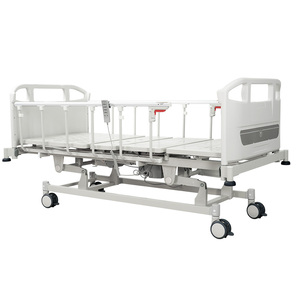
YXZ-C3 (y302) 3-Function ICU Electric Bed
- Integrated ABS tuck-away safety side rails
- Linear actuator motor with reserve emergency backup
- Central locking brake system with directional steer
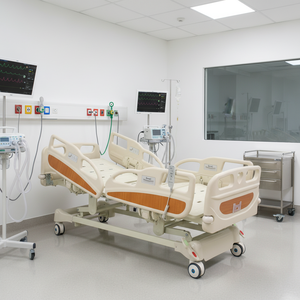
Clinical Nursing 3/5/7 Function Electric ICU Bed
- Trendelenburg & Reverse Trendelenburg positioning
- Integrated nurse attendant control station
- Auto-contour simultaneously profiling back and knee
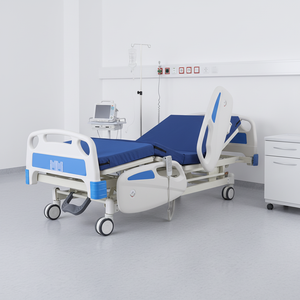
Height Adjustable Luxury 3-Function Care Bed
- Seamless acoustic-damped continuous column lift
- Engineered for fall-prevention & safe egress
- Detachable composite head & foot boards
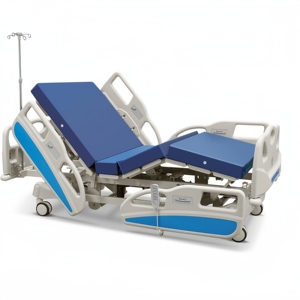
Cama Clínica 5-Function ICU Electric Bed System
- Quick-release mechanical CPR lever for emergency response
- High-resilience antimicrobial hospital grade mattress
- Perforated cold-rolled steel ventilation deck
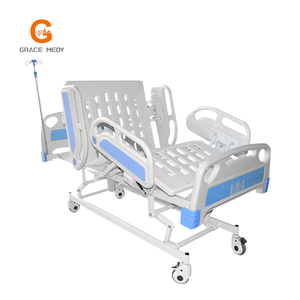
Multi-Function Examination & Treatment Platform
- Combines physical exam couch & ward transport utility
- Reinforced side channels for auxiliary diagnostic mounts
- Electrostatic anti-scratch epoxy powder coating
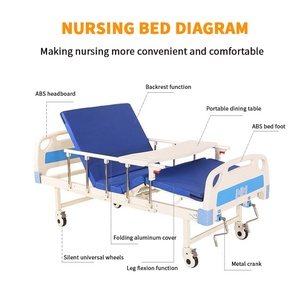
Two-Crank Manual Clinical Recovery Bed
- Bi-directional torque protection on mechanical linkages
- Smooth backrest & leg-rest elevation range
- Resistant to tropical high-salinity ambient humidity
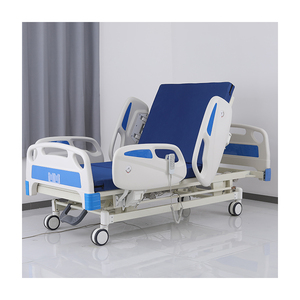
CH-C8 Double-Shaking Stainless Steel Bed
- Heavy-duty anti-corrosion stainless steel construction
- Ultra-quiet lead screw transmission mechanics
- Fold-away stainless lateral containment wings
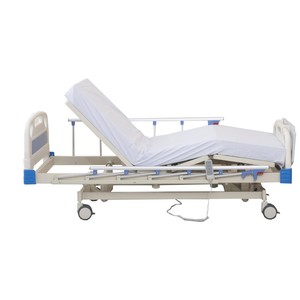
GRACEMED 3-Function Electronic Clinical Bed
- Low-noise precision medical actuators with IP54 sealing
- High-durability ergonomic hand pendant controller
- Factory-backed 5-year structural frame guarantee
Architectural Engineering & Customization for Brazilian Healthcare Demands
Manufacturing hospital examination furniture, treatment tables, and clinical ICU beds for export to the Federative Republic of Brazil necessitates deep mastery over distinct operational, environmental, and clinical criteria. Through Hoffmann NOA Medical Industries engineering heritage, our production methodologies fuse high-throughput automated robotic fabrication with custom OEM/ODM architectural adaptations. Every treatment table and bed system is engineered to mitigate structural fatigue under relentless 24/7 operating room, emergency room (Pronto-Socorro), and intensive care unit (UTI) duty cycles.
Our comprehensive production footprint utilizes automated laser tube cutting, cold-rolled plate punching, and multi-axis Panasonic robotic seam welding. Steel structural chassis undergo an intensive eight-stage pre-treatment wash including zinc phosphate immersion, neutralizing acid residues, and finishing with thermosetting electrostatic powder coating. This produces an antimicrobial layer exceeding 80 microns in thickness, rated for 1,000+ hours of continuous salt-spray exposure (ASTM B117) to withstand rigorous clinical disinfectants such as quaternary ammonium formulations, accelerated hydrogen peroxide, and sodium hypochlorite routinely deployed in Brazilian medical facilities.
Dual Power Architecture
Standardized dual-voltage switching power supply modules (127V / 220V @ 60Hz) engineered specifically to address regional electrical variance across Brazilian states, from São Paulo to Bahia, preventing solenoid coil overheating.
Biocompatible Antimicrobial ABS
Blow-molded virgin ABS head and footboards containing integrated antibacterial silver-ion additive compounds, halting MRSA and Klebsiella pneumoniae colonization without degrading under UV sterilization cycles.
IPX6 Ingress Sealing
All electric linear actuators, junction control boxes, and auxiliary foot pedals feature high-integrity silicone gaskets compliant with IPX6 moisture ingress ratings, allowing direct pressure-wash disinfection protocols.
Localized Application Scenarios Across Brazil’s Healthcare Landscape
Brazil's dual healthcare market—spanning the public Unified Health System (SUS) and premium private hospital groups (Saúde Suplementar)—requires adaptable treatment table and bed platforms that harmonize therapeutic versatility with economic longevity.
High-Acuity Private ICUs (UTI Adulto)
Private hospital networks (such as Rede D’Or São Luiz, Hospital Israelita Albert Einstein, and Hospital Sírio-Libanês) demand multi-function electric beds offering 5-axis articulation, continuous cardiac chair profiling, dual bilateral CPR triggers, and built-in radiography-lucent X-ray backrests.
SUS Municipal & State Hospital Networks
Public municipal procurement teams require ultra-durable two-crank manual and three-function electric beds engineered with high-yield tensile steel. These units feature standardized interchangeable modular spare parts to withstand high turnover rates across public emergency hospital hubs.
Outpatient & Physical Therapy Centers
Specialized physiotherapy and kinesiology institutes across Curitiba, Campinas, and Belo Horizonte require treatment tables with ultra-low clearance entry heights, allowing elderly or neurological patients with mobility limitations safe egress while reducing caregiver back strain.
Geriatric Residences & ILPI Facilities
Instituições de Longa Permanência para Idosos (ILPI) leverage our ergonomic residential-styled nursing beds. Combining home-like aesthetic wood-grain composite laminates with clinical full-electric profiling minimizes fall risks and optimizes patient dignity during extended convalescence.
Brazilian Regulatory Framework (ANVISA / INMETRO) & Macro Procurement Trends
Navigating import barriers into South America’s largest economy requires strategic mastery of technical certification protocols. All electromedical treatment furniture and clinical hospital beds intended for clinical use in Brazil fall under Class I or Class II medical device classifications monitored by ANVISA (Agência Nacional de Vigilância Sanitária) under normative resolutions RDC 751/2022 and RDC 685/2022.
To obtain ANVISA market authorization, equipment must first secure mandatory INMETRO (Instituto Nacional de Metrologia, Qualidade e Tecnologia) certification through accredited third-party test laboratories. Our export equipment is fully validated against:
| Regulatory Standard | Scope of Evaluation | Engineering Compliance Verification | Brazilian Authority |
|---|---|---|---|
| ABNT NBR IEC 60601-1 | General requirements for basic safety and essential performance of electromedical devices. | Dual-fuse insulation, earth leakage current < 100μA, high-pot isolation barrier up to 4000V. | INMETRO Certified |
| ABNT NBR IEC 60601-1-2 | Electromagnetic disturbances – Requirements and testing for clinical environments. | Shielded actuator cabling preventing interference with telemetry and cardiac monitors. | EMC Validated |
| ABNT NBR IEC 60601-2-52 | Particular requirements for the basic safety and essential performance of medical beds. | Side rail entrapment prevention geometry (<60mm gaps), dynamic structural fatigue test. | ANVISA Class II |
| ISO 13485:2016 | Quality Management Systems for Medical Device Manufacturing. | Comprehensive batch traceability, robotic weld inspection, statistical process verification. | MDSAP Audited |
Macro-Economic Dynamics & Import Optimization: The Brazilian market is experiencing accelerated modernization fueled by private hospital expansion beyond the traditional São Paulo-Rio axis into the Central-West and Northeast corridors. However, local supply chains face severe challenges due to high internal capital costs and domestic raw material inflation. By leveraging our factory-direct OEM/ODM manufacturing partnerships, Brazilian distributors achieve superior economies of scale. We provide comprehensive export documentation—including Certificates of Free Sale (CFS), ISO 13485 declarations, full Bill of Materials (BOM) technical dossiers, and optimized Mercosur Common Nomenclature (NCM 9402.90.20 - Hospital Beds) tariff classifications—minimizing customs clearance friction at the Port of Santos and Paranaguá.
Frequently Asked Questions by Brazilian Importers & Hospital Engineers
Essential technical, regulatory, and logistics answers for hospital purchasing committees, clinical engineering departments (Engenharia Clínica), and specialized surgical supply importers.
Enterprise Heritage & Global Manufacturing Leadership
Founded in 1989, NOA Medical Industries established its reputation by pioneering specialized height-adjustable patient systems designed to dramatically lower fall risks and ease caregiver demands. Today, as an operating cornerstone of the Hoffmann Family of Companies—a global multi-billion-dollar enterprise operating across 240+ manufacturing, industrial, and healthcare subsidiaries worldwide—we combine agile clinical engineering with deep balance-sheet stability.
Unlike regional assembly workshops, our manufacturing infrastructure operates under stringent ISO 13485 medical quality controls. Each production lot undergoes automated destructive fatigue testing, weld penetration ultrasonic validation, electromagnetic compatibility pre-scans, and rigorous dynamic safe-working-load (SWL) stress analysis. When partnering with us, Brazilian distributors and institutional healthcare providers gain direct access to a world-class manufacturing partner committed to sustainable lifecycle reliability, transparent technical compliance, and rapid delivery cycles.
Over 3 Decades of Innovation
Continuous clinical research and mechanical development resulting in patented patient-care geometries, whisper-quiet motor configurations, and low-height bed architectures.
Global Scale & Reliability
The financial backing and global logistics integration of the Hoffmann Family of Companies guarantees uninterrupted raw-material supplies and long-term project stability.
Pre-Shipment QA Matrix
Every unit is assembled, calibrated, load-tested, and electronically safety-screened under full dynamic loads prior to crating, eliminating out-of-box field failures.
Request Technical Specifications & Brazilian Import Support
Connect with our dedicated medical export engineering team to evaluate technical drawings, request complete compliance dossiers (ANVISA/INMETRO ready), or arrange factory-direct volume quotations for your next tender.