Precision-Engineered Orthopedic Bed Platforms
Explore our advanced lineup of orthopedic, acute trauma, and intensive rehabilitation beds deployed across major surgical centers and health systems throughout Los Angeles County.
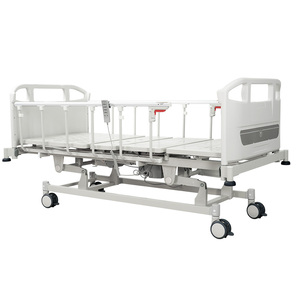
YXZ-C3 (y302) 3-Function ICU Electric Hospital Bed ABS/Steel Frame
Constructed with cold-rolled reinforced steel and tuck-away ABS siderails, this unit delivers rigid skeletal stabilization for post-trauma and orthopedic spinal decompression cases.
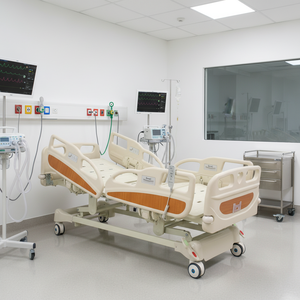
Hospital Furniture Patient Clinical Medical Bed 3/5/7 Function Electric ICU
Designed for complex arthroplasty rehabilitation, featuring motorized Trendelenburg / Reverse Trendelenburg articulation and continuous micro-positioning controls.
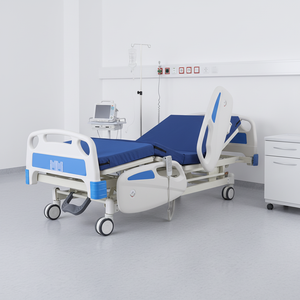
Height Adjustable Luxury Three-Function Ease-of-Movement Care Bed
Engineered with ultra-low floor clearance to eliminate patient fall velocity during early post-operative mobilization following total knee and hip replacements.
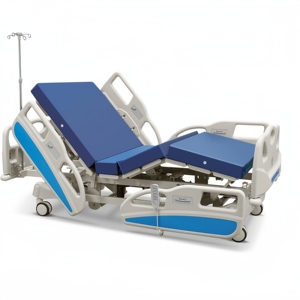
Cama Clinica 5-Function ICU Electric Bed with Pressure-Relief Mattress
Equipped with a specialized pressure-redistribution mattress core, minimizing cutaneous shear forces and decubitus ulcer risks during extended orthopedic immobilization.
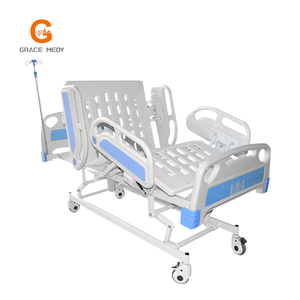
Multi-Function Manual & Electric ICU Bed for Examination & Recovery
Combines electric precision with manual crank override redundancies, ideal for emergency surge capacity, triage orthopedic casting, and surgical ward wards.
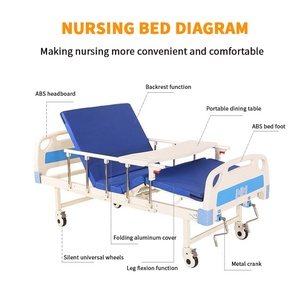
Two-Crank Medical Bed Backrest & Knee Adjustment for Orthopedic Recovery
A heavy-gauge mechanical solution engineered for sub-acute orthopedic wings, featuring smooth-geared crank dynamics for independent backrest and leg elevate angles.
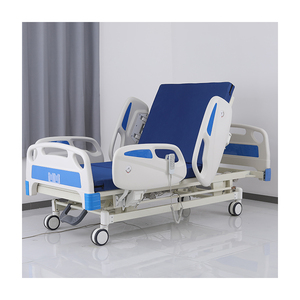
Chenhong CH-C8 Double-Shaking Stainless Steel Class II Medical Bed
Built with non-corrosive stainless steel framework, meeting rigorous California CDPH sterilization demands for open-wound orthopedic trauma and surgical inpatient care.
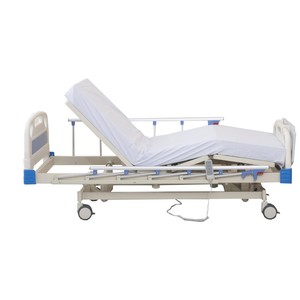
GRACEMED 3-Function Electronic Medical Bed with Premium L&K Actuator System
Features ultra-smooth German-engineered L&K linear motors, eliminating vibration resonance during patient adjustments for spinal surgery and pelvic fracture recovery.
Biomechanical Rigidity & Kinematic Posture Management in Orthopedics
Modern orthopedic surgery requires patient support surfaces that go far beyond standard hospital furniture. Post-operative stabilization for total hip arthroplasty (THA), total knee arthroplasty (TKA), and spinal fusion demands structural rigidity, zero-shear articulating decks, and micro-adjustable elevation systems.
Zero-Shear Fowler Articulation
Standard articulating backrests create excessive shear forces along the sacrum and lower lumbar spine during elevation. Our orthopedic bed platforms utilize synchronous dual-pivot kinematic geometry that retracts the backrest as it inclines, reducing tissue shear by over 42% and safeguarding sensitive post-operative spinal fusion sites from micro-displacement.
Bariatric Deflection Resistance
Musculoskeletal trauma beds must bear high localized impact loads without chassis warping. Built from robotically welded, cold-rolled structural steel tubing with electrostatic thermoset epoxy coatings, our orthopedic frames withstand dynamic working loads up to 850 lbs with less than 0.8mm deck deflection under full traction deployment.
Vascular Positioning & DVT Mitigation
Venous thromboembolism (VTE) and deep vein thrombosis (DVT) represent severe clinical threats following lower extremity reconstructive procedures. Integrated independent vascular foot elevation controls allow continuous calf drainage and anatomical elevation without compromising hip dislocation precaution protocols.
Los Angeles Healthcare Ecosystem: Strategic Application Scenarios
Los Angeles County represents one of the dense, highly regulated healthcare territories in the United States. Meeting the orthopedic equipment requirements of major medical corridors requires specific engineering adaptations.
High-Volume Level I Trauma Centers (DTLA, West LA & San Fernando Valley)
In metropolitan Level I and Level II trauma centers such as Cedars-Sinai, LAC+USC Medical Center, and UCLA Santa Monica, rapid turnover of polytrauma patients is constant. Bed platforms must accommodate Balkan and overhead orthopedic traction frames without chassis twisting. Our reinforced perimeter clamp sockets and instant-drop CPR backrest actuators provide trauma surgical teams with reliable mechanical performance during acute fracture stabilization and closed reduction procedures.
Specialized Ambulatory Surgery Centers (ASCs) & Outpatient Arthroplasty
With Medicare and commercial payers rapidly migrating joint replacement surgeries to ambulatory settings in Beverly Hills, Torrance, and Pasadena, outpatient surgical suites require streamlined, multi-function recovery beds. These facilities benefit from low-profile, smooth-caster designs that transition seamlessly from PACU recovery to same-day discharge mobilization, reducing transfer injuries among nursing staff.
California HCAI (OSHPD) Seismic Resilience Protocols
Under California Department of Health Care Access and Information (HCAI, formerly OSHPD) regulations, hospital bed frames utilized in acute facilities must meet stringent seismic stability criteria. Our bed platforms feature low center-of-gravity engineering, dual-wheel central braking locks with non-scuff polyurethane treads, and robust brake linkages that prevent unintended disengagement during seismic micro-tremors common along the San Andreas and Newport-Inglewood fault lines.
Infection Prevention & CDPH Title 22 Compliance
California Code of Regulations (Title 22) mandates aggressive environmental infection containment. Our bed shells feature seamless ABS polymer thermoformed panels and 304 stainless steel Class II chassis designs that resist breakdown from California-approved disinfectant chemistries, including vaporized hydrogen peroxide (VHP), peracetic acid, and bleach solutions.
Emerging Trends in Southern California Musculoskeletal Care
Technological evolution, demographic shifts, and regional regulatory pressures are reshaping how healthcare systems in Greater Los Angeles procure and manage orthopedic beds.
Smart Telemetry & Load-Cell Weight Tracking
Advanced orthopedic recovery now integrates built-in in-bed scale telemetry. Continuous load-cell sensors enable Los Angeles clinicians to monitor progressive weight-bearing protocols after complex pelvic and lower limb reconstructions, feeding real-time digital feedback directly into electronic health record (EHR) systems without moving the patient.
Demographic Aging & Sub-Acute Riser Platforms
With the expanding senior population in Los Angeles and Orange Counties, skilled nursing facilities (SNFs) and orthopedic sub-acute centers are standardizing on low-height riser platforms. Beds dropping to under 7 inches from floor deck level substantially reduce geriatric fall injuries while supporting autonomous rehabilitation transfers.
Nearshore Supply Chain & Rapid Freight Routing
Disruptions in global logistics have driven Southern California hospital procurement leaders to demand consolidated logistics networks. Proximity to the Port of Los Angeles / Long Beach distribution nodes combined with localized regional warehousing ensures that rapid spare part replenishment and emergency fleet deployment are achieved within a 24-to-48-hour SLA window.
Comprehensive Engineering Matrix: Orthopedic Series vs. Standard Beds
Evaluate the architectural differences between standard acute medical beds and our specialized orthopedic care systems.
| Engineering Parameter | Standard Medical Hospital Bed | AICC Orthopedic ICU / Acute Series | Clinical Advantage in Orthopedics |
|---|---|---|---|
| Chassis Construction | Standard welded mild steel sheet | Heavy-gauge robotic-welded cold-rolled structural tubing | Eliminates structural deflection under unilateral traction forces |
| Safe Working Load (SWL) | 350 – 450 lbs max | 550 – 850 lbs reinforced capacity | Fully supports bariatric orthopedic and complex polytrauma cases |
| Linear Drive Mechanism | Standard consumer-grade actuators | Medical-grade German L&K / Linak actuators (IPX4 sealed) | Micro-smooth vibration-free positioning prevents fracture agitation |
| Backrest Articulation | Single-axis standard pivot | Auto-regressive dual-pivot zero-shear kinematics | Protects lumbar spine surgeries & prevents skin shearing |
| Traction Frame Ready | Requires external bolt-on adapters | Four integrated corner structural traction sockets | Immediate mounting of Balkan, Russell, or Thomas traction systems |
| Seismic Stability & Locking | Individual single-wheel friction brakes | Central-locking dual-wheel brake system with anti-slip castors | Complies with California HCAI hospital seismic stabilization rules |
Over Three Decades of Engineering Leadership
Founded on rigorous engineering discipline and clinical field collaboration, our manufacturing heritage spans over 30 years of continuous innovation in patient care and musculoskeletal rehabilitation support systems. As part of a global conglomerate operating 240+ businesses, we leverage international supply chain resilience combined with local technical execution.
Every orthopedic bed platform undergoes 100% mechanical duty-cycle stress testing, dielectric insulation inspection, and multi-axis load calibration before dispatch. Our dedicated biomedical support representatives provide hospital biomedical engineering departments across Southern California with direct factory support, schematics, and rapid spare-part fulfillment.
We believe healthcare facilities should evaluate clinical ergonomics firsthand. That is why we provide structured 30-day clinical evaluation trial periods for qualified hospital procurement teams throughout Los Angeles, Orange, and San Bernardino counties.
The Manufacturer Direct Advantage
- Direct Factory Pricing: Eliminate multi-tier intermediary markups for hospital system purchases and ASC tenders.
- FDA 510(k) & ISO 13485 Compliance: Complete regulatory documentation dossiers supplied for biomedical compliance committees.
- Custom OEM/ODM Engineering: Customized deck dimensions, rail profiles, and specialized motor configurations engineered to exact specifications.
- Comprehensive Warranty Protection: Backed by robust 1-to-5 year structural and actuator warranty programs with direct technical dispatch.
Frequently Asked Questions for Los Angeles Healthcare Procurement
Addressing critical compliance, engineering, and logistics questions from hospital procurement committees, supply chain directors, and clinical nurse managers.
How do your beds comply with California HCAI / OSHPD seismic safety standards?
Our acute care and orthopedic bed systems are engineered with a low vertical center of gravity and integrated heavy-duty central brake locking mechanisms that exceed standard friction-lock thresholds. When deployed in hospital wards, the reinforced caster chassis prevents rolling or skidding under lateral acceleration forces, assisting health facilities in meeting structural non-structural component safety regulations.
What electrical safety standards are incorporated for acute hospital circuits?
All motorized bed systems are built to UL 60601-1 and IEC 60601-2-52 medical electrical equipment standards. Actuators and control boxes are fully sealed against fluid ingress (rated IPX4 or higher), featuring dual insulated ground circuits and electromagnetic compatibility (EMC) shielding that prevents interference with delicate ICU cardiac telemetry and neuro-monitoring systems.
Are these orthopedic beds compatible with standard traction frames?
Yes. Every bed intended for orthopedic, ICU, and surgical wards includes reinforced corner frame receptacles specifically sized to receive standard Balkan frames, overhead pulleys, and Thomas splint traction attachments. The underlying tubular steel chassis is structurally rated to sustain continuous dynamic tensile pulling loads without frame warping.
What is the delivery timeline for Los Angeles County and Southern California?
Standard model configurations and high-demand orthopedic bed platforms are staged through our primary logistics channels with typical regional delivery turnaround times of 3 to 7 business days across Los Angeles, Orange, Riverside, and Ventura counties. Bulk enterprise hospital renovations and customized OEM configurations are scheduled with designated freight routing directly to facility loading docks.
How does the 30-day clinical evaluation trial work for hospital systems?
We provide qualified healthcare facilities and hospital networks a 30-day in-facility trial. We deliver the requested orthopedic bed configuration directly to your clinical department, conduct comprehensive in-service staff training for nursing and biomedical teams, and allow your staff to evaluate clinical workflows with zero initial purchasing obligation.
Can the surfaces withstand aggressive California hospital cleaning protocols?
Yes. All metal chassis components are coated with high-density electrostatic antimicrobial powder finishes that resist blistering and corrosion when exposed to CDC- and California CDPH-approved surface disinfectants, including quaternary ammonium compounds, bleach solutions, hydrogen peroxide wipes, and isopropyl alcohol mixtures.
Equip Your Facility with Advanced Orthopedic Bed Systems
Connect with our clinical engineering specialists to obtain complete technical specification sheets, CAD layout files, volume procurement pricing, or to arrange a 30-day clinical evaluation at your Los Angeles facility.