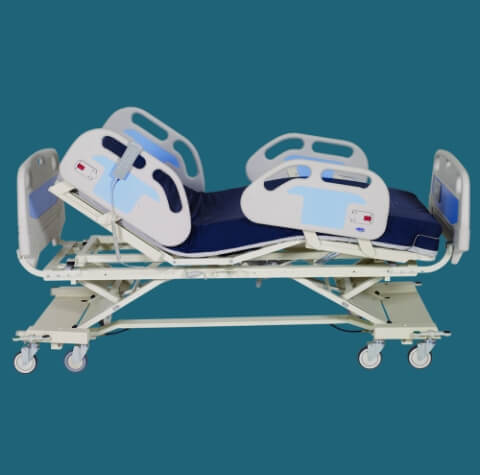
NOA Platinum SC Plus Bed
High-acuity medical sleep safety bed equipped with dual-pedestal ultra-low elevation, integrated bed exit scale telemetry, and non-entrapment split assist rails for intensive clinical environments.
Technical SpecsA definitive technical analysis and product evaluation guide for hospital procurement officers, clinical engineers, and healthcare facility managers seeking FDA-compliant, restraint-free patient sleep safety systems.
In modern acute care, skilled nursing, and behavioral health environments, patient sleep safety represents one of the most complex operational and clinical challenges faced by healthcare executives. Nocturnal patient falls, accidental side rail entrapment, and unassisted bed egress during vulnerable circadian cycles remain leading causes of non-reimbursable adverse events, prolonged length of stay (LOS), and devastating institutional liability.
According to healthcare safety data, over 70% of inpatient fall incidents occur in unmonitored patient rooms during night-shift hours (22:00 to 06:00). When patients attempt to exit standard hospital beds while disoriented or medicated, the combination of elevated deck heights and rigid, non-compliant side rails creates severe impact trauma or life-threatening mechanical entrapment. Consequently, global regulatory bodies—including the U.S. Food and Drug Administration (FDA), the Centers for Medicare & Medicaid Services (CMS), and European CE directives—have enacted stringent mandates prioritizing restraint-free fall prevention and complete compliance with IEC 60601-2-52 entrapment standards.
As a leading American manufacturer of medical bed systems since 1989, Hoffmann NOA Medical Industries, LLC. has spearheaded the evolution of Medical Sleep Safety Products. By synthesizing bio-mechanical engineering, low-height motorized articulation, zero-gap side rail geometries, and real-time biometric telemetry integration, NOA Medical delivers holistic patient sleep safety solutions that drastically reduce fall velocity, prevent zone entrapment, and optimize caregiver ergonomics.
Selecting the optimal sleep safety platform requires matching clinical acuity levels with specialized physical bed configurations. Below are NOA Medical’s flagship, FDA-compliant sleep safety product lines designed for acute care, skilled nursing, bariatric, and behavioral health care settings.
High-acuity medical sleep safety bed equipped with dual-pedestal ultra-low elevation, integrated bed exit scale telemetry, and non-entrapment split assist rails for intensive clinical environments.
Technical Specs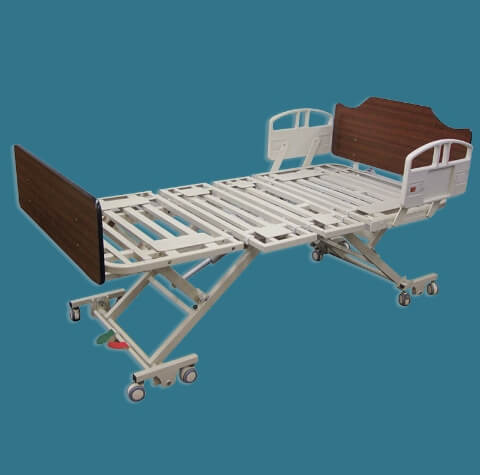
Featuring an expandable sleep deck (width adjustable from 36" to 42" & 48") combined with a ultra-low floor clearance of 7", providing maximum fall mitigation for LTC facilities.
Technical Specs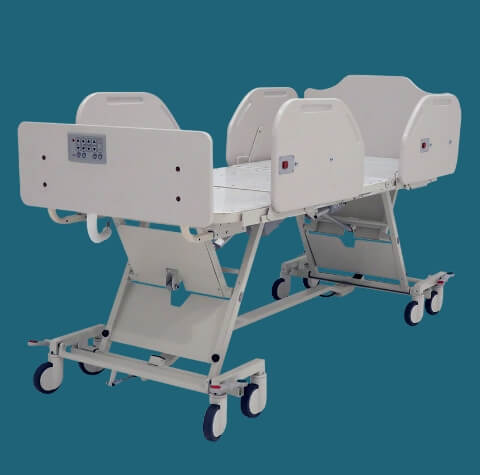
Anti-ligature, tamper-resistant sleep safety design. Concealed internal actuators and heavy-duty steel deck prevent self-harm while enabling full-electric positioning.
Technical Specs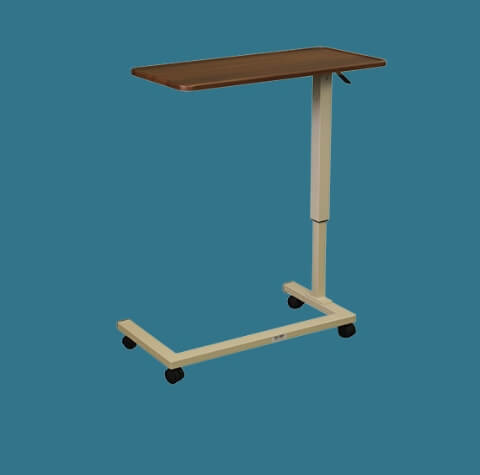
Comprehensive lineup of FDA entrapment zone compliant assist bars, side rail bumpers, soft perimeter bolsters, and floor-level safety mats for total bed environment security.
Explore Accessories| Platform Model | Clinical Target | Deck Height Range | Safe Working Load | Entrapment Compliance | Special Safety Features |
|---|---|---|---|---|---|
| NOA Platinum SC Plus | Acute Care / ICU Step-down | 7.0" to 30.0" | 600 lbs (272 kg) | IEC 60601-2-52 Compliant | In-bed scale alarm, Trendelenburg positioning, C-arm clear |
| NOA Elite EX Low Riser | Long Term Care / Skilled Nursing | 7.0" to 28.0" | 600 lbs to 1000 lbs | FDA 7-Zone Entrapment Free | Width & Length expandable deck, low-height fall prevention |
| Platinum Behavioral Health | Psychiatric / Secure Facilities | 8.5" to 27.5" | 600 lbs (272 kg) | Anti-Ligature Architecture | Tamper-proof fasteners, internal wiring, solid steel platform |
| NOA Elite II System | Standard LTC Care Units | 8.0" to 28.0" | 500 lbs (227 kg) | FDA 7-Zone Compliant | High-impact powder coat finish, dual-pedestal hi-lo motors |
The global healthcare procurement landscape for patient room equipment is undergoing a paradigm shift driven by AI integration, regulatory enforcement, and demographic changes. B2B procurement directors are moving away from traditional static furniture toward high-performance, modular Medical Sleep Safety Products. Key procurement trends shaping international healthcare purchasing include:
Global regulatory bodies have severely penalized facility usage of physical restraints due to adverse psychological and physiological outcomes. Consequently, healthcare procurement standards now mandate physical fall mitigation architectures. Ultra-low height beds that lower to 7 inches off the finished floor allow patients to touch the ground safely upon rolling out, dissipating kinetic impact energy. Purchasing managers are prioritizing low-deck designs over raised side rails to maintain zero-restraint compliance.
With obesity rates rising globally, acute and long-term care facilities frequently face equipment shortages for high-BMI patients. Procurement trends strongly favor multi-capacity beds such as the NOA Elite EX, which features an integrated expandable deck (adjusting effortlessly between 36", 42", and 48" widths). This eliminates the cost of purchasing separate bariatric frames and ensures continuous sleep surface comfort and safety for diverse patient demographics.
Modern medical sleep safety products are no longer isolated mechanical structures—they are active nodes in digital healthcare networks. Procurement requests for proposals (RFPs) now routinely specify smart bed scale telemetry, continuous bed exit sensing, and automated nurse call integration. In-bed sensors analyze subtle pressure shifts and micro-movements during sleep cycles, alerting nursing staff prior to an unassisted exit attempt, thereby preventing falls before they occur.
Looking ahead, technological advancements in medical sleep safety systems will concentrate on predictive analytics, advanced material science, and automated pressure management to enhance patient outcomes and streamline nursing operations.
Future sleep safety beds will incorporate machine learning models trained on millions of nocturnal patient movement data points. By monitoring restlessness patterns, respiratory rates, and mattress center-of-gravity shifts during REM and non-REM sleep phases, the bed platform will calculate real-time fall probability scores, dynamically adjusting side rail illumination and notifying floor nurses via direct wearable alerts.
Healthcare-Associated Infections (HAIs) remain a major concern in patient room design. The next generation of medical sleep safety products will incorporate ionic silver-embedded powder coatings and seamless, non-porous polymer surfaces capable of degrading bacterial DNA upon contact, withstanding harsh hospital-grade disinfectant protocols without structural degradation.
Automated turning protocols integrated directly into sleep safety beds will gently tilt the mattress platform at pre-programmed intervals during the night (e.g., 10-degree subtle lateral rotation every 2 hours). This continuous weight displacement prevents pressure ulcers (decubitus ulcers) without waking the patient, significantly improving nocturnal sleep quality and clinical recovery velocity.

Since 1989, NOA Medical Industries has been a pioneer in medical bed engineering, introducing the market’s first specialized adjustable-height long-term care beds. In 2021, NOA Medical joined the Hoffmann Family of Companies, combining over three decades of clinical innovation with the global backing, capital strength, and supply chain resiliency of a worldwide multi-industry conglomerate.
Every NOA Medical sleep safety system is designed, assembled, and quality-tested in Washington, Missouri, upholding strict ISO 13485 standards and FDA compliance to ensure uncompromised reliability in high-acuity environments.
Addressing the core search queries and technical questions evaluated by hospital procurement boards, risk management teams, and clinical engineering departments worldwide:
Traditional physical restraints (such as vest restraints or full-length locked side rails) are increasingly banned due to safety hazards and negative clinical outcomes. Modern medical sleep safety products solve this by utilizing ultra-low floor heights (down to 7 inches), passive soft perimeter mats, and ergonomic assist handles. When a bed lowers to near-floor level, the vertical distance of an accidental fall is dramatically reduced, eliminating the risk of impact injury while allowing the patient complete freedom of movement without physical restraint.
The FDA’s Hospital Bed Safety Workgroup (HBSW) established 7 specific zones of potential entrapment, including: (1) Within the rail, (2) Under the rail between rail supports, (3) Between the rail and mattress, (4) Under the rail at the ends, (5) Between split rails, (6) Between end of rail and side board, and (7) Between head/foot board and mattress end. NOA Medical sleep safety products are designed with strict dimensional tolerances (e.g., gaps maintained below 4.75 inches under load testing) and zero-gap split rail geometry to ensure complete adherence to IEC 60601-2-52 safety standards.
An unassisted patient fall resulting in moderate-to-severe injury costs a hospital between $14,000 and $35,000 in direct non-reimbursable treatment expenses, extended length of stay, and potential legal claims. By investing in low-height medical sleep safety beds across a 100-bed facility, preventing just two major fall events per year fully pays for the platform upgrade. Furthermore, dual-pedestal motorized elevation reduces caregiver back strain injuries, yielding additional savings in workers' compensation claims.
Bariatric patients sleeping on standard 36-inch wide mattresses experience restricted movement, leading to accidental egress falls or skin breakdown against rigid side barriers. Expandable sleep safety beds (such as the NOA Elite EX) allow clinical staff to expand the sleep surface to 42 inches or 48 inches seamlessly. This extra lateral space lowers center-of-gravity shifts during turning, reduces roll-out fall risks, and maintains improper pressure distribution protection during sleep.
NOA Medical sleep safety beds feature universal 37-pin and 1/4-inch auxiliary communications interfaces compatible with all major nurse call and facility monitoring systems. Telemetry outputs transmit real-time data regarding in-bed patient presence, scale measurements, brake lock status, and side rail position directly to central nurse stations and telemetry dashboards.
Every NOA Medical bed platform is backed by an industry-leading warranty, including lifetime coverage on structural welds, 15 years on frame structures, and 5 years on electrical control systems and actuators. Facilities receive direct toll-free customer support (1-800-633-6068) operating from our U.S. headquarters, along with rapid global replacement parts dispatch and on-site clinical staff training programs.
In 2021, NOA Medical Industries became part of the Hoffmann Family of Companies, transforming into Hoffmann NOA Medical Industries, LLC. This integration grants our global purchasing partners unprecedented supply chain security, ongoing research and development investments, and the backing of over 240 enterprise operations worldwide.
Whether equipping a 20-bed regional clinic or a multi-hospital health network, our enterprise infrastructure guarantees seamless production timelines, stringent quality control, and uninterrupted long-term component availability.